Patricio Guzmán, widely celebrated as one of the most vital documentary filmmakers of the Latin American cinema movement and a master chronicler of Chile’s tumultuous political history, has died at the age of 85. According to reports from the Chilean news outlet Emol, Guzmán passed away on Tuesday in Paris, France, following a cardiorespiratory arrest.
Over a career spanning more than half a century, Guzmán dedicated his cinematic lens to preserving the memory of Chile’s democratic hopes, the violent rupture of the 1973 military coup, and the long, lingering shadows cast by the dictatorship of General Augusto Pinochet. His monumental works, most notably the three-part epic The Battle of Chile, transformed documentary filmmaking into a poetic, historical archive, capturing moments of profound political transformation and unspeakable tragedy.
The Crucible of 1973 and the Birth of a Masterpiece
Born in Santiago, Chile, in 1941, Guzmán initially worked in advertising before pursuing formal film education in Chile and later in Madrid, Spain. Returning to his homeland in the early 1970s, he stepped into a charged and febrile political environment following the democratic election of Marxist president Salvador Allende in 1970.
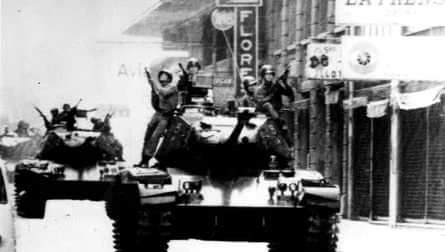
Sensing the immense historical gravity of the Unidad Popular government, Guzmán and a small, daring crew began filming the social and political landscape of a country polarizing in real-time. This endeavor culminated in his masterwork, The Battle of Chile (La Batalla de Chile), an exhaustive, three-part documentary chronicle tracking the systematic efforts by domestic opposition and foreign interests to destabilize and ultimately overthrow Allende’s administration.
The trilogy—comprising The Insurrection of the Bourgeoisie (1975), The Coup d’État (1976), and Popular Power (1979)—stands as a towering achievement in direct cinema. Guzmán and his team did not shy away from the raw brutality of the era. Notably, the films include authentic footage captured by heroic camera operator Leonardo Henrichsen, who filmed his own death at the hands of a rebellious soldier during the short-lived Tanquetazo uprising in June 1973.
The production of the documentary was fraught with peril. Following the September 11, 1973, coup that brought Pinochet to power and resulted in Allende’s death by suicide inside the presidential palace, Guzmán was briefly detained in the Estadio Nacional—which had been converted into a massive concentration camp—before being released.
Realizing that remaining in Chile would mean the destruction of his life’s work, Guzmán smuggled the master reels out of the country with the crucial assistance of French filmmaker Chris Marker, who provided invaluable film stock, financial backing, and international distribution networks. Tragically, not everyone associated with the production escaped unscathed. Jorge Müller, the brilliant cinematographer for The Battle of Chile, and his partner, Carmen Bueno, were arrested by the regime’s secret police in 1974, becoming two of Chile’s countless detenidos desaparecidos (forcibly disappeared persons).
Exile, Return, and Cinematic Evolution
Working from exile in Cuba, Sweden, and eventually France, Guzmán painstakingly assembled the footage into the completed Battle of Chile trilogy. The resulting work earned widespread international acclaim, praised by critics for its rigorous observation, breathless urgency, and exceptional photographic clarity.

Despite achieving international renown, Guzmán remained permanently marked by the trauma of his homeland. In a 2012 interview with The Guardian, he reflected on his lifelong artistic preoccupation: “I’m a filmmaker who was very marked by the ways of the dictator. It has remained with me for ever. I cannot leave it behind.” Yet, he consistently rejected the label of a conventional political agitator or activist. “I’m not a sociologist. Neither am I a politician. I make films that are metaphorical and poetic; I interpret reality through my own personal way of looking.”
As the political landscape of Chile evolved, so did Guzmán’s approach to filmmaking. In the mid-1990s, following the return of civilian rule, he traveled back to Chile to film Chile, Obstinate Memory (1997), examining how a society deals with collective amnesia after a quarter-century of dictatorship. He followed this with The Pinochet Case (2001), which meticulously documented the international legal battles surrounding the former dictator’s sensational arrest in London in 1998 at the behest of Spanish magistrate Baltasar Garzón—a watershed moment for global human rights jurisprudence.
Metaphysical Landscapes and Chile’s Recent Upheavals
In the latter stages of his career, Guzmán expanded his cinematic vocabulary beyond strictly archival history, pivoting toward metaphysical and philosophical subjects that tied human suffering directly to the geography of the Chilean landscape. This artistic shift materialized in a celebrated trilogy that began with Nostalgia for the Light (2010), which juxtaposed the astronomers searching the pristine skies of the Atacama Desert with women desperately digging through the same arid earth in search of the remains of their vanished relatives.
He continued this thematic exploration with The Pearl Button (2015), which examined the genocide of Chile’s indigenous peoples alongside the maritime history of the country’s southern archipelagos, and The Cordillera of Dreams (2019), a haunting meditation on the massive Andean mountain range that acts as both a protective barrier and a silent witness to national trauma.
Guzmán’s final film, My Imaginary Country (Mi País Imaginario), premiered in 2022. The documentary brought his career full circle, turning its lens toward the massive, spontaneous street protests that erupted across Chile in late 2019 over economic inequality, public services, and the legacy of the Pinochet-era constitution. The film captured a new generation of Chileans demanding systemic change, proving that Guzmán’s passion for documenting his country’s political soul remained undiminished into his ninth decade.
Legacy and International Mourning
Following the announcement of his passing, tributes poured in from international film institutions, historians, and cultural figures across Latin America. Colleagues praised Guzmán not only for his technical mastery and uncompromising journalistic integrity, but also for his profound moral courage in the face of political repression.
Film critics and scholars note that without Guzmán’s tireless dedication, much of the visual evidence of the Allende years and the immediate terror of the Pinochet regime would have been permanently lost to history. His works remain standard viewing in film schools and university history departments worldwide.
Patricio Guzmán is remembered as a titan of documentary cinema whose films transcended regional boundaries to become universal testaments to the fragility of democracy, the resilience of the human spirit, and the moral imperative of historical memory. His passing marks the end of an era for Latin American independent filmmaking, but his cinematic legacy remains an indelible monument etched into the conscience of Chile and the world.