When The Walt Disney Company, under the leadership of CEO Bob Iger, orchestrated the monumental acquisition of Lucasfilm for approximately $4 billion in October 2012, the move was widely perceived as a masterstroke. The allure of the Star Wars universe, with its rich lore, beloved characters, and proven box office power, presented an almost inexhaustible wellspring of potential for the entertainment giant. For a considerable period, this acquisition appeared to validate the hefty price tag. The initial wave of films under Disney’s stewardship, including Star Wars: The Force Awakens (2015), which shattered global box office records by grossing over $2 billion, and Rogue One: A Star Wars Story (2016), which surpassed $1 billion, seemed to confirm the franchise’s enduring appeal. Even Star Wars: The Last Jedi (2017), despite igniting a fervent and often acrimonious debate among fans, a phenomenon that some critics likened to a "culture war," managed to generate over $1.3 billion worldwide. Following this, Star Wars: The Rise of Skywalker (2019), despite facing significant backlash from a segment of the fandom, still achieved a remarkable box office performance, earning more than $1 billion for Disney.
The advent of Disney+ in November 2019 provided a new and potent delivery system for the Star Wars saga. This streaming platform effectively eliminated the protracted waiting periods between major film releases, offering a continuous stream of content. Series such as The Mandalorian, The Book of Boba Fett, Obi-Wan Kenobi, Andor, and Ahsoka became staples of the platform. These shows delved into the intricacies of the Star Wars universe, filling narrative gaps, providing in-depth explorations of fan-favorite animated characters, and, in some instances, offering surprisingly detailed examinations of the bureaucratic and ideological underpinnings of galactic governance.
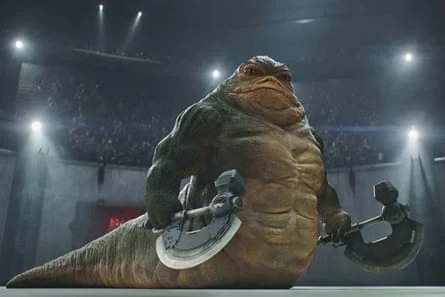
However, nearly 14 years after this seismic shift in the Star Wars power structure, a growing chorus of critical notices suggests that the saga may be experiencing a decline in its creative and commercial momentum. The recent cinematic release, The Mandalorian & Grogu, has garnered a mixed reception, with a Rotten Tomatoes score of 61% at the time of writing, just barely securing its place in the “fresh” category. Positive commentary has often highlighted the film’s charm, brisk pacing, and polished visual aesthetic, largely attributing its appeal to the undeniable adorability of Grogu, often affectionately referred to as "Baby Yoda." Conversely, critics have voiced concerns about the film’s perceived narrative thinness, formulaic structure, and a distinctly televisual quality, leading some to suggest it feels more like an extended episode of its Disney+ predecessor rather than a grand cinematic event.
The Challenge of Reimagining a Beloved Saga
The question now facing the Star Wars franchise is whether it has become an "impossible" entity, particularly on the big screen. The Mandalorian & Grogu, while perfectly competent and featuring elements that have resonated with fans, such as callbacks to established villains and Mando’s continued efficiency in dealing with stormtroopers, alongside Grogu’s signature cuteness, has not ignited the widespread enthusiasm some anticipated. The core issue may not be a lack of effort from Disney. In fact, the company has pursued a multifaceted strategy to maintain the franchise’s relevance.
The initial approach, exemplified by The Force Awakens, was a deliberate soft reboot of the original trilogy. This strategy aimed to recapture the magic of the classic films by presenting familiar archetypes and narrative structures within a modern cinematic framework. While commercially successful, it also inadvertently set a trap. By providing fans with a nostalgic echo of what they loved, it may have conditioned audiences to expect more of the same, potentially stifling innovation.

Rian Johnson’s The Last Jedi represented a bold departure, attempting to challenge established mythology and complicate the hero’s journey, a move often lauded as a sign of creative courage in franchise filmmaking. However, this approach starkly illuminated the complexities of modern blockbuster cinema in the age of social media. Audiences, it appears, often hold contradictory desires for franchise content. They may profess a desire for originality and subversion, yet react with fierce resistance when these expectations are met, leading to highly polarized fan reactions and accusations of "personally murdering their childhood." The Rise of Skywalker then attempted to course-correct by seemingly backtracking on some of The Last Jedi‘s more divisive elements, a strategy that ultimately satisfied few and further fueled fan dissatisfaction.
Navigating the Nostalgia Trap
The current iteration, The Mandalorian & Grogu, seems to represent a return to safer territory. It focuses on beloved characters, avoids major, potentially divisive revelations about the Force or character lineage, and clarifies that Mando has no direct genetic link to Boba Fett, and Grogu is not the offspring of Yoda and Yaddle. Instead, the film offers a straightforward, old-fashioned adventure set between the fall of the Galactic Empire and the rise of the First Order. For viewers invested in the television series, this approach is likely to be perfectly acceptable.
However, if this cautious, character-driven narrative is not what audiences expect from a Star Wars film, it raises a fundamental question about the franchise’s trajectory since George Lucas’s sale of Lucasfilm to Disney. Star Wars has, arguably, always been a franchise that is difficult to master. The prequel trilogy (1999-2005) was met with a similarly divided reception, and even the inclusion of the Ewoks in the original trilogy was not universally embraced. The notorious 1978 Star Wars Holiday Special remains a cautionary tale of what can go spectacularly wrong when creative vision falters.
The Unfinished Symphony: The Perils of Perpetual Continuation
Perhaps a crucial, overlooked element of the original Star Wars trilogy’s success was its inherent sense of closure. George Lucas’s initial three films formed a cohesive, mythic narrative arc: a farm boy discovers his destiny, a princess leads a rebellion, a scoundrel finds a cause, a father is redeemed, and the Empire falls. This story felt complete, a self-contained epic. However, every subsequent attempt to extend this narrative has, in essence, reopened thematic wounds. The Empire’s defeat at the Battle of Endor proved to be a temporary administrative reshuffle rather than the definitive end of tyranny. The Jedi did not truly return in a way that established a lasting order. Luke Skywalker’s efforts to rebuild the Jedi Order were ultimately unsuccessful, and Emperor Palpatine’s death was not permanent.
This constant unraveling of happy endings to create new narrative threads risks diluting the mythic power of the original story. Star Wars, in this context, begins to feel like a galaxy where characters are never truly allowed to retire, heal, learn, or complete their emotional journeys. This sense of perpetual narrative continuation can lead to a feeling of stagnation, where the stakes are constantly reset, and the sense of finality that made the original story so resonant is lost.
Even The Mandalorian, which initially captivated audiences with its lean, Western-inspired narrative of a lone bounty hunter and his enigmatic ward, has found itself increasingly drawn into the sprawling, interconnected web of the larger Star Wars universe. The narrative has become populated with familiar elements like helmets, discussions of bloodlines, clones, intergalactic councils, the Darksaber, and legacy character cameos. This trajectory mirrors what many perceive as the inevitable outcome of the Disney acquisition: a galaxy presented as a neatly packaged product, a myth manufactured on a conveyor belt, perpetually seeking to re-sell the same core appeal, albeit with increasingly polished packaging. The challenge for Disney now is to find a balance between honoring the legacy of Star Wars and forging a creative path that offers genuine evolution and avoids the perception of a franchise trapped in a cycle of its own making. The success of The Mandalorian & Grogu will be a key indicator of whether the franchise can recapture its cinematic magic or if it is destined to remain a captivating, yet increasingly familiar, echo of its past glories.