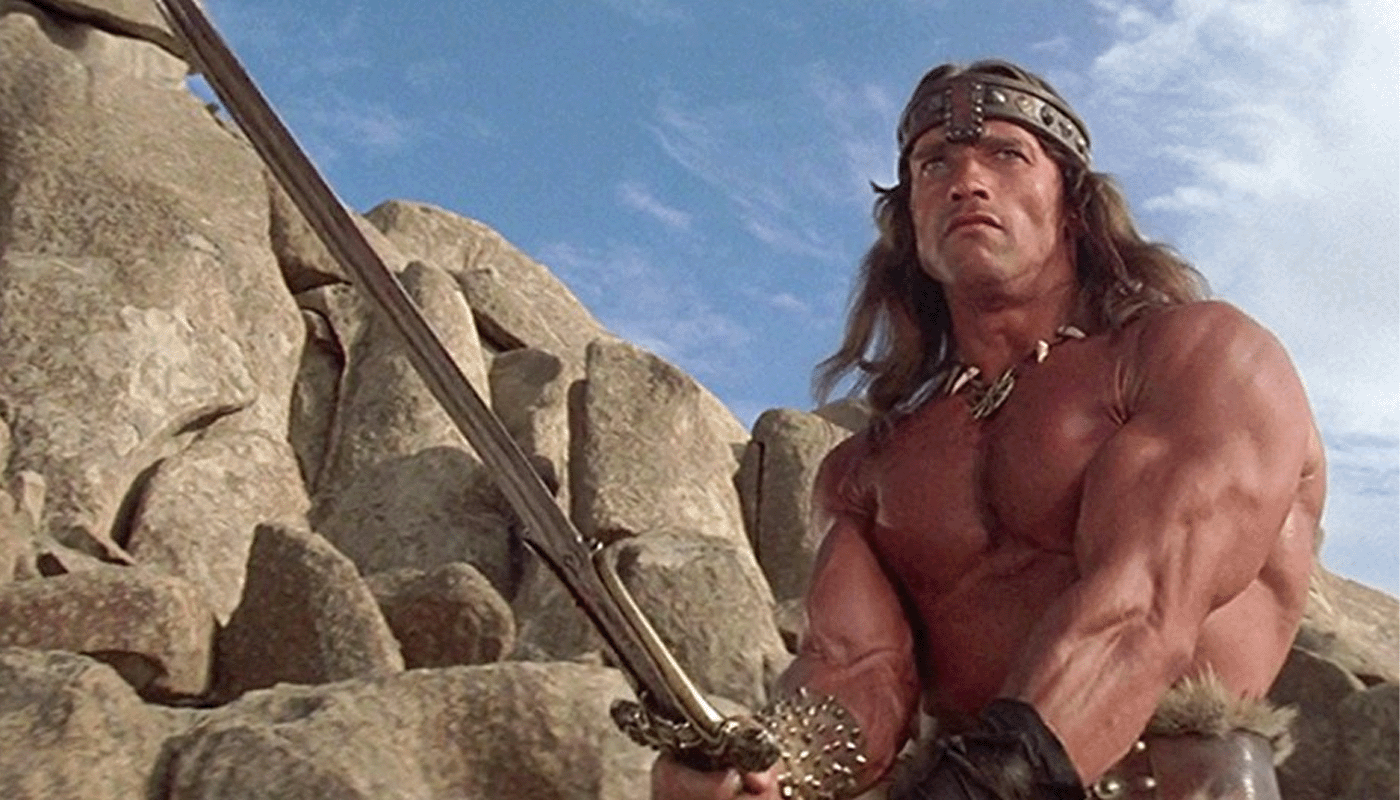
The cinematic landscape of the 1980s represented a distinct golden era for sword-and-sorcery fantasy films, a genre that subsequently experienced a sharp decline throughout the 1990s before resurfacing in the high-budget productions of the 2000s. Unlike the polished, computer-generated visual effects-driven epics of the subsequent decades, 1980s fantasy cinema was characterized by practical effects, tangible set designs, gritty aesthetics, and unconventional storytelling. Within this framework, 1984’s Conan the Destroyer, directed by Richard Fleischer and starring Arnold Schwarzenegger, stands as a notable entry in the decade’s catalog of canonical fantasy works. Serving as a direct sequel to John Milius’s critically acclaimed 1982 film Conan the Barbarian, the production shifted the franchise’s tonal trajectory toward a lighter, more accessible comic-book-inspired adventure while cementing its place in popular culture.
Production Background and Narrative Framework
Conan the Destroyer entered production under the auspices of veteran Hollywood producer Dino De Laurentiis, following the moderate box-office and cultural success of the original film. While John Milius infused the 1982 film with a heavy, philosophical tone influenced by Robert E. Howard’s pulp fiction and Friedrich Nietzsche’s concepts of power and masculinity, the sequel adopted a broader, family-friendly PG rating and a swashbuckling cadence.
The narrative follows the Cimmerian warrior Conan, who remains emotionally burdened by the death of his lost love, Valeria. He is approached by Queen Taramis of Shadizar, portrayed by Sarah Douglas. Taramis offers to resurrect Valeria under a single condition: Conan must escort her young niece, Princess Jehnna (played by Olivia d’Abo), to the distant lair of the sorcerer Toth-Amon. The objective is to retrieve a magical horn capable of awakening Dagoth the Dreamer, the city’s slumbering patron deity.
Unbeknownst to Conan, the quest is an elaborate deception. Taramis intends to sacrifice the virgin princess to secure supreme political and spiritual authority, while her loyal captain, Bombaata (portrayed by legendary basketball player Wilt Chamberlain), is assigned to protect Jehnna’s innocence until the mission is complete, whereupon he is ordered to assassinate Conan.
Ensemble Cast and Chronology of the Quest
Along the journey, Conan accumulates a diverse band of companions that reflects the eclectic casting choices typical of 1980s action cinema. The party includes:
- Malak the Thief, played by Tracey Walter, who provides comic relief and pragmatism.
- Akiro the Wizard, with Mako reprising his Academy Award-nominated role from the original film.
- Bombaata, portrayed by Wilt Chamberlain, leveraging his immense physical stature.
- Zula, an Amazon warrior brought to life by musician and cultural icon Grace Jones in her feature film debut.
The narrative progression follows a classic adventure chronology. After navigating traps and confronting Toth-Amon—played by Pat Roach, who also doubles as the monstrous ape-beast in the hall of mirrors sequence—the party secures the magical jewel. They locate the ancient tomb housing the horn of Dagoth, deciphering warnings regarding the entity’s apocalyptic potential.
Following Bombaata’s inevitable betrayal and the temporary imprisonment of the protagonists, the group returns to Shadizar to halt the sacrificial ritual. The climax features a multi-tiered confrontation: Conan dispatches Bombaata in single combat, Zula neutralizes the vizier, and Taramis places the horn upon the statue of Dagoth. The deity subsequently mutates into a towering, Lovecraftian monster—portrayed by professional wrestler André the Giant in an uncredited role—before Conan eradicates the threat by removing the horn from its forehead.
The film concludes with Jehnna ascending the throne, offering Conan a royal marriage and co-rulership. True to his character arc and enduring grief for Valeria, Conan declines the crown, maintaining his status as a wandering adventurer destined for future kingship.
Box Office Performance and Critical Reception
Released in the summer of 1984, Conan the Destroyer grossed approximately $31 million worldwide against a production budget of $30.1 million. While the financial return was respectable, it fell short of the breakout commercial milestones achieved by its predecessor.
Critical reception upon release was mixed. Prominent film critics, such as Roger Ebert, noted the distinct tonal shift, observing that Fleischer’s direction embraced a campier, more lighthearted sensibility than Milius’s brooding original. Despite the mixed critical consensus, the film achieved sustained popularity through home video distribution and television syndication, cementing its status as a cult classic of 1980s fantasy cinema.
Cultural Impact and Industry Implications
The commercial and cultural footprint of Conan the Destroyer extended far beyond its initial theatrical run, influencing multimedia adaptations, literature, and the public profiles of its principal cast members.
Literary and Comic Adaptations
The intellectual property generated significant cross-media tie-ins. Marvel Comics published a two-part comic book adaptation in 1984, followed by a comprehensive graphic novel in 1990 titled Conan the Barbarian: The Horn of Azoth, written by Roy Thomas and Gerry Conway. Additionally, Tor Books published a novelization of the film in 1984 authored by acclaimed fantasy writer Robert Jordan, predating his massive success with The Wheel of Time series.
Career Trajectories and Multimedia Stardom
For Grace Jones, her portrayal of the warrior Zula—combined with her role as the villainous henchwoman Mayday in the 1985 James Bond film A View to a Kill—cemented her transition from a celebrated recording artist to a globally recognized multimedia icon. Her distinct visual presentation and physical performance in Conan the Destroyer left a lasting template for action heroines in subsequent decades.
Speculative Fiction Nomenclature
The mythological elements of the film, specifically the antagonist entity Dagoth, left a notable nomenclature footprint within the broader speculative fiction industry. The name was later adopted by Blizzard Entertainment for a Zerg character in the 1998 strategic video game StarCraft, and more prominently utilized by Bethesda Game Studios for the primary antagonist Dagoth Ur and the associated lore in the 2002 role-playing game The Elder Scrolls III: Morrowind.
Conclusion and Future Outlook
While Conan the Destroyer is frequently evaluated as a lighter, less disciplined cinematic effort compared to Conan the Barbarian, its contributions to the sword-and-sorcery genre remain significant. Featuring elaborate set designs by master craftsmen, a soaring orchestral score by Basil Poledouris, and an unforgettable ensemble cast, the film captures the uninhibited aesthetic of 1980s fantasy filmmaking.
Decades after its premiere, the cultural resonance of Schwarzenegger’s tenure as the Cimmerian king continues to generate industry interest. Discussions regarding a legacy sequel centering on an aging monarch—tentatively titled King Conan—demonstrate the enduring viability of Robert E. Howard’s creation and the lasting cultural imprint forged by the cinematic adaptations of the 1980s.