When Robert Kirkman, the visionary behind industry-defining titles such as The Walking Dead and Invincible, launched the inaugural issue of Void Rivals in 2023, the move was widely viewed as a high-stakes gamble. The project served as a clandestine gateway to a reimagined shared comic universe, effectively merging the storied intellectual properties of Transformers and G.I. Joe under the Skybound banner. For decades, these Hasbro-owned franchises had been staples of the comic book market, licensed continuously by industry titans including Marvel, Devil’s Due, and IDW. However, those previous iterations were often characterized by steady, if somewhat stagnant, sales performance. Kirkman’s ambition was to move beyond the sporadic, gimmicky crossovers of the past, instead weaving these characters into a cohesive, long-form narrative tapestry.
The initiative, now known as the Energon Universe, has not only validated Kirkman’s creative intuition but has shattered industry expectations, consistently rivaling and occasionally outpacing the output of the "Big Two"—DC and Marvel. Three years into this ambitious publishing experiment, the data confirms that the strategy of deep integration has resonated profoundly with both legacy fans and a new generation of readers.
A Chronology of the Energon Universe
The genesis of the Energon Universe began with a deliberate obfuscation of intent. By launching Void Rivals, Skybound introduced a new, original intellectual property that acted as a Trojan horse for the wider Hasbro integration. This strategic pivot allowed the publisher to establish stakes and character dynamics independent of the well-trodden histories of the Cybertronians and the Joes.
The pivotal moment arrived in October 2023 with the release of Transformers No. 1. This launch served as the true catalyst for the current growth trajectory. Unlike the previous, more formulaic approaches to the license, this iteration focused on high-octane narrative stakes and a fresh aesthetic, spearheaded by writer and artist Daniel Warren Johnson. The overwhelming demand for this issue necessitated an unprecedented 14 printings, with a 15th currently in production, cementing it as a landmark release in modern comic history.
Following this success, the expansion continued with the strategic integration of other Hasbro properties, including the introduction of M.A.S.K. in mid-2026. This methodical rollout has maintained a consistent cycle of engagement, preventing the typical "launch-and-drift" attrition rate that plagues the broader comic book industry.
Quantitative Analysis of Market Dominance
Skybound has taken the rare step of offering transparency regarding its sales figures, providing a clear look at the health of the Energon Universe. According to official company data, the line has moved over 7.6 million units since its inception. The Transformers title stands as the cornerstone of this success, accounting for roughly 3.5 million units—or 47 percent of the total volume.
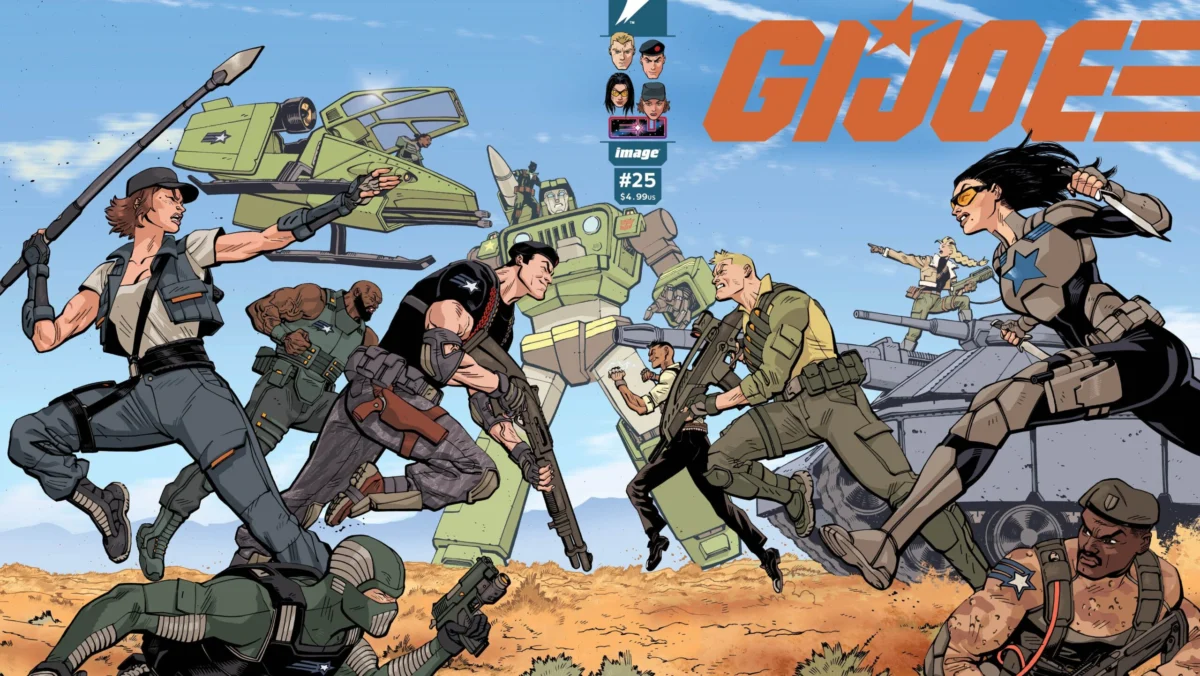
The longevity of individual issues remains a primary indicator of the brand’s health. While most comic series see sales plummet following the debut issue, the Energon Universe has displayed a rare upward trajectory. For instance, the first printing of Transformers No. 1 moved 170,000 copies, followed by an additional 180,000 units in subsequent printings. Even as the series has matured, the demand remains robust; issue No. 36 recently moved over 66,000 units, while G.I. Joe issue No. 25 saw sales of 52,462 units.
The most striking evidence of this success is the frequency of reprints. Skybound has commissioned 67 separate printings for the Transformers series alone. Furthermore, the trade paperback editions of these stories have secured a position as the company’s second-highest-selling graphic novel series, trailing only the juggernaut that is Invincible.

The Strategic Pitch and Corporate Collaboration
The acquisition of the Hasbro license was a deliberate, long-term objective for Kirkman, who holds a personal connection to the source material. Having grown up during the height of the Transformers and G.I. Joe cartoon eras, Kirkman approached the pitch to Hasbro with a level of preparation rarely seen in licensing negotiations.
"We rolled out the red carpet," Kirkman explained in a recent interview. "We got every single artist we were working with to do original drawings for the proposal. We had 10 to 15 comic book covers drawn to prove we had the creative bandwidth to handle these icons."
The pitch relied on the concept of a "surprise" shared universe, a risky proposition that required buy-in from Hasbro’s executives. By presenting Void Rivals as a new IP that would serve as the connective tissue for the legacy franchises, Kirkman demonstrated a vision that prioritized narrative cohesion over simple brand recognition. This level of institutional support from Hasbro, combined with Skybound’s established infrastructure, created a unique synergy that has allowed the creative team to operate with unprecedented freedom.
Industry Implications and Future Outlook
The success of the Energon Universe carries significant implications for the comic book industry. Traditionally, publishers have relied on constant relaunches, "event" fatigue, and numbering resets to spike sales. Skybound’s success suggests that readers are increasingly hungry for a persistent, high-quality, and interconnected narrative that does not rely on ephemeral gimmicks.
The ability of a non-Big Two publisher to dominate the market metrics serves as a wake-up call to larger competitors. As the Energon Universe matures, Kirkman has expressed an intention to model the franchise after the expansive, long-term planning seen in the DC and Marvel universes. The goal is to ensure the Energon Universe is not merely a short-term hit, but a sustainable ecosystem that can evolve over the next decade.
"We are making plans for the long haul," Kirkman stated. "The individual sales are great, but I want to make sure that we have something exciting to introduce in year five and year 10. We want to maintain that momentum."
Looking Ahead: The Sustainability Challenge
The challenge now for Skybound is maintaining this momentum as the universe expands. The introduction of M.A.S.K. in June 2026—which debuted with over 206,000 units—indicates that the appetite for expanded Hasbro lore remains high. However, the industry is notoriously volatile, and the pressure to maintain quality while managing an ever-growing stable of characters is significant.
Market analysts suggest that the Energon Universe has effectively filled a void in the current comic landscape, providing fans with a sense of "prestige" storytelling attached to recognizable, nostalgic brands. If Skybound can continue to balance the nostalgia of these properties with the innovative narrative techniques that have defined their original IPs, the Energon Universe is well-positioned to become the third pillar of the modern comic book industry.
As of late 2026, the trajectory remains decidedly positive. Whether the audience will continue to support the expansion into even more obscure Hasbro properties remains to be seen, but the baseline set by the Transformers and G.I. Joe titles provides a formidable foundation. For now, the Energon Universe stands as the most significant success story in contemporary publishing, a testament to the power of a cohesive vision and the enduring appeal of iconic storytelling.