The landscape of American television has long been defined by the shifting rules and bureaucratic adjustments of the Television Academy, yet few cycles have promised a competitive arena quite like the upcoming Primetime Emmy Awards. Scheduled for September 14, the ceremony brings together the titans of late-night television, sketch comedy, and satirical news under a single, highly contested category. With the Academy reversing previous structural changes and merging the variety talk and scripted variety categories back into a unified race, heavyweights such as Stephen Colbert, Jimmy Kimmel, John Oliver, and the enduring institution of Saturday Night Live are set to collide. This administrative consolidation occurs against a backdrop of unprecedented political pressures, industry-wide structural overhauls, and significant rule changes that have already upended the broader eligibility field.
Understanding the magnitude of this year’s competition requires examining the intricate ecosystem of the Emmys, where roughly 100 craft and guest-acting awards are distributed during the Creative Arts ceremonies a week before the main event, leaving 23 marquee trophies for the Primetime broadcast. In recent years, the Television Academy has continuously adjusted its rulebook to address the blurring lines between formats. A notable modification for this cycle prevents performers from securing a guest-acting nomination for a role in which they were previously submitted as a lead or supporting actor. This regulatory shift immediately impacted high-profile contenders, most notably resulting in the disqualification of Jon Hamm for his guest appearance on Apple’s The Morning Show, as the platform mistakenly submitted him in a category made ineligible by his 2024 supporting actor nomination for the same character. While Hamm retained eligibility in other categories, the incident underscored the rigid enforcement of Academy bylaws during an increasingly competitive awards climate.
The Evolution of the Variety Series Category
No category embodies the Academy’s structural flux quite like the variety series field. Established in 1951, the category has repeatedly undergone revisions to accommodate the distinct formats of nightly talk programs, weekly satirical news shows, and sketch-based revues. During the early 1970s, the Academy briefly instituted subcategories to separate talk shows like The Tonight Show with Johnny Carson from sketch programs like Rowan & Martin’s Laugh-In. However, the subsequent decades favored a unified category that frequently pitted mismatched formats against one another. Throughout the 1990s and 2000s, late-night programs solidified their dominance, culminating in Jon Stewart’s The Daily Show setting a historic record with ten consecutive wins.
To level the playing field, the Academy split the category in 2015 into separate awards for variety talk series and variety sketch series. This division allowed sketch shows like Inside Amy Schumer and Key & Peele to claim early victories before Saturday Night Live embarked on a six-year winning streak. Meanwhile, Last Week Tonight with John Oliver dominated the talk series category, securing seven consecutive victories before the Academy reclassified the HBO program into the scripted variety category in 2023, where it subsequently added three more trophies. With the 2026 merger of these fields, John Oliver returns to direct competition with traditional network late-night programs and Saturday Night Live, setting the stage for one of the most volatile races in television history.
Political Pressures and Late-Night Turmoil
The convergence of these programs in a single Emmy category takes on heightened significance given the turbulent political and corporate climate surrounding late-night television over the past year. The genre has found itself at the center of intense public scrutiny, corporate restructuring, and regulatory pressures, transforming routine television broadcasts into cultural flashpoints.
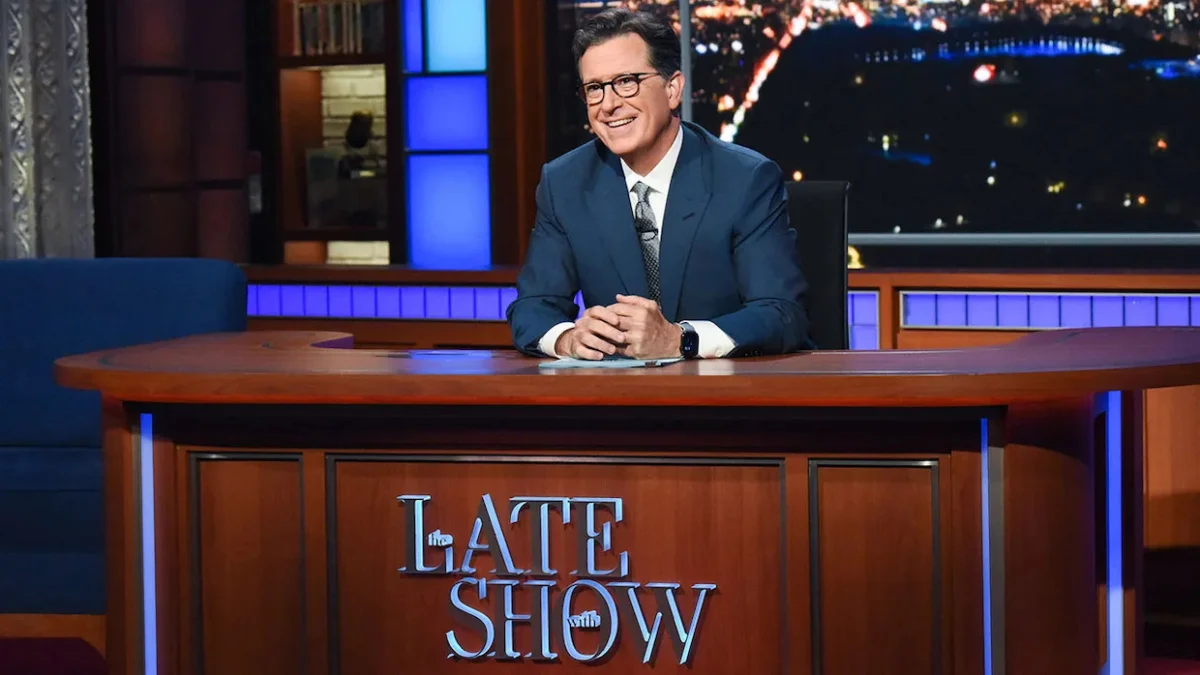
The most seismic industry development involved the conclusion of The Late Show with Stephen Colbert. Following parent company Paramount’s acquisition by Skydance Media, led by David Ellison, CBS announced the cancellation of the 33-year network staple, with Colbert’s final broadcast airing on May 21 after an 11-season run. While network executives cited financial figures indicating an annual operating loss of approximately $40 million, media analysts and industry critics frequently pointed to external factors, including Colbert’s persistent political satire targeting the Trump administration and the perceived alignment between the incoming ownership and political figures. Despite the abrupt termination, Colbert’s final season garnered widespread critical acclaim, culminating in his first individual talk series Emmy victory last September and setting the stage for a potentially emotional final campaign among Academy voters.
A parallel controversy unfolded on ABC with Jimmy Kimmel Live!. On September 17, the program was temporarily pulled from the air amid mounting pressure from the federal administration and Federal Communications Commission Chairman Brendan Carr, following remarks made by Kimmel during an opening monologue regarding conservative political commentator Charlie Kirk. Major broadcast groups, including Nexstar Media Group and Sinclair Broadcast Group, threatened to preempt the program across their affiliated stations, casting immediate doubt on the show’s future. However, the suspension sparked an immediate and sustained public backlash, resulting in widespread calls for audience boycotts and advertiser scrutiny. Under this intense pressure, ABC reversed the suspension within days, allowing Kimmel to return on September 23 to a record-breaking audience of 6.26 million viewers on television and tens of millions of views across digital platforms.
The 2026 Emmy Contenders and Strategic Implications
As voting blocks weigh the contenders, these extraordinary events are widely expected to influence the final ballot. Observers note that The Late Show enters the race with significant narrative momentum. Academy voters may view the category as a final opportunity to honor Colbert’s extensive contributions to the medium, while simultaneously registering a symbolic response to the corporate and political pressures that precipitated the show’s end.
Concurrently, Jimmy Kimmel Live!—which has maintained a consistent presence in the category for over a decade without securing a win in the primary series field—represents a viable alternative for voters motivated by the cultural defense of late-night satire. Nevertheless, any surge by the network hosts must contend with the formidable, multi-platform presence of Last Week Tonight with John Oliver. Having established a reputation for critical dominance across multiple categorical iterations, Oliver’s program remains a statistical powerhouse within the Academy.
Further complicating the race is Saturday Night Live, which navigates its 51st season following a widely publicized 50th-anniversary celebration. While the long-running NBC sketch institution has experienced high-profile cast transitions, including the departure of fan favorite Bowen Yang, the program continues to lean into absurdist humor and cultural commentary while maintaining a distinct distance from the direct political targeting that characterizes its late-night peers. Additionally, the successful international expansion of the franchise via the live London-based broadcast of Saturday Night Live UK has reinforced the enduring institutional influence of creator Lorne Michaels.
Rounding out the probable nominees is Comedy Central’s The Daily Show. Utilizing a hybrid format featuring Jon Stewart anchoring Monday broadcasts alongside a rotating ensemble of correspondents for the remainder of the week, the program continues the satirical legacy that historically defined the category. Following previous victories under Trevor Noah and subsequent nominations for the multi-host iteration, the series remains a reliable fixture on the ballot.
As the September 14 ceremony approaches, the convergence of these distinct programs highlights the enduring intersection of television entertainment, political discourse, and institutional policy. With a liberal-leaning Academy membership facing a ballot defined by industry disruption and high-profile cancellations, the outcome remains exceptionally unpredictable. Regardless of which program ultimately secures the trophy, the race guarantees a profound reflection of the cultural battles that have shaped the American television landscape over the past year.