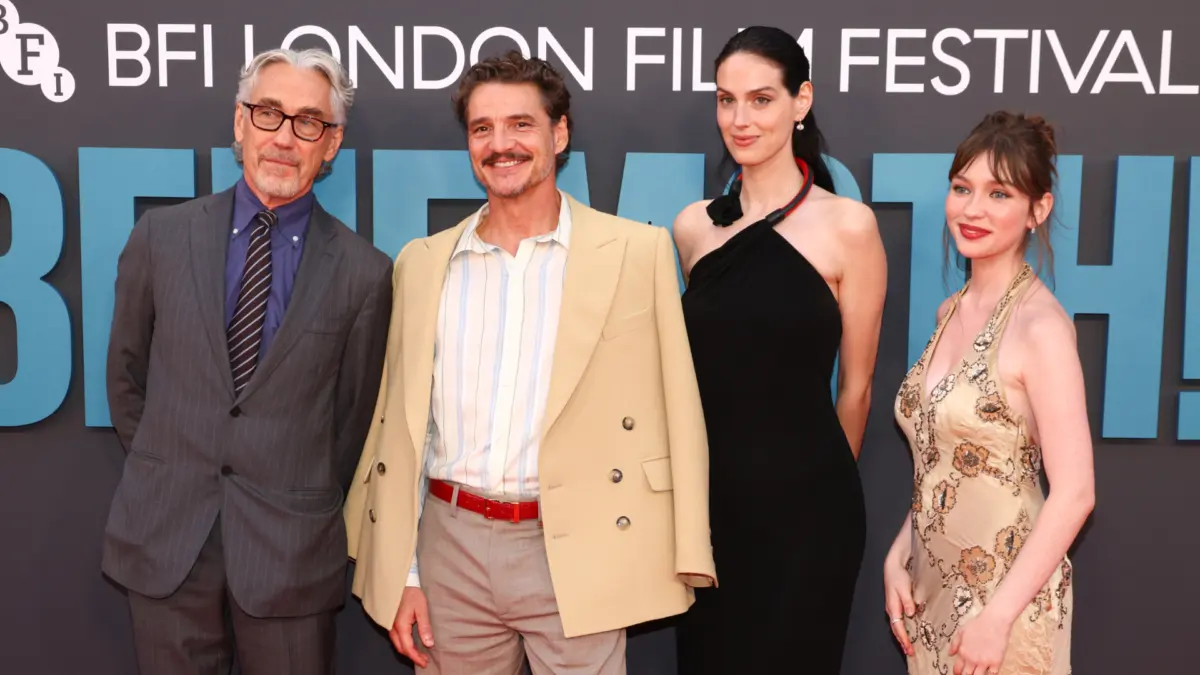
The BFI London Film Festival, now in its 70th year, has long served as a prestigious launchpad for international cinema, blending the glamour of the red carpet with the intellectual rigor of global film discourse. This week, the festival hosted a high-profile engagement featuring director Tony Gilroy and actor Pedro Pascal, who arrived in the United Kingdom to promote their latest project, the adult drama Behemoth!. For Gilroy, the film marks a significant professional milestone, representing his first feature film directorial effort in 14 years. However, the production of this character-driven drama is inextricably linked to his recent, critically acclaimed work in the Star Wars universe, specifically his role as the architect behind the Disney+ series Andor.
The Andor Effect and the Evolution of a Filmmaker
Tony Gilroy, a seasoned veteran of the industry known for his screenplay work on the Bourne franchise and his pivotal contributions to Rogue One: A Star Wars Story, spent the better part of three years helming the Andor series. The show, which aired from 2022 to 2025, achieved a level of critical consensus rarely seen in modern franchise filmmaking. Often cited by critics as the most narratively sophisticated entry in the contemporary Lucasfilm catalog, Andor provided Gilroy with a platform to experiment with political tension, slow-burn pacing, and grounded character studies.
During the press junket at London’s Royal Festival Hall, Gilroy spoke candidly about how the success of Andor directly facilitated the greenlighting of Behemoth!. According to the director, studio executives are often risk-averse when it comes to original adult dramas. By maintaining a decade-long relationship with Disney—a period he describes as being defined by "three very eccentric projects"—Gilroy was able to leverage the reputational capital gained from the Emmy-winning series to secure funding for his more personal feature film. He suggests that the studio’s willingness to back a project as nuanced as Behemoth! was a calculated stretch, one that would have been significantly more difficult to justify without the commercial and critical stability provided by his Star Wars tenure.
A New Direction: Behemoth! and Artistic Risk
Behemoth! represents a departure from the high-stakes, large-scale world-building of the galaxy far, far away. The film follows Alex Serian, played by Pedro Pascal, a gifted cellist who returns to his home city of Los Angeles after a two-decade absence. The narrative is driven by his return to care for his ailing mother and his subsequent attempt to reconcile with the fallout of a relationship from 16 years prior, involving a violinist portrayed by Eva Victor. The supporting cast, which includes Olivia Wilde, Will Arnett, Hank Azaria, and Alexa Swinton, anchors a story that focuses on the quiet, agonizing realities of missed opportunities and long-term consequences.
Gilroy’s stated intent for the project is rooted in a desire to "keep gambling" artistically. Having reached a point in his career where he could comfortably repeat the formulas that brought him past successes, he instead chose to pursue a project that defies easy categorization. His philosophy is one of constant progression; he posits that once a filmmaker achieves a level of "winning" within the industry, that momentum should be used to push boundaries rather than consolidate power.
The Method Behind the Performance
For Pedro Pascal, the transition into the character of Alex Serian required an intense, immersive preparation process. The role necessitated that the actor not only simulate the life of a professional musician but also master the physical mechanics of playing the cello. During the festival proceedings, Pascal revealed that he adopted a method-like approach to the instrument, carrying the cello with him to the gym and during daily errands.
"It was like putting myself into a relationship," Pascal explained, noting that the instrument became a constant companion. This dedication was essential to the film’s internal logic. Gilroy, ever the perfectionist, required that the musical performances be convincing enough to ground the film’s emotional stakes. For Pascal, the prospect of failing to meet this standard was "terrifying," yet the challenge of tackling a skill outside his previous experience was what drew him to the project.
The casting of Pascal itself is a testament to the serendipitous nature of Hollywood development. Oscar Isaac, another Star Wars alumnus, was originally slated to play the lead role but was forced to step down due to scheduling conflicts. When Gilroy met with Pascal to discuss the vacancy, the director arrived with the intention of reevaluating the entire project. However, the connection was instantaneous. Gilroy characterized their initial meeting not as a standard business negotiation, but as a "Hinge date"—an informal, high-stakes agreement to commit to a rigorous, shared vision for the sake of the story.
Industry Context: The State of the BFI London Film Festival
The 70th BFI London Film Festival, which spans from October 7 to October 18, has presented a diverse slate of features this year, ranging from the European premiere of Andrew Scott’s Elsinore to global festival darlings like Ink and Wild Horse Nine. The festival has become an essential barometer for the health of the film industry, showcasing a mix of auteur-driven dramas and high-budget studio projects.
Gilroy’s presence at the festival coincides with a broader conversation about the state of contemporary cinema. In his comments, the director noted that the current year has been particularly fertile for interesting, high-quality films. He cited Nathan Fielder’s documentary You Can See Everything as a highlight, reinforcing his belief that filmmakers should strive to be part of the "interesting" years in cinema, rather than worrying about the competitive nature of the box office or critical rankings.
Implications for Future Filmmaking
The collaboration between Gilroy and Pascal on Behemoth! highlights a shifting dynamic in the relationship between talent and major studios. By utilizing the platform provided by streaming giants to cultivate a brand of prestige, niche storytelling, directors like Gilroy are finding ways to bypass traditional roadblocks to original filmmaking.
The success of Andor—both as a standalone work and as a foundational tool for creative leverage—serves as a case study for how talent can negotiate creative freedom in an era dominated by intellectual property. As the industry looks toward the next decade, the success of Behemoth! may serve as a bellwether for whether adult-oriented, character-driven dramas can continue to find a foothold in an environment increasingly focused on established franchises.
For the BFI London Film Festival, the reception of the film represents another successful chapter in its history of platforming diverse voices. As the festival concludes, the focus shifts to the broader impact of these stories on global audiences and the continued, evolving careers of creators who, like Gilroy, are determined to keep "pressing their bets" in an unpredictable cinematic landscape. Whether Behemoth! achieves the same cultural saturation as Andor remains to be seen, but the intent behind the project—to prioritize creative substance over safe bets—is a sentiment that resonates deeply with both the artistic community and the audiences currently navigating a rapidly changing media landscape.