The Australian film and television industry is mourning the loss of Gary Waddell, a defining character actor whose visceral, grounded performances left an indelible mark on the nation’s cinematic landscape. Waddell, celebrated for his peerless ability to inhabit rough-edged, authentic, and morally complex characters, passed away at the age of 74. Over a career spanning nearly five decades, he transitioned from the countercultural shockwaves of 1970s underground cinema to become a respected, rock-solid fixture in mainstream television dramas and prestige feature films.
Main Facts and the Legacy of a Screen Icon
Gary Waddell’s passing marks the end of an era for Australian character acting. While rarely cast in traditional leading roles, Waddell possessed the rare gift of commanding the screen through sheer presence, turning minor supporting parts into unforgettable cinematic moments. Industry peers and critics frequently noted that Waddell required no formal theatrical training to achieve a staggering level of authenticity; his performances carried a lived-in weight that resonated deeply with audiences.
His filmography reads as a chronological map of modern Australian cinema, featuring collaborations with some of the country’s most visionary directors—including Bert Deling, Rolf de Heer, and Gregor Jordan. Whether portraying a jittery heroin addict, a small-town ne’er-do-well, or a menacing suburban neighbor, Waddell brought an uncompromising realism to every project. His death closes the chapter on a remarkable career that bridged the gap between raw, guerrilla-style social realism and polished commercial production.
A Chronological Journey: From Underground Notoriety to Mainstream Acclaim
Waddell’s ascent into the public consciousness began in the tumultuous cultural climate of the 1970s. His career chronology highlights a gradual evolution from a counterculture icon into an institutional character actor.
The 1970s: The Countercultural Awakening
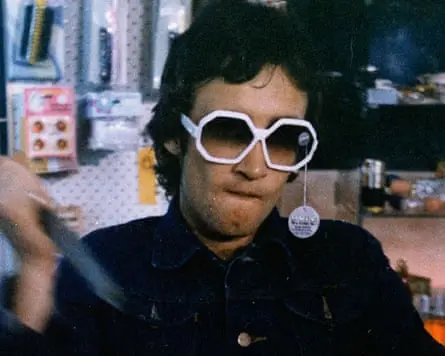
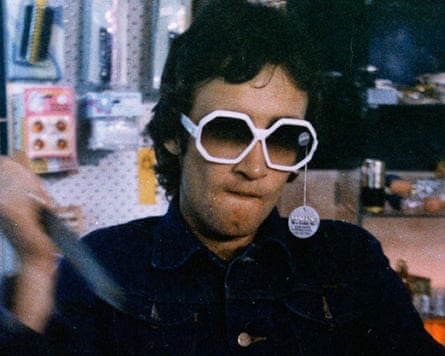
Waddell burst onto the Australian cultural scene in 1976 with a star-making, bleary-eyed turn in Bert Deling’s seminal drug drama, Pure Shit. Widely regarded as the most uncompromising and authentic film ever made regarding Australia’s heroin subculture, the production was engulfed in controversy from its inception. Its turbulent history culminated in a notorious vice squad raid during its first public screening in 1976, cementing its status as an underground legend.

In Pure Shit, Waddell played Lou, a perpetually anxious addict whose opening complaints about being without a fix for ten hours set a gritty, unvarnished tone. That same year, Waddell appeared in Oz: A Rock’n’Roll Road Movie, further establishing his association with the countercultural cinematic wave that challenged the conservative norms of Fraser-era Australia. By the close of the decade, he also appeared in The FJ Holden (1977), cementing his reputation as a face of the Australian working-class milieu.
The 1980s and 1990s: Navigating Industry Shifts and Self-Doubt
Despite his early impact, Waddell’s career faced periods of stagnation, largely compounded by personal struggles and substance abuse. In later interviews, Waddell candidly admitted to "sabotaging" his early career and suffering from severe imposter syndrome. He confessed that for more than a decade, he viewed his career as an elaborate "con job," genuinely believing he did not know how to act. It was not until the late 1980s, following validation from formally trained peers who recognized the intuitive brilliance of his screen presence, that Waddell fully embraced his identity as a legitimate artist.
During the 1980s and 1990s, as the Australian film industry underwent a renaissance supported by the Australian Film Commission, Waddell transitioned smoothly into the booming television landscape. He became a ubiquitous face across the golden age of Australian small-town police procedurals and serial dramas, logging credits in foundational series such as A Country Practice, E Street, Blue Heelers, and Water Rats.
The 2000s and 2010s: A Resurgence in Prestige Cinema
The turn of the millennium heralded a resurgence for Waddell, who found himself repeatedly cast in critically acclaimed feature films that revitalized gritty Australian crime and drama. His film credits from this period include prominent turns in Chopper (2000), Dirty Deeds (2002), Gettin’ Square (2003), Black and White (2002), and Charlie’s Country (2013).
His career pinnacle during this era arrived in 2012 when auteur Rolf de Heer cast him as the titular character in the dark black comedy The King Is Dead!. Playing a drugged-up, charismatic, yet deeply unsettling suburban neighbor opposite Dan Wyllie and Bojana Novakovic, Waddell delivered a performance that dominated critical discourse. The role earned widespread acclaim from prominent film critics, including Margaret Pomeranz, Evan Williams, Richard Kuipers, and Jake Wilson, who hailed it as the ultimate encapsulation of Waddell’s unique screen persona.
Final Years and Final Screen Performance
Waddell maintained a steady working pace well into his later years. His television credits expanded to include modern hits such as Bad Cop Bad Cop, Home and Away, City Homicide, Upright, and Rake. He also made notable appearances in contemporary cinematic thrillers like The Stranger (2022). Waddell’s final screen performance came in Rolf de Heer’s haunting, meditative 2022 dystopian drama, The Survival of Kindness, ensuring that his cinematic legacy concluded alongside one of his most trusted creative collaborators.
Critical Reception and Industry Impact
Throughout his career, Gary Waddell commanded the respect of rigorous film critics and discerning directors alike. While mainstream accolades such as major acting awards largely eluded him during his peak years—prompting vocal public campaigns from critics advocating for his recognition—his true metric of success lay in his undeniable utility to directors seeking absolute authenticity.
Film historian and former Crikey critic noted that what separated Waddell from contemporaries was an innate cinematic intelligence. While formally trained actors spent years mastering naturalism on screen, Waddell possessed it inherently. His portrayal of Lou in Pure Shit established a template for social realism that influenced generations of independent filmmakers seeking to depict the margins of Australian society without sentimentality or moralizing. Furthermore, his collaboration with Rolf de Heer on The King Is Dead! demonstrated that Waddell could anchor a narrative with a performance that balanced dark comedy, genuine threat, and unexpected human vulnerability.
Broader Cultural Implications and the Loss of a Working-Class Acting Tradition
The passing of Gary Waddell invites broader reflection on the changing nature of the Australian screen industry and the fading archetype of the rugged, lived-in character actor. Waddell belonged to a generation of performers whose physical appearance, idiosyncratic speech patterns, and lived experiences directly reflected the social realities of the characters they played.
As the global entertainment industry increasingly homogenizes casting practices, the space for idiosyncratic, rough-around-the-edges character actors has narrowed. Waddell’s career serves as both a testament to and a product of a specific era in Australian cinema—one defined by risk-taking, gritty regionalism, and a refusal to sanitize the darker edges of national identity. His ability to move seamlessly between exploitative countercultural dramas and refined auteur cinema demonstrated a versatility that few of his peers could match.
Ultimately, Gary Waddell’s legacy endures not merely through his extensive filmography, but through the profound impression he left on those who watched him. From the vice squad-raided screenings of 1976 to the pristine digital canvases of 2022, Waddell remained a vital, electrifying presence—a consummate professional whose work elevated every frame he inhabited. He is remembered by colleagues and audiences alike as a humble, intelligent, and deeply gifted artist who permanently enriched the cultural fabric of Australian storytelling.