When the critically acclaimed British sitcom Ghosts broadcast its final series-closing episode in December 2023, millions of viewers and the core creative team alike assumed the spectral residents of Button House had been laid to rest permanently. The BBC production, which chronicled the chaotic coexistence between living homeowner Alison—portrayed by Charlotte Ritchie—and a diverse ensemble of centuries-old phantoms, concluded with a seemingly definitive resolution. Alison and her husband, Mike (played by Kiell Smith-Bynoe), opted to sell the crumbling, historic estate to a hotel developer, guided by the very spirits who had haunted their lives and property for years.
For the production crew and the six-person writer-performer troupe, saying goodbye to the universe they had spent half a decade constructing was an intensely emotional ordeal. Yet, the finality of the television finale has proven to be short-lived. The franchise is officially returning, bypassing traditional broadcast television for a feature-length cinematic installment titled Ghosts: The Possession of Button House.
The Genesis of the Cinematic Revival
The transition from a closed television narrative to a theatrical feature film was neither planned nor anticipated by the show’s creators. Mathew Baynton, who co-created the series and starred as the lovesick romantic poet Thomas Thorne, admitted that the television series concluded with absolute finality and zero intention of a revival. The emotional weight of the final day of principal photography was heavy for the cast, who broke down in tears upon wrapping the series.
Despite this definitive stop, external forces quickly began nudging the creators toward a continuation. Alison Carpenter, an executive producer at Monumental Television, initially floated the concept of securing film financing to the core creative team. At first, the suggestion was promptly dismissed.
Laurence Rickard, a co-creator and star who portrayed both the caveman Robin and the decapitated 16th-century nobleman Sir Humphrey Bone, expressed a common industry fear regarding television-to-film adaptations. The primary apprehension was that a cinematic extension would inadvertently morph into an overextended ninety-minute television episode, lacking the necessary narrative propulsion, scale, and cinematic stakes required for a theatrical release.
However, persistent encouragement from production executives eventually persuaded the core troupe—comprising Baynton, Rickard, Simon Farnaby, Martha Howe-Douglas, Jim Howick, and Ben Willbond—to convene for an official brainstorming session. What began as a reluctant meeting on a weekday morning at 9:30 a.m., with the consensus leaning heavily toward declining the project, transformed dramatically within ninety minutes. By 11:00 a.m., the creative synergy had reignited, and the writers realized the concept was not only viable but essential to pursue.
Crafting the Narrative: The Mechanics of Possession
The central narrative hurdle for the writers was formulating a premise that elevated the material beyond standard television formatting while honoring the established rules of the Ghosts universe. Because the television series ended with Alison and Mike selling Button House, the property was no longer their primary residence, instantly altering the character dynamics.

The breakthrough came via the conceptual mechanism of spiritual possession. By allowing one of the spectral entities to temporarily inhabit a living human vessel, the narrative unlocked the capability for a ghost to physically leave the geographic boundaries of the Button House estate. This single plot device immediately introduced elevated stakes, a literal ticking clock, and a structured sense of urgency that defined classic adventure cinema.
Baynton noted that the creative touchstones for the film were drawn heavily from seminal coming-of-age and high-concept films of the creators’ youth. Structural and tonal inspirations included the body-swap mechanics of the 1988 fantasy comedy Big, the temporal stakes and fading vitality seen in Back to the Future, and the youthful camaraderie and unauthorized trespassing elements characteristic of The Goonies.
This blending of high-concept cinematic tropes with the show’s signature deadpan absurdity—such as utilizing a Ouija board to deliver politically satirical commentary—ensured the film retained its distinct comedic voice while expanding its visual and narrative scope.
Production Timeline and Collaborative Writing Dynamics
The production timeline for Ghosts: The Possession of Button House stands as an exceptional feat within the television and film industry. Director Simon Hynd, who helmed several episodes of the television series, was only briefed on the cinematic project late in 2023, initiating a remarkably compressed pre-production and filming schedule.
Unlike the television series, where individual episodes were frequently written by rotating permutations of the six-member writing collective, the feature film carries a shared credit across all six creators. The collaborative process relied on organic availability and cyclical critique.
According to Baynton, the writing room operated through fluid attendance where members would cycle in and out based on scheduling constraints. This dynamic inadvertently solved narrative bottlenecks. When a specific writer became entrenched in a creative deadlock—unable to choose between two problematic plot directions—a colleague returning from a brief absence would provide an external perspective, instantly identifying a third, optimal solution.
This seamless collaboration is rooted in a nearly two-decade professional history. The core creative collective first forged their partnership while working on the multi-award-winning historical sketch comedy series Horrible Histories, which debuted on the BBC in 2009. Their collaborative efforts subsequently extended into the fantasy-comedy television series Yonderland (2013–2016) and the historical feature film Bill (2015).
Mainstream television history rarely features an ensemble writing and performing troupe of this magnitude maintaining artistic cohesion and continuous employment for close to twenty years. While historical comedy troupes such as Monty Python eventually fractured creatively and personally, the Ghosts team has consistently prioritized collaborative stability. Rickard noted that the production hiatus following the 2023 series finale marked the first time in eighteen years that the group had not actively collaborated on a shared project.
Expanding the Ensemble and Humanizing Mike
While the spectral residents remain the focal point of the franchise, the film introduces significant adjustments to the human characters, most notably Kiell Smith-Bynoe’s portrayal of Mike Cooper-Smith. Throughout the five-television-series run, Mike occupied a unique and often isolating dramatic position as the only primary character entirely oblivious to the supernatural world, rendering him unable to interact directly with the ghosts inhabiting his home.
In the cinematic adaptation, Mike’s narrative arc receives a substantial upgrade. Stripped of the primary burden of homeownership at Button House, Mike and Alison are swept back into the chaos alongside the ensemble. Smith-Bynoe expressed enthusiasm for the character’s expanded utility, noting that the film finally allows Mike to actively contribute to resolving the plot rather than serving merely as a comedic straight man reacting to unseen supernatural phenomena.
The climax of the film presented technical and performance challenges for Smith-Bynoe, requiring precise physical acting as characters both living and dead fluctuated between physical states of tangibility and invisibility. Navigating these multi-layered spatial interactions demanded ongoing spatial direction from Hynd to ensure continuity.
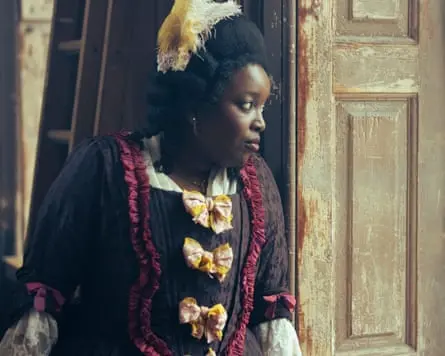
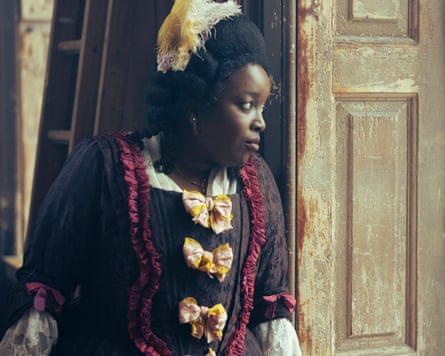
In addition to returning personnel, the film introduces a younger cohort of actors to the ensemble. The inclusion of new talent, notably featuring rising young performers such as Scott Ellis Watson, injected a distinct generational dynamic into the production. Lolly Adefope, who portrays the 18th-century socialite Kitty Higham, embraced the role of an unofficial generational bridge on set, noting that her interactions with the younger cast members mirrored a cultural exchange bridging millennial and Generation Z sensibilities.
Broader Implications and the Future of the Franchise
The commercial and critical implications of translating a beloved British television sitcom into a cinematic event are substantial. In an era where linear television ratings face continuous contraction, successful sitcoms frequently struggle to find lucrative exit strategies outside of streaming syndication. By transitioning into a feature film, the creators of Ghosts have demonstrated a viable commercial model for concluding long-running broadcast properties with high production values and theatrical distribution potential.
Furthermore, the international success of the Ghosts intellectual property—which spawned a critically acclaimed American adaptation on CBS—highlights the enduring global appeal of high-concept supernatural farce combined with character-driven domestic comedy. The film preserves the idiosyncratic British cultural specificity of the original series while adopting the universal narrative stakes required for international theatrical exhibition.
As for the long-term future of the franchise, the creators maintain a pragmatic yet guarded stance regarding further cinematic installations. While Baynton and Rickard acknowledge that the film serves as a definitive "swan song" for the primary narrative arc of Button House, neither ruled out future collaborations entirely, provided creative inspiration and financial backing align.
However, physical realities impose strict limitations on the longevity of the premise. Because supernatural entities do not age, the passage of time presents an escalating continuity challenge for human actors portraying ageless historical spirits. As Baynton remarked regarding his ongoing portrayal of the youthful 19th-century poet Thomas Thorne, biological aging eventually supersedes theatrical suspension of disbelief—leaving open the possibility of localized character spin-offs, such as Rickard’s caveman Robin, where natural aging aligns seamlessly with prehistoric character design.