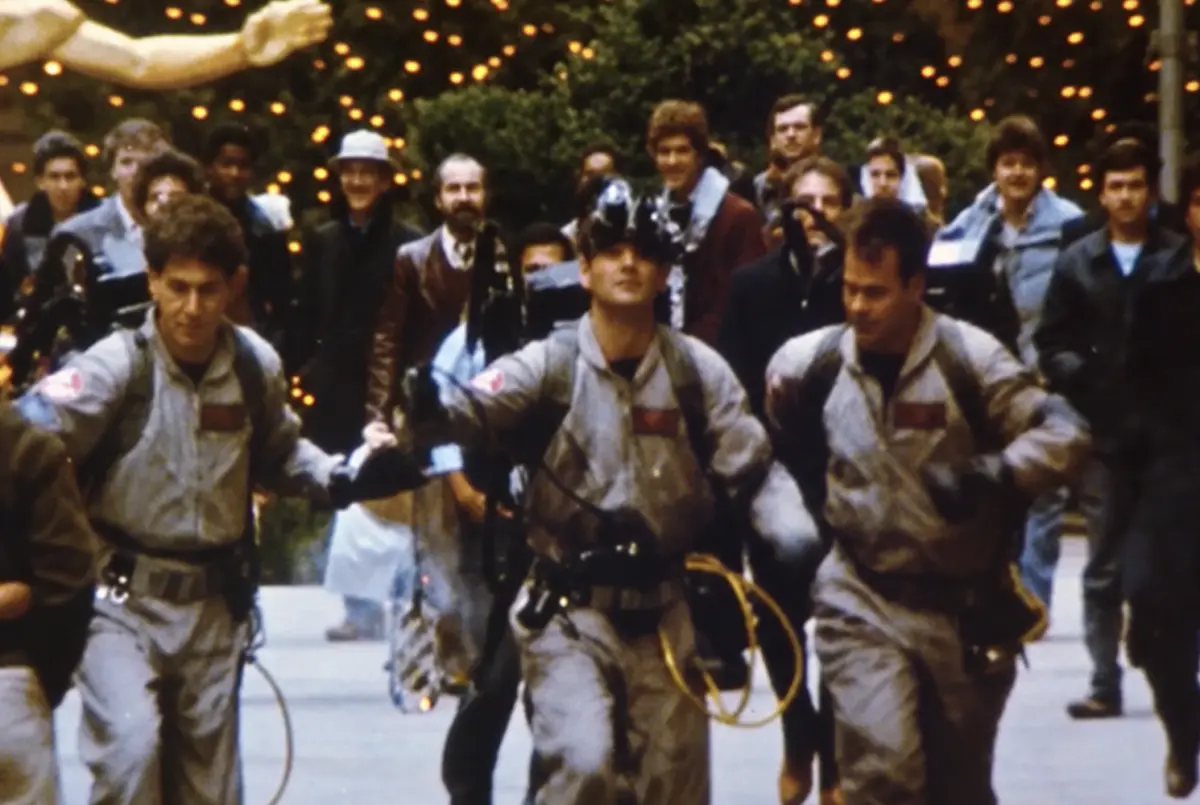
The 1984 release of Ivan Reitman’s Ghostbusters stands as a watershed moment in the history of science-fiction comedy, fundamentally altering the landscape of pop culture and film marketing. Central to the film’s massive commercial success was its iconic, chart-topping theme song composed and performed by Ray Parker Jr. However, recent archival efforts have brought renewed attention to a forgotten piece of cinematic history: the film’s original teaser trailer, which premiered in theaters months before the iconic synth-pop anthem was finalized, featured a completely different musical composition.
The Mystery of the Unidentified Theme
The discovery of this alternate musical score, recently recirculated by Ghostbusters News, highlights a rare instance where the marketing materials for a blockbuster film were distributed with a temporary, placeholder soundtrack. While fans have spent four decades inextricably linking the Ghostbusters brand to Ray Parker Jr.’s infectious, Oscar-nominated track, the early promotional materials utilized a soundscape that lacked the definitive pop-hook identity that would eventually help propel the film to its $295 million worldwide gross.
The identity of the performer behind this specific teaser track remains a subject of debate among film historians and music archivists. Despite extensive documentation by resources such as Spook Central, the piece—a driving, upbeat track that lacks the lyrical punch of the later hit—has yet to be definitively attributed to a specific musician or session artist. It stands as an atmospheric artifact, preserved through the transition from analog home media to digital restoration.
Historical Context and Production Timeline
To understand the significance of this audio disparity, one must look at the production schedule of Ghostbusters in the early 1980s. The film was famously rushed into production, with a tight turnaround between the completion of principal photography and the mid-1984 release date.
The teaser trailer was prepared for theatrical distribution well before the film’s post-production was finalized. During this period, it was standard practice in Hollywood to utilize stock music or temporary demos for marketing materials while the official soundtrack was still being commissioned. Ray Parker Jr. was famously brought in late in the process to deliver a song that could incorporate the film’s title into its chorus, a mandate that resulted in the now-legendary composition.
The chronology of these musical efforts is as follows:
- Early 1984: The original teaser trailer is cut for theatrical distribution, featuring an unknown, non-lyrical composition.
- Spring 1984: Ray Parker Jr. is commissioned to write a theme song, with the specific requirement that the title be included in the lyrics.
- June 1984: Ghostbusters is released; the Ray Parker Jr. song becomes a global phenomenon, reaching number one on the Billboard Hot 100.
- 1989: The original teaser trailer is preserved on the Criterion Collection LaserDisc release, marking one of the first times the public could compare the two versions side-by-side.
- 2019: The trailer is included in Sony’s 4K/Blu-ray Ghostbusters 1 & 2 collection, solidifying its place in the franchise’s official archival history.
Distinguishing Between Unused Demos
A common point of confusion among enthusiasts involves the attribution of various rejected tracks to this teaser. It is critical to distinguish the unidentified teaser music from other notable rejected themes, most notably the work of Glenn Hughes (of Deep Purple and Trapeze) and Pat Thrall.

In 2021, Pat Thrall provided clarity on this matter by sharing the original demo tape of their composition, which had been misidentified in various online forums for years. The Hughes-Thrall demo is a distinct, hard-rock-influenced track that was clearly developed as a serious contender for the film’s official theme. Unlike the unidentified instrumental used in the teaser, the Hughes-Thrall track was a fully produced song that ultimately failed to secure the director’s approval, likely due to a shift in tone toward the more pop-oriented direction eventually provided by Parker. The existence of these multiple competing tracks underscores the frantic, iterative nature of the film’s creative development.
The Evolution of Film Marketing
The presence of a different theme in the Ghostbusters teaser serves as a case study in the evolution of film marketing. In the 1980s, the "teaser" was a tool used to build initial awareness, often utilizing whatever assets were available at the time of the trailer’s completion. Today, major studio films operate under a unified branding strategy where even the marketing music is finalized months in advance to ensure brand consistency across all platforms.
The "lost" theme also highlights the role of home media in preserving the history of film. Without the inclusion of the trailer on the 1989 Criterion LaserDisc, this piece of musical history might have been lost to the archives. The fact that this footage was later ported to high-definition digital formats allows modern viewers to experience the trailer as audiences did in 1984, before the cultural phenomenon had fully crystallized.
Implications for Archival Research
The ongoing effort to identify the performer of the teaser track reflects a broader trend in pop-culture archaeology. As fans and archivists gain access to production documents and studio outtakes, the "definitive" history of major films is increasingly being nuanced.
For industry professionals, the Ghostbusters teaser provides a reminder of the importance of metadata and documentation during the production process. When studios fail to document the sources of temporary or placeholder music, it creates a vacuum of information that can take decades to resolve. In this instance, the missing credit is not merely a trivia point; it is a missing link in the creative history of one of the most successful franchises in cinema.
Conclusion: A Legacy Refined
While the unidentified teaser song does not carry the weight or the cultural significance of the final Ghostbusters theme, its existence provides a fascinating glimpse into the high-pressure environment of mid-80s blockbuster filmmaking. It serves as a reminder that the iconic products audiences love are often the result of a long, experimental process involving multiple discarded ideas and temporary solutions.
As digital restoration continues to bring these archival materials to a wider audience, the story of the Ghostbusters teaser remains a testament to the fact that even the most famous movies have secrets hidden in their earliest drafts. Whether or not the composer of the teaser track is ever officially identified, the footage remains a vital piece of the Ghostbusters legacy, demonstrating the distance between an early creative impulse and the final, enduring cultural product. For the casual viewer, it is a curious anomaly; for the historian, it is a necessary piece of the puzzle that makes up the multifaceted history of Hollywood’s golden age of supernatural comedy.