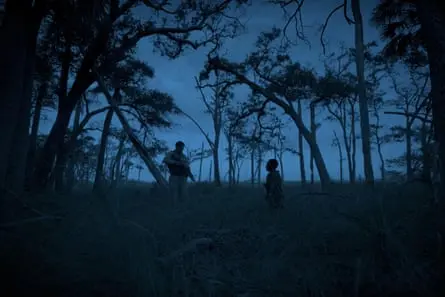
Decades after the final helicopter lifted off from the roof of the US embassy in Saigon, the American collective memory of the Vietnam War remains dominated by iconic imagery: green-bereted Green Berets, elite Navy SEALs, and mechanized infantry cutting through dense vegetation. Yet, tucked away in the classified archives and operational ledgers of the conflict is a deeply consequential chapter involving the US Army’s long-range reconnaissance patrols, or LRRPs. Among these high-stakes units, one specific detachment—team 2/6 of Company F, 51st Infantry—pioneered a path as the military’s first all-Black special operations team. Directed by filmmaker JM Harper and adapted from Ed Emanuel’s 2003 memoir, the documentary Soul Patrol brings this extraordinary and haunting piece of military history into the public consciousness.
Main Facts and the Genesis of Team 2/6
Operating behind enemy lines required a specific breed of soldier. LRRP teams typically consisted of six to eight volunteers dropped deep into hostile territory to track supply routes, map enemy positions, and coordinate artillery or airstrikes. Stealth was absolute. Direct engagement was strictly discouraged; their objective was to observe, report, and vanish before a superior force could isolate them.
For Black American soldiers during the late 1960s, securing a position in such an elite, high-risk unit was an uphill battle. The United States military had been officially integrated by executive order in 1948, but institutional racism, entrenched prejudice, and subtle systemic barriers persisted on bases and battlefields alike. Despite these hurdles, team 2/6—derogatorily referred to by some detractors within the ranks by the euphemism "soul patrol"—carved out a reputation for exceptional daring and tactical execution.
Composed of young men seeking to prove their valor, loyalty, and capability as elite soldiers, these volunteers volunteered for missions that pushed human endurance to its absolute limits. Their story, however, is not merely one of battlefield heroism. It is a profound examination of institutional betrayal, enduring psychological trauma, and the complex reality of serving a nation riven by profound social upheaval.
Chronology of a Fateful Reconnaissance Mission
The central narrative anchor of Soul Patrol centers on a harrowing mission executed in the summer of 1968. Dispatched into Cu Chi—a notorious Viet Cong stronghold situated northwest of Saigon—team 2/6 was tasked with mapping the intricate, subterranean tunnel networks that had served as a staging ground for the devastating Tet Offensive earlier that year.

As the operatives maintained their deep-cover observation post, circumstances rapidly deteriorated. Heavy mortar rounds began to fall, and full platoons of North Vietnamese soldiers swept through the area in systematic sweeps, attempting to flush out hidden spotters. Decades later, Emanuel recalled the chilling realization that the enemy forces were acutely aware of their presence. Through a strange twist of battlefield dynamics, the opposing commander opted not to close in immediately, effectively showing a degree of operational mercy.
Team 2/6, however, was bound by the unyielding protocols of special reconnaissance. Their orders demanded absolute silence: they were required to gather intelligence, report exact coordinates, and wait for extraction without revealing their position. Once the team was safely exfiltrated, US forces unleashed devastating artillery barrages and massive airstrikes upon the coordinates. Shortly thereafter, the military initiated the widespread tactical spraying of Agent Orange, stripping the dense jungle canopy down to a desolate, chemical wasteland.
The mission succeeded from a tactical standpoint, but the human cost was catastrophic. The surviving members of team 2/6 carried an overwhelming burden of survivor’s guilt, haunted by the destruction unleashed upon the terrain and the psychological weight of the intelligence they provided.
Supporting Data and Demographic Realities on the Battlefield
The experiences of team 2/6 must be viewed within the broader statistical context of African American participation in the Vietnam War. According to historical analyses by the Department of Defense and academic researchers, African Americans served in disproportionately high numbers relative to their percentage of the total US population, particularly during the early and middle phases of the conflict.
During the peak years of the draft between 1965 and 1969, Black soldiers frequently accounted for a higher percentage of combat infantry casualties than their white counterparts. Veteran journalists such as Jesse Lewis, who covered the conflict for the Washington Post, documented these stark disparities from the front lines. Lewis noted that in numerous frontline combat units, the proportion of Black casualties was double the rate seen in the broader military demographic.
Many of these soldiers were volunteers. Impelled by a desire to demonstrate their patriotism, establish their standing as elite combatants, and defy the second-class citizenship awaiting them back home, these young men stepped forward for hazardous assignments. Yet, upon completion of their tours, many were flown back to the United States within a 48-hour window, plunging them abruptly from active combat zones into peaceful domestic environments without any formal psychological deprogramming or decompression protocols.
Official Responses and Institutional Context
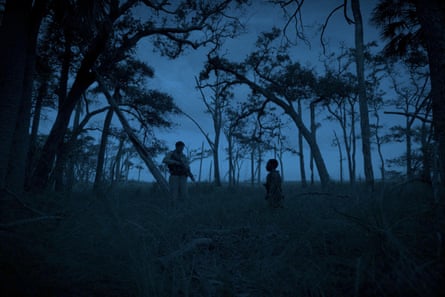
The United States military of the Vietnam era was entirely unequipped to address the psychological wounds of its personnel, let alone the compounded trauma experienced by minority soldiers who navigated a dual-front war. While white veterans often faced societal indifference or hostility upon returning to an increasingly anti-war domestic populace, Black veterans encountered an even more complex social landscape. They returned to a homeland torn apart by civil rights struggles, urban unrest, and deep-seated systemic discrimination.
Official military policy at the time recognized "combat fatigue" or "shell shock" primarily through rudimentary diagnoses, failing to systematically track or treat what is now comprehensively understood as Post-Traumatic Stress Disorder (PTSD). The abrupt transition from the hyper-vigilant environment of deep-reconnaissance patrols in the Vietnamese jungle to civilian life in towns across America left veterans isolated. Family members frequently bore the brunt of this unaddressed trauma, noting how sudden loud noises, celebratory fireworks, or routine civic events could instantly trigger intense, combat-ready defensive responses.
Broader Impact and Implications
The release of archival projects and documentaries like Soul Patrol carries significant implications for modern military history and sociology. By bridging the gap between raw archival material—including Super 8mm footage and contemporary interviews—and innovative narrative staging, the film challenges traditional depictions of the Vietnam War.
Sociologists and military historians point out that projects like this help dismantle monolithic historical narratives, restoring the specific identities, struggles, and contributions of minority service members who served under extraordinary constraints. Furthermore, the documentary sheds vital light on the long-term societal costs of modern warfare, illustrating how unhealed psychological wounds cascade across generations.
Ultimately, the legacy of team 2/6 transcends the tactical victories and defeats of the Vietnam War. It stands as a testament to the complex bonds forged in extremis—where soldiers placed their lives entirely in the hands of their peers—and serves as an enduring reminder of the heavy, often invisible price paid by those who walk the razor’s edge behind enemy lines.