The stark, often unsettling, vastness of America’s nocturnal country roads has long served as a fertile ground for cinematic dread. From the primal terror of a lone vehicle stalked by an unseen force in Steven Spielberg’s Duel to the chillingly nihilistic encounters in Robert Harmon’s The Hitcher and the visceral thrills of Joy Ride, this specific brand of Americana horror taps into a universal anxiety: the vulnerability of isolation, the creeping unease of distant headlights, and the unsettling stretches of darkness between sparse points of light. Director André Øvredal’s latest offering, Passenger, endeavors to join this lineage of road-bound terrors, aiming to capture that specific atmospheric dread. While moments of technical prowess and stylistic flair are evident, the film ultimately struggles to navigate its own narrative landscape, leaving audiences with a journey that, for much of its runtime, feels more like a frustrating detour than a compelling destination.
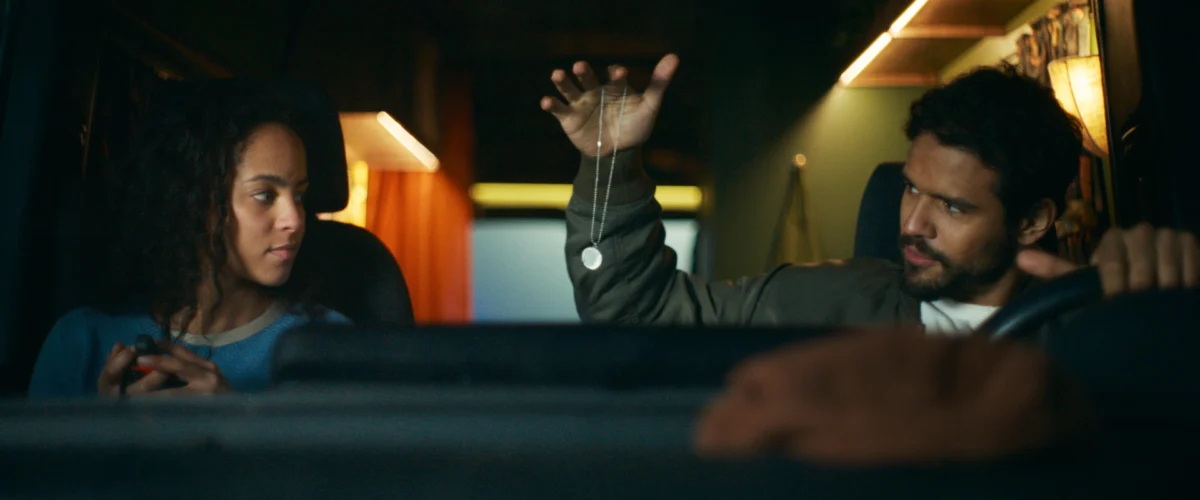
The film centers on Tyler (Jacob Scipio) and Maddie (Lou Llobell), a young couple who have embraced a nomadic lifestyle, choosing to live out of a van and traverse the country. Their transient existence takes a sinister turn when they witness a roadside incident and subsequently find themselves "marked" by a spectral entity known only as the Passenger, portrayed by Joseph Lopez. This figure operates within the film’s constructed folklore as an arbiter of road rules, punishing those who transgress his unwritten laws. The Passenger then embarks on a campaign of psychological and physical torment, toying with the couple before enacting deadly consequences.
![‘Passenger’ Gets Mangled by Its Own Mechanics [Review]](https://www.dreadcentral.com/wp-content/uploads/2026/05/passenger111.jpg)
Thematic Underpinnings and Missed Opportunities
At its core, Passenger presents a compelling thematic premise. The idea of a couple who has deliberately chosen a life of rootlessness, of constant movement and transient existence, being targeted by an entity whose very nature is tied to the act of passing through, offers rich metaphorical territory. The film attempts to weave in deeper explorations of attachment, the challenges of incompatibility within a relationship, and the existential weight of choosing a life without anchors. These elements, if fully realized, could have elevated Passenger beyond a mere genre exercise into a more profound commentary on modern relationships and societal detachment.
However, the execution falters. Despite the promising foundation, the narrative fails to fully capitalize on its potential. The film seems to acknowledge the inherent horror of the open road, the isolation it breeds, and the psychological toll it can take. Yet, Passenger often feels like it is treading familiar thematic ground without discovering any truly novel insights or narrative twists. This leads to a sense of déjà vu for seasoned genre fans, where the expected beats are hit, but without the fresh perspective needed to make them resonate.
Craftsmanship and Atmospheric Strengths
Credit must be given to André Øvredal’s directorial vision, which brings a significant level of technical expertise to Passenger. Known for his work on The Autopsy of Jane Doe, Scary Stories to Tell in the Dark, Trollhunter, and The Last Voyage of the Demeter, Øvredal demonstrates a clear understanding of atmospheric horror. This is further amplified by the work of cinematographer Federico Verardi and the evocative score from veteran horror composer Christopher Young.
![‘Passenger’ Gets Mangled by Its Own Mechanics [Review]](https://www.dreadcentral.com/cdn-cgi/image/width=788,height=444,fit=crop,quality=75,gravity=auto,metadata=none,format=auto,onerror=redirect/wp-content/uploads/2026/05/passenger111.jpg)
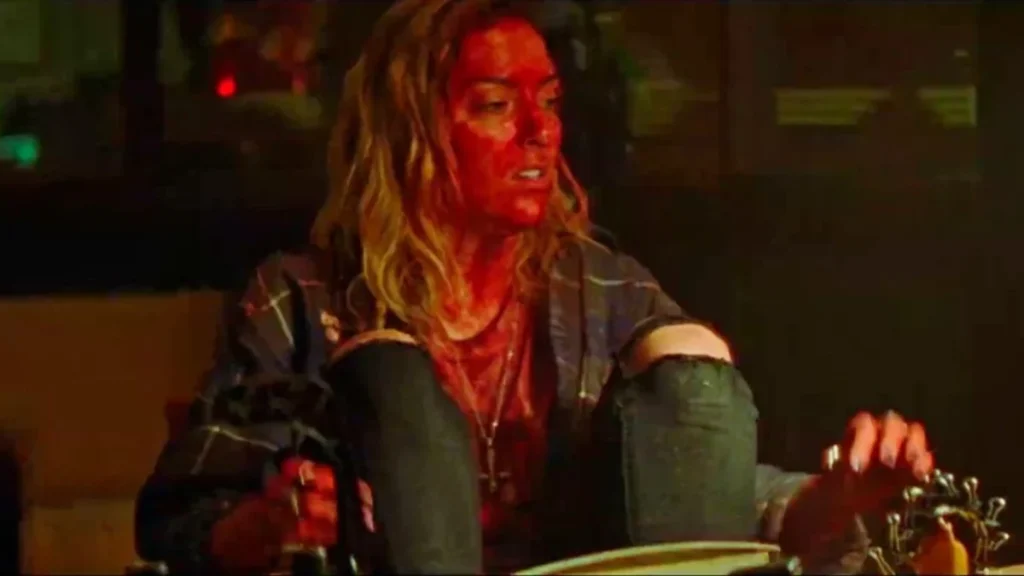
The film boasts several visually striking set pieces that effectively build tension and deliver genuine scares. The opening sequence, in particular, is a masterclass in sustained, patient, and intense horror. It meticulously establishes the film’s unsettling tone and the inherent dangers of the road at night. A standout scene later in the film features Tyler and Maddie watching a movie projected onto a fabric screen in the woods. The projected beam itself becomes a source of creative and unsettling scares, highlighting the film’s potential when it leans into its visual storytelling and stylistic flourishes. Through careful attention to setting, pacing, and aesthetic, Øvredal repeatedly crafts moments that underscore the stark beauty and inherent menace of remote, nocturnal landscapes. The film’s commitment to a striking, remote-road-at-night aesthetic is undeniably its strongest asset.
Narrative Stumbles and Mechanical Weaknesses
Despite the visual and atmospheric strengths, the narrative structure and thematic development of Passenger prove to be significant hindrances. The film’s reliance on a set of in-world rules for the Passenger, while a common trope in mechanics-driven horror, feels underdeveloped and ultimately unsatisfying. Rules such as "don’t stop for someone on the side of the road" are presented, but the film offers little in the way of compelling reasoning or intentionality behind them.
For a pulpy, rule-driven horror film to succeed, these mechanics need to be not only effective but also purposeful, serving as the engine for the emotional narrative. In Passenger, however, the rules feel arbitrary and lack the depth required to carry the film’s emotional weight, which itself is described as barely existing. A more robust exploration of the ethical implications of transient living and the emotional complexities of a relationship tested by incompatibility would have benefited greatly from rules and layers that carried genuine symbolic or thematic significance. Instead, the established rules feel superficial, failing to imbue the conflict with the necessary substance.
![‘Passenger’ Gets Mangled by Its Own Mechanics [Review]](https://www.dreadcentral.com/cdn-cgi/image/width=788,height=328,fit=crop,quality=75,gravity=auto,metadata=none,format=auto,onerror=redirect/wp-content/uploads/2026/04/PSNGR_FRAME_010R.jpg)
Pacing and Antagonist Design Issues
The film’s structural issues extend to its pacing. The set pieces, rather than building organically upon one another, often feel like self-contained announcements. They play out, and then the stage is cleared for the next encounter, leading to a disjointed and clunky rhythm. This "stop-start" quality prevents the film from gathering the narrative momentum that its premise desperately needs. The transitions between scenes can feel abrupt, akin to the awkward scene changes in a school play, hindering the overall flow and immersion.
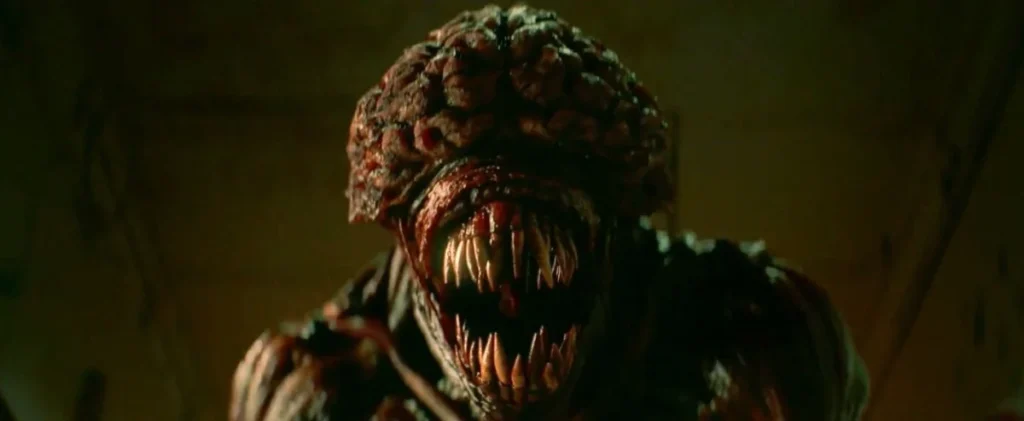
The antagonist, the Passenger, also struggles to maintain the level of menace required to truly frighten the audience. While the character works effectively in silhouette or at a distance, when brought into closer focus, the design leans towards a ghoulish, derivative aesthetic. The attempt to evoke something archetypal or ancient ultimately falters, veering into territory that feels more goofy than genuinely terrifying, especially in comparison to recent horror figures like the antagonist in Longlegs. This visual misstep undermines the intended fear factor and detracts from the film’s overall impact.
The Unsettling Insertion of Religious Horror
Perhaps one of the most perplexing aspects of Passenger is its incorporation of religious horror elements. This particular facet of the film lands flat and feels incongruous with the established narrative. The religious themes do not seem to organically emerge from the plot or align with the road-folklore register the film otherwise attempts to cultivate. American road horror has its own rich tapestry of mythology, including ghost trucks, phantom hitchhikers, and even pacts made at metaphorical crossroads. Passenger has these established tropes readily available but instead opts for a Catholic-inspired register that feels disconnected from the onscreen events. This choice raises suspicions that the religious elements may have been a late addition, potentially a cynical attempt to capitalize on the recent financial success of religious horror films, rather than an integral part of the story’s organic development. The lack of organic connection leaves this aspect feeling forced and ultimately ineffective.
![‘Passenger’ Gets Mangled by Its Own Mechanics [Review]](https://www.dreadcentral.com/cdn-cgi/image/width=788,height=477,fit=crop,quality=75,gravity=auto,metadata=none,format=auto,onerror=redirect/wp-content/uploads/2026/04/Screenshot-2026-04-14-at-8.06.34-AM.png)
Conclusion: A Haunted Vision of What Could Have Been
By the time the credits roll on Passenger, the lingering impression is one of missed opportunity. The film is haunted by the ghost of a far better movie that it might have been. The essential components are present: a compelling premise rooted in Americana horror, a capable director, strong technical craftsmanship, and moments of genuine atmospheric dread. However, the film’s narrative shortcomings, particularly its underdeveloped rules, uneven pacing, and the jarring inclusion of forced religious themes, prevent these elements from coalescing into a cohesive and truly impactful horror experience. Passenger offers a visually arresting journey through the dark heart of the American road, but its narrative engine sputters, leaving audiences to ponder the more compelling film that remains just out of reach.
Summary: While Passenger presents some striking visual aesthetics and atmospheric moments, its narrative stumbles, a clumsy emotional engine, and a forced insertion of religious themes ultimately leave its horror largely DOA, a journey haunted by the potential of what could have been.