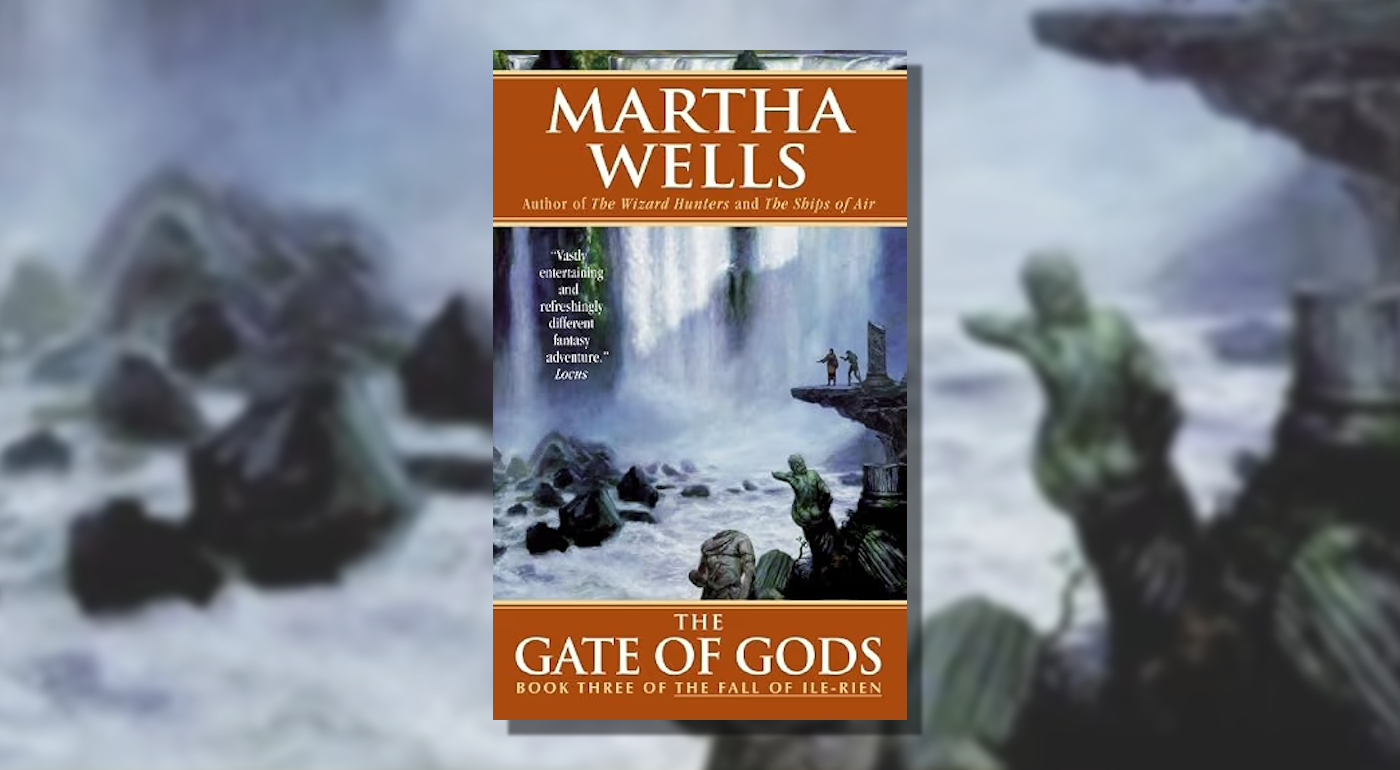
The literary community and speculative fiction enthusiasts have reached the culmination of one of the genre’s most enduring multi-world narratives with the publication and comprehensive audiobook reception of The Gate of Gods, the final installment of Martha Wells’s acclaimed The Fall of Ile-Rien series. Released to widespread critical and commercial anticipation, the novel brings together complex character arcs, intricate cross-world diplomacy, and high-stakes magical warfare that have defined the trilogy since its inception. As readers and book clubs analyze the dense web of resolutions—ranging from Florian’s tactical confrontation with the antagonist Ixion to the intricate familial reckonings of Nicholas and the political survival of the Riennish and Syprian refugees—the conclusion offers a definitive evaluation of Wells’s world-building capabilities and her lasting impact on contemporary fantasy literature.
Background Context and Narrative Chronology
To understand the weight of The Gate of Gods, literary analysts point to the expansive chronology of Wells’s fictional universe, which bridges distinct societal structures across multiple planes of existence. The narrative chronology of the final volume picks up immediately following the volatile events of The Ships of Air. At this juncture, a coalition comprising the Riennish, Syprians, and formerly enslaved refugees—alongside their Gardier captive, Balin—relocate to Capidara, a sovereign nation situated on the opposite side of the planet within Tremaine’s world.
The primary geopolitical objective of the coalition is to secure military and logistical support from the Capidaran leadership to bolster their ongoing war effort. However, this diplomatic mission is compromised by strategic concessions regarding the rogue wizard Ixion. Underestimating Ixion’s malevolent capacity, the Capidarans pursue a precarious alliance, triggering a cascade of devastating consequences. This plot development reinforces a recurring thematic critique within Wells’s work: the inherent corruption and self-serving nature of institutionalized magical power. Critics and readers frequently draw parallels between the petty, exploitation-driven Syprian wizards depicted in the text and modern socio-technological anxieties, noting how unchecked powerful entities often perpetuate systemic harm despite possessing full awareness of the destructive outcomes of their actions.
Character Development and Interpersonal Dynamics
The narrative architecture of The Gate of Gods relies heavily on dynamic character pairings to drive the emotional and tactical stakes. Central to this dynamic are Florian and Nicholas, whose unlikely alliance forms the primary bulwark against Ixion’s expansion in Capidara. Literary reviews of the novel frequently highlight the generational contrast and complementary skill sets of the duo, comparing Nicholas’s long-term strategic foresight—tempered by the heavy psychological toll of his past actions as a killer rather than a standard murderer—with Florian’s resourceful adaptability.
Furthermore, the resolution of long-standing interpersonal conflicts, including the emotional trajectories of Ilias, Tremaine, Giliead, and Gerard, provides structural closure to the series. The pacing of the narrative, particularly when experienced through its unabridged 19-hour audiobook format, has been noted by reviewers for its ability to maintain high engagement despite the density of its historical lore. Climaxing with a series of high-stakes revelations involving the origin of the gate circles and the architects of the Gardier, the novel successfully balances macro-level world-building with intimate character stakes.

Literary Craftsmanship and World-Building Analysis
Martha Wells’s methodology in constructing the Fall of Ile-Rien series has long been a subject of discussion among speculative fiction scholars. A defining characteristic of her prose in The Gate of Gods is the ability to maintain a fine equilibrium between historical depth and accessible lore. Rather than relying on rigid, exposition-heavy magic systems or exhaustive encyclopedic world-building, Wells provides sufficient contextual data for readers to navigate vast, ancient, and culturally diverse planes of existence without sacrificing narrative momentum.
This restrained approach to lore generation allows the trilogy to project a sense of scale and antiquity that resonates deeply within the fantasy genre. Publishing data indicates that The Fall of Ile-Rien has steadily climbed readership rankings, frequently positioning itself alongside Wells’s other major literary contributions, such as The Books of the Raksura and the globally renowned Murderbot Diaries series. This sustained commercial performance underscores the enduring appeal of Wells’s character-driven storytelling within complex fantastical settings.
Critical Reception and Sociocultural Perspectives
While critical consensus praises the pacing, emotional payoff, and structural integrity of The Gate of Gods, academic and community reviewers have engaged in broader discussions regarding the representation of diversity within the text. Literary analysis of the trilogy highlights a notable scarcity of explicit intersectional representation—particularly regarding queer, transgender, or non-binary identities—within the stratified societies of Ile-Rien and Sypria. Critics argue that the omission of diverse gender and sexual identities within matriarchal and highly structured magical societies represents a missed opportunity to explore how such frameworks might complicate power dynamics and social stratification. Despite these textual omissions, community engagement, including fan interpretation and unofficial "headcanons" regarding polyamorous and asexual character dynamics, demonstrates active reader participation in expanding the sociological scope of Wells’s universe.
Broader Impact and Future Literary Outlook
The conclusion of The Fall of Ile-Rien marks a definitive chapter in Martha Wells’s bibliography, closing the door on further planned installations in the universe while solidifying the series’s status as a masterclass in cross-genre fantasy. As literary clubs and individual readers transition their focus toward subsequent releases—most notably Wells’s return to the Murderbot Diaries catalog with upcoming works such as Platform Decay—the legacy of The Gate of Gods remains secure. The novel exemplifies the capacity of speculative fiction to interrogate complex themes of power, accountability, and redemption, ensuring that the world of Ile-Rien will continue to be studied and appreciated by readers and aspiring authors alike for years to come.