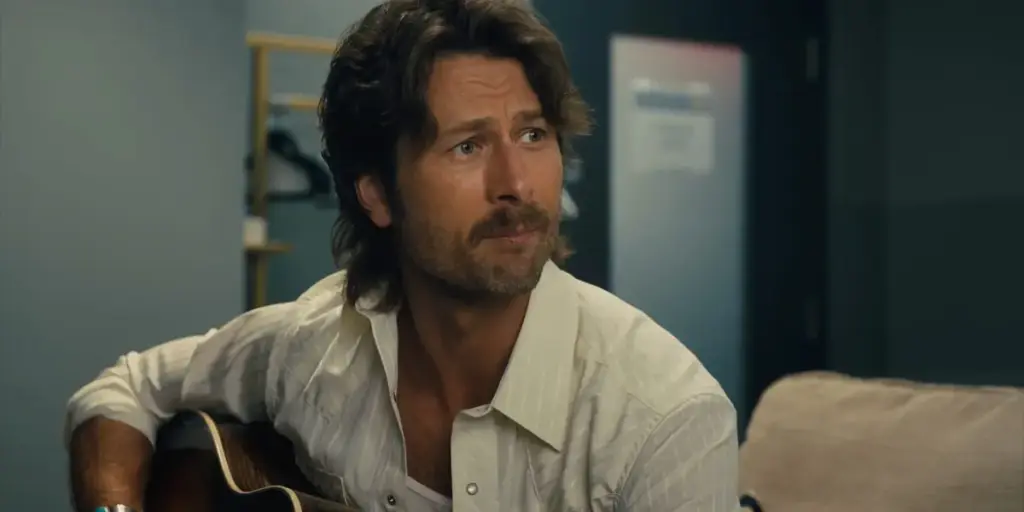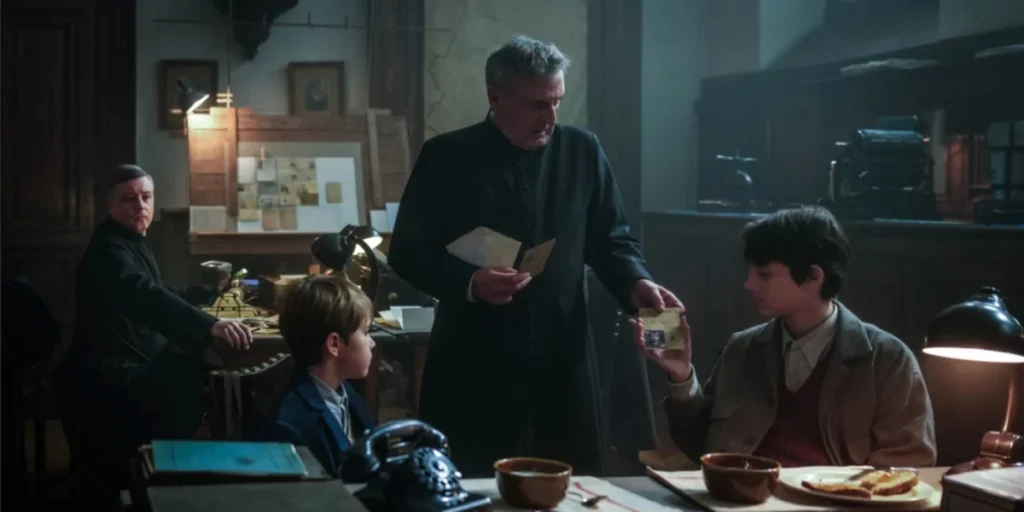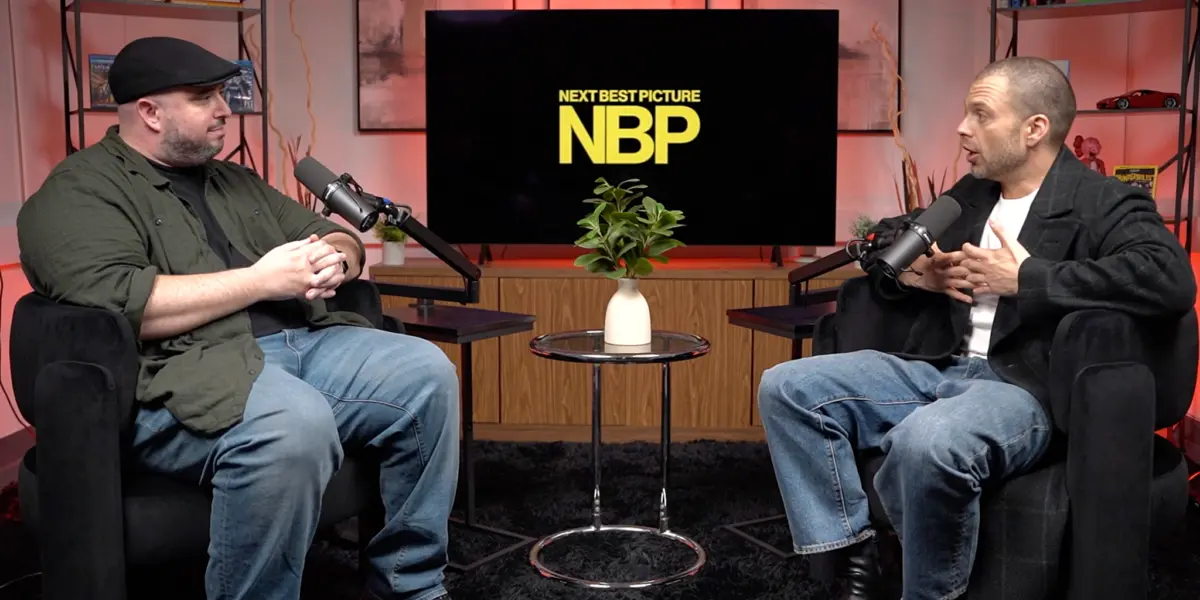
The cinematic landscape of 2026 has been profoundly shaped by Cristian Mungiu’s latest masterwork, Fjord, a searing legal thriller and domestic drama that has captured international critical acclaim. Following its triumphant world premiere in the main competition at the 2026 Cannes Film Festival—where it was awarded the prestigious Palme d’Or—the film has established itself as a towering achievement in contemporary European cinema. Beyond its festival success, Fjord has been officially selected as Romania’s official submission for Best International Feature Film at the upcoming 99th Academy Awards, positioning it as a major player in the global awards circuit. Amidst this whirlwind of critical praise and Oscar buzz, acclaimed actor Sebastian Stan sat down for an extensive, in-studio interview with the Next Best Picture Podcast. During the discussion, Stan offered deep insights into the creative process behind Fjord, reflected on his defining tenure as Bucky Barnes within the Marvel Cinematic Universe, and discussed the trajectory of his diverse and evolving career.
Unpacking Fjord: Genesis, Narrative, and Cultural Impact
Directed, written, and co-produced by renowned Romanian auteur Cristian Mungiu, Fjord represents a monumental transnational co-production involving Romania, France, Norway, Sweden, Denmark, and Finland. Mungiu, celebrated globally for his morally complex and socially incisive filmmaking—including his Palme d’Or-winning 2007 feature 4 Months, 3 Weeks and 2 Days—returns to themes of institutional power, individual autonomy, and ideological clashes.
The narrative centers on a conservative Romanian-Norwegian couple, portrayed by Sebastian Stan and Renate Reinsve, who relocate to the wife’s fiercely progressive hometown situated in a remote region of Norway. What begins as an attempt to integrate into a new community quickly spirals into a harrowing legal and cultural battle when local child welfare authorities intervene, removing the couple’s children from their care over allegations of disciplinary methods deemed acceptable in their traditional household but strictly prohibited under progressive Norwegian statutes.
Loosely inspired by the harrowing true story of the Bodnariu family—a case that sparked international debate and diplomatic friction regarding state intervention in family life—Fjord meticulously examines the chasm between differing cultural values, state overreach, and the visceral desperation of parents fighting to reclaim their children. Mungiu’s script has been widely lauded by critics for refusing to offer simplistic moral binaries, instead forcing audiences to confront the uncomfortable intersections of cultural relativism, state protectionism, and fundamental human rights.
Sebastian Stan on Crafting a Complex Protagonist
During his in-studio conversation, Sebastian Stan elaborated on the intense psychological preparation required to bring his character to life in Fjord. Working alongside Norwegian co-star Renate Reinsve—who has enjoyed a meteoric rise following her breakout performance in Joachim Trier’s The Worst Person in the World—Stan discussed the intricate dynamics of portraying a man caught between the cultural traditions of his Eastern European heritage and the uncompromising social norms of modern Scandinavia.
Stan noted that Mungiu’s directorial style demands absolute authenticity and emotional transparency. Rather than relying on melodramatic tropes, the actors were encouraged to ground their performances in the quiet desperation and systemic alienation experienced by immigrant families navigating unfamiliar bureaucratic labyrinths. The actor detailed the physical and emotional toll of sustaining such heightened dramatic tension throughout the rigorous production schedule across multiple European locales.
Critics have singled out Stan and Reinsve’s chemistry as the emotional anchor of the film, balancing the overarching legal and societal critique with an intimate, devastating portrait of a marriage fractured under unbearable external pressure. Industry analysts suggest that Stan’s nuanced, understated performance places him squarely in the conversation for major Best Actor accolades during the current awards season.
Career Retrospective: From Indie Roots to the Marvel Cinematic Universe
While Fjord highlights Stan’s capacity for searing, prestige-level dramatic work, the conversation also took a broader look at his multifaceted career. Stan reflected on his long-standing association with the Marvel Cinematic Universe, where he has portrayed James "Bucky" Barnes, also known as the Winter Soldier, across multiple blockbuster franchises and television series.

Tracing his journey from early television and independent film roles to becoming a staple of global pop culture, Stan discussed the unique challenges of transitioning between high-profile studio tentpoles and character-driven independent cinema. He emphasized how his experiences within the Marvel ecosystem—demanding rigorous physical preparation and deep emotional consistency over more than a decade—have informed his broader acting methodology. Far from distancing himself from his blockbuster roots, Stan expressed gratitude for the platform it provided, which has granted him the creative freedom to select daring, auteur-driven projects like Fjord.
Furthermore, the discussion touched upon Stan’s recent slate of critically acclaimed biographical and historical projects, including his transformative work as a young Donald Trump in Ali Abbasi’s The Apprentice and his textured portrayal of musician Tommy Lee in Pam & Tommy. These diverse roles collectively underscore a deliberate career strategy aimed at subverting audience expectations and continually pushing the boundaries of his artistic range.
Distribution, Awards Season Prospects, and Audience Accessibility
As Fjord transitions from its triumphant festival run to commercial release, anticipation among cinephiles has reached a fever pitch. NEON, the distributor responsible for championing several recent Palme d’Or winners—including Parasite, Titane, and Anatomy of a Fall—is orchestrating the home release of the film. Fans and film enthusiasts will be able to rent or own Fjord at home starting November 24th, a strategic release window designed to capitalize on holiday viewing habits and ramp up momentum ahead of the Academy Award nominations voting period.
The film’s trajectory toward the 99th Academy Awards is viewed by industry pundits as exceptionally strong. Securing Romania’s official submission slot is a significant milestone, bolstered by Mungiu’s established international prestige and the undeniable cultural relevance of the film’s central themes. Moreover, the universal acclaim directed at the cinematography by regular Mungiu collaborators, the taut editing, and the commanding lead performances ensures that Fjord will remain a prominent fixture of cinematic discourse well into the new year.
Broader Implications and Cultural Relevance of Mungiu’s Vision
The resonance of Fjord extends far beyond standard awards season metrics, touching upon pressing contemporary debates surrounding globalization, immigration, and state paternalism. By choosing to set the narrative against the picturesque yet isolating backdrop of a Norwegian fjord, Mungiu utilizes the geography as a metaphor for deep-seated ideological divides. The pristine landscapes, typically associated with tranquility and social welfare, transform into a claustrophobic arena of surveillance and cultural friction.
Sociological analysts have observed that films tackling institutional child welfare and cross-cultural family dynamics frequently unearth deep societal anxieties regarding where the boundaries of state authority should lie. Fjord avoids taking an overtly partisan stance, instead inviting viewers to examine the systemic mechanisms that govern modern society. This intellectual rigor is a hallmark of Cristian Mungiu’s filmography, ensuring that Fjord functions not merely as entertainment, but as a vital cultural document for the mid-2020s.
Conclusion and How to Experience the Interview
The complete conversation with Sebastian Stan offers an illuminating look behind the scenes of one of the most decorated films of the decade. Listeners and viewers can access the full video interview via the embedded player in this article or tune into the Next Best Picture Podcast across all major podcast platforms, including Apple Podcasts, Spotify, and the Evergreen Podcasts Network.
As Fjord prepares for its home video release on November 24th courtesy of NEON, audiences worldwide will soon have the opportunity to experience the cinematic triumph that has captivated critics from Cannes to Hollywood. Whether viewed as a nail-biting legal thriller, a profound family drama, or a complex study in cultural displacement, Fjord stands as an essential cinematic milestone of 2026. Supporters of independent film journalism are encouraged to subscribe, review, and support the Next Best Picture Podcast via their Patreon community to ensure continued access to in-depth conversations with the industry’s leading creative voices.