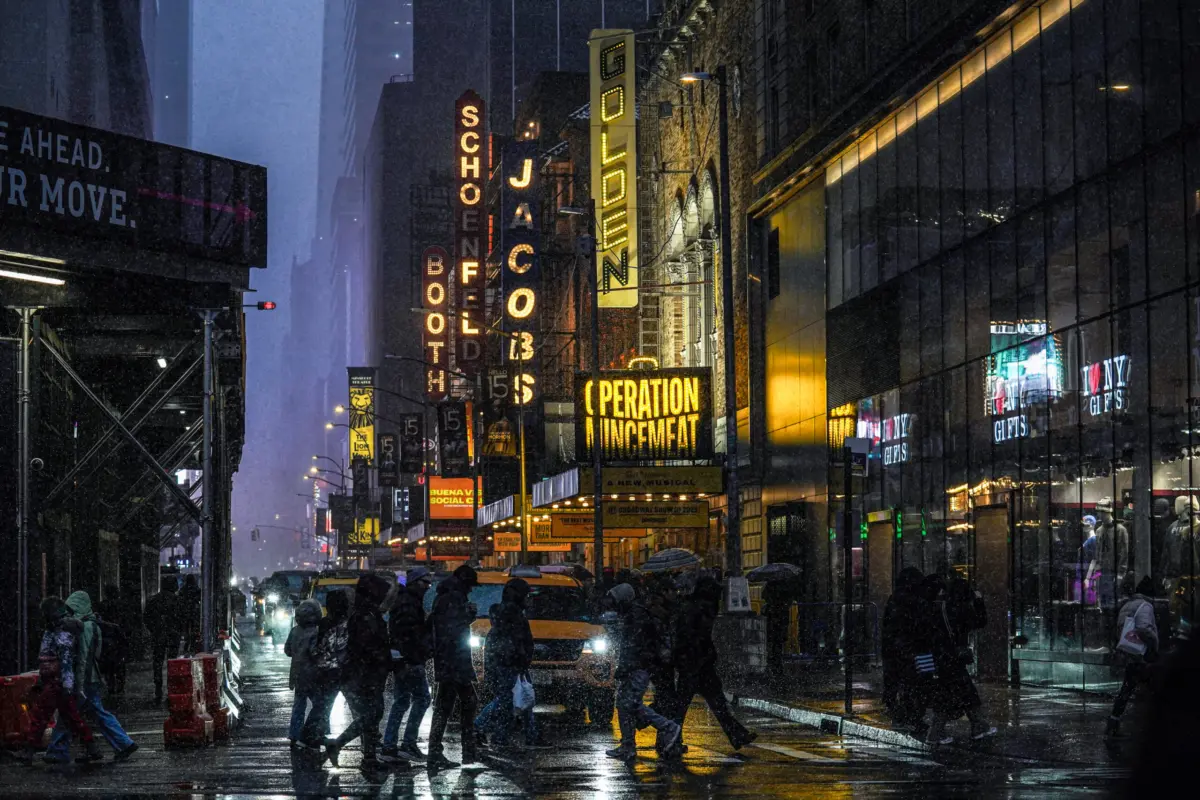
The labor landscape across Broadway remains in a state of high-stakes transition as IATSE Local One, the powerful union representing stagehands, has secured a tentative agreement with the Broadway League, effectively averting a potential work stoppage ahead of the critical holiday season. While this breakthrough provides a measure of stability for the theater industry, the labor peace is far from universal. IATSE Local 764, which represents the wardrobe supervisors, dressers, and costume workers essential to every production, has officially voted to authorize a strike, citing stalled negotiations and deep-seated grievances regarding systemic pay disparities.
This divergence in labor relations highlights the complex financial and structural tensions currently defining the Great White Way. As producers and unions navigate the post-pandemic recovery, the threat of labor action has become a recurrent theme, forcing stakeholders to confront questions regarding wage parity, inflation, and the evolving economic model of commercial theater.
A Chronology of Negotiations and Escalation
The current atmosphere of uncertainty began to coalesce in the summer of 2024. Both Local One and Local 764 saw their collective bargaining agreements expire on July 26. For months, the Broadway League—the national trade association for the Broadway industry—engaged in parallel, though distinct, negotiations with the various craft unions that keep the curtains rising.
By October, frustrations within the stagehand ranks reached a boiling point. Local One members, citing a lack of meaningful progress on wage adjustments and workplace safety protocols, voted overwhelmingly to authorize a strike. A strike by Local One, which encompasses the master carpenters, electricians, and prop masters who physically assemble and operate Broadway’s intricate technical systems, would have functioned as an industry-wide shutdown. Without these essential personnel, no major production can safely or legally operate.
Following the October strike authorization, negotiations intensified. The successful tentative agreement reached this month suggests that the Broadway League recognized the existential risk posed by a mid-winter walkout. While the specific terms of the deal remain confidential until the union’s December membership meeting, the agreement is widely expected to address inflationary cost-of-living adjustments and health and welfare fund contributions.
However, the progress made with Local One has not been mirrored in the negotiations with Local 764. The costume department’s union has been at the bargaining table since June with little resolution to show for their efforts. The situation deteriorated in mid-November when, according to IATSE leadership, the Broadway League cancelled two consecutive days of scheduled bargaining sessions. This move was viewed by union membership as a lack of good faith, leading directly to the overwhelming Sunday vote to authorize strike action should the League fail to present an equitable offer.
The Core Conflict: Wage Parity and Historical Gender Bias
At the heart of the dispute with Local 764 is a grievance that union leaders describe as a legacy of gender-based discrimination. The wardrobe profession on Broadway has historically been dominated by women, while the stagehand classifications represented by Local One have been predominantly male.
According to data provided by IATSE, the pay disparity is not merely a matter of a few percentage points, but a structural inequity that has persisted for decades. The union reports that Local 764 department heads are currently required to work approximately 45 percent more hours than their counterparts in other departments to achieve the same annual income. For many workers, this represents a fundamental issue of professional valuation. The union contends that the technical complexity and physical demands of managing multimillion-dollar costume inventories, complex quick-changes, and the maintenance of intricate theatrical garments warrant a compensation structure commensurate with other skilled stagecraft roles.
The Broadway League, for its part, has traditionally maintained that wage structures are influenced by a variety of factors, including market rates, historical precedents, and the specific economic realities of individual production budgets. However, in an era of heightened awareness regarding pay equity, the optics of this disparity have become increasingly difficult for producers to defend.
Historical Context of Broadway Labor Relations
The threat of a Broadway shutdown has become a recurring feature of the industry’s business cycle. In the previous season, both Actors’ Equity Association—the union representing performers and stage managers—and the American Federation of Musicians (AFM) Local 802 moved to the brink of strike action.
In those instances, the threat of a work stoppage proved to be a powerful catalyst for resolution. The musicians’ union, in particular, engaged in a high-profile battle regarding the integration of artificial intelligence and the protection of live music in the digital age. The successful negotiation of those contracts established a blueprint for how labor and management can find common ground even when negotiations appear to have reached a terminal impasse.
The current situation with Local 764, however, carries different baggage. Unlike the negotiations involving performers or musicians, which often focus on intellectual property and technological displacement, the Local 764 conflict is rooted in the fundamental economics of labor value. The union’s public emphasis on the "gender pay gap" positions this negotiation within the broader national discourse on equity, making it a matter of social as well as economic policy.
Industry Implications and Economic Stability
The economic stakes for the Broadway League are immense. The holiday weeks between Thanksgiving and New Year’s represent the most lucrative period for the industry, often accounting for a significant portion of annual revenue. A strike during this window would be catastrophic for producers, theater owners, and the secondary ecosystem of restaurants and tourism that relies on Broadway’s success.
Analysts suggest that the tentative deal with Local One was a strategic necessity to secure the box office through the winter. By locking in the stagehands, the League has effectively removed the threat of a total, immediate shutdown. However, the labor volatility remains a concern for investors and institutional partners. If Local 764 were to walk off the job, the impact would be immediate: shows cannot open without wardrobe departments, and the complexity of modern Broadway costumes requires constant maintenance and supervision that cannot be easily outsourced or filled by replacement labor.
Moreover, the precedent set by these negotiations will likely influence future bargaining cycles. As IATSE continues to consolidate its bargaining power, the industry may see a shift toward more unified contract expiration dates or more aggressive multi-union coordination.
Moving Forward: The Path to Resolution
As of late November, the industry is in a holding pattern. The focus has shifted toward the upcoming December meetings where Local One members will vote on the ratification of their tentative agreement. If ratified, it will signal a period of relative calm for the technical staff.
Simultaneously, pressure is mounting on the Broadway League to resume active, productive negotiations with Local 764. The cancellation of the November 18 and 19 bargaining sessions has served as a rallying point for the union, which is now operating under a clear mandate from its members to take whatever action is necessary to close the pay gap.
For the Broadway League, the challenge lies in balancing the demands of fiscal sustainability—particularly as production costs for new musicals continue to soar—with the need to maintain a satisfied, stable workforce. The industry has long prided itself on its "the show must go on" ethos, but current trends suggest that the future of that mantra is increasingly dependent on the equitable treatment of the invisible labor force that makes the spectacle possible. Whether through further mediation, federal intervention, or a return to the table, the coming weeks will determine if Broadway can navigate this latest labor hurdle without the disruption of a dark stage.