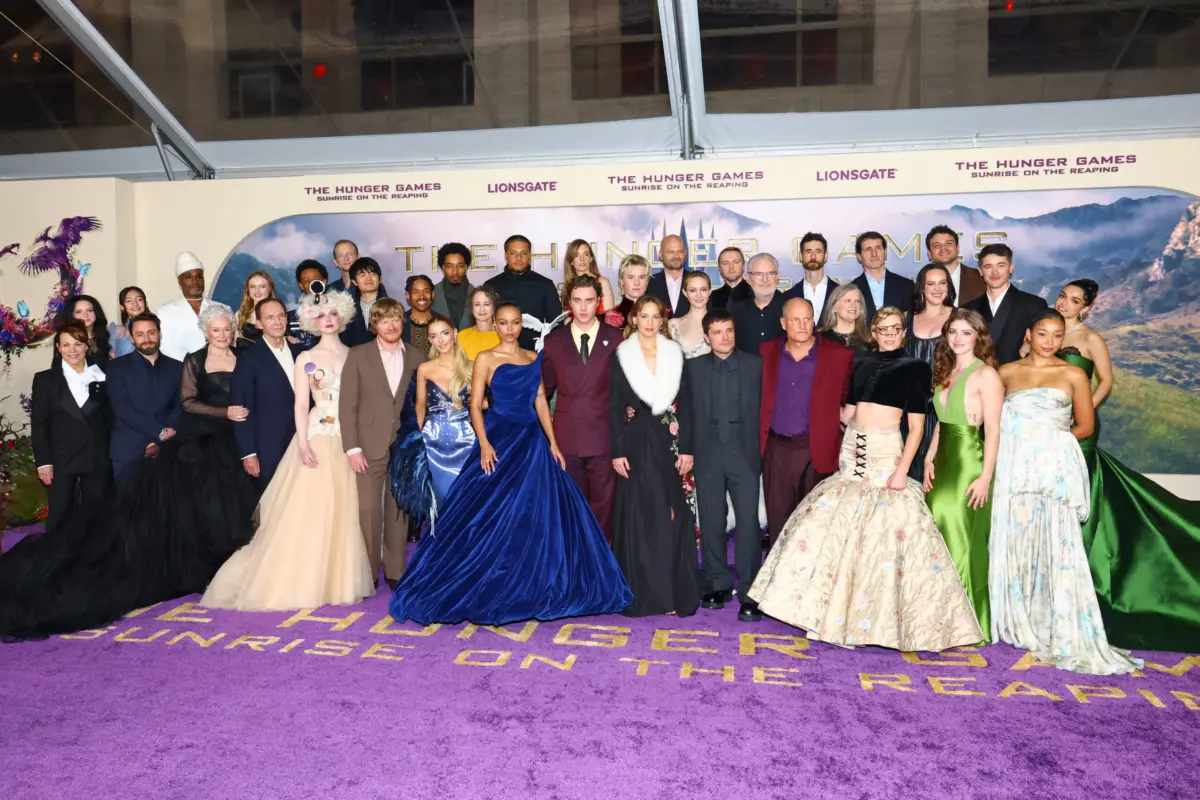
The morning after the star-studded New York City premiere of The Hunger Games: Sunrise on the Reaping, director Francis Lawrence found himself reflecting on the singular scale of the event. On the red carpet, the past, present, and future of Panem converged in a rare, multi-generational assembly. Franchise newcomers, including Joseph Zada, Whitney Peak, and Mckenna Grace, stood alongside high-profile additions to the series like Kieran Culkin, Elle Fanning, Jesse Plemons, Ralph Fiennes, and Glenn Close. This new wave of talent mingled with the original architects of the franchise’s global success, such as Jennifer Lawrence, Josh Hutcherson, Woody Harrelson, Elizabeth Banks, Jena Malone, and Willow Shields.
For Lawrence, the event served as a testament to the longevity of the saga. "Last night at the premiere, for the first time, we had three generations of cast," Lawrence noted. "There is something really special about the time we have all spent together and the quality of people I have gotten to work with."

A Decade of Dystopian Dominance
Since stepping into the director’s chair for 2013’s Catching Fire, following the departure of original director Gary Ross, Francis Lawrence has been the steady hand guiding the franchise. Working in close partnership with veteran producer Nina Jacobson, Lawrence transformed Suzanne Collins’ dystopian novels into a cultural and financial powerhouse. The four original films alone grossed approximately $2.98 billion at the global box office, while the source material has cemented its place in literary history with over 100 million copies sold worldwide.
The franchise’s impact became tangible for Lawrence during the production of the Mockingjay films, when he visited The Hunger Games: The Exhibition with his lead actors. Witnessing the collection of costumes, props, and set pieces curated into a museum-worthy retrospective, Lawrence realized the gravity of the work they had created. It was a realization that shifted his perspective from simply "making a movie" to contributing to a lasting cultural phenomenon that resonated deeply with millions of fans.
The Evolution of the Panem Universe
Lawrence’s entry into the franchise was marked by a sense of professional apprehension. Inheriting an established family of actors on the set of Catching Fire, he felt the pressure of a seasoned cast and a studio with massive expectations. At the time, he viewed his involvement as a one-time commitment. The studio’s request for him to return for the two-part finale, Mockingjay, was the catalyst that solidified his long-term partnership with Jacobson and Collins.

The mid-production period of Mockingjay remains a defining moment in his career. The team had to pause filming to promote the release of Catching Fire. Lawrence recalls the intense pressure of waiting for the box office verdict while simultaneously filming a massive sequel. "Man, what if this thing bombs?" he wondered. "I now still have like 125 days of shooting with all of these people that are going to be looking at me like, ‘We just made a movie with this guy that bombed.’"
The success of Catching Fire—which became the highest-grossing installment of the series—not only validated his direction but established a foundation of trust between the filmmaker and the studio. When he and Jacobson returned in 2023 with The Ballad of Songbirds & Snakes, they faced a new set of challenges: an eight-year hiatus and a narrative centered on the villainous Coriolanus Snow rather than the heroic Katniss Everdeen. The prequel’s success proved that the appetite for the Panem universe remained undiminished, paving the way for the latest adaptation, Sunrise on the Reaping.
The Secretive Development of Sunrise on the Reaping
Sunrise on the Reaping, which explores the origins of the mentor Haymitch Abernathy, represents a departure in the development process. Unlike previous installments, Lawrence and Jacobson were brought into the fold while the book was still in its early draft stages. The logistical challenges of maintaining secrecy were unprecedented. The manuscript was kept under lock and key, with screenwriter Billy Ray working from an offline laptop in Jacobson’s office to prevent any potential leaks.

"A lot of work was done before the book was even announced, and I couldn’t talk to anybody about it," Lawrence explained. The eventual public reveal in June 2024 brought a sense of relief, allowing the team to shift focus to the casting of a young Haymitch. After an exhaustive audition process, Joseph Zada was selected, receiving high praise from author Suzanne Collins herself, who described his performance as "remarkably powerful and moving."
The Influence of the MTV Era
While Lawrence is best known for his work in the blockbuster space, his roots in the music video industry of the 1990s and early 2000s remain a foundational influence on his visual style. Having directed approximately 120 music videos for icons like Britney Spears, Lady Gaga, and Justin Timberlake, Lawrence learned to prioritize mood, tone, and emotional resonance over literal interpretation.
This music-forward approach is a cornerstone of the Hunger Games films. Whether it is the haunting melody of "The Hanging Tree" or the atmospheric scores he listens to on set during filming, Lawrence uses sound to evoke specific emotional states. He noted that he often listens to scores from other films—including Alexandre Desplat’s "Lily’s Theme" from Harry Potter and the Deathly Hallows – Part 2—to help frame his creative vision during production.

Future Horizons: Constantine, Red Rising, and Beyond
Beyond Panem, Lawrence is navigating a slate of high-profile projects. Chief among them is a long-gestating sequel to his 2005 cult classic, Constantine. Despite industry roadblocks, including shifts in DC’s leadership and corporate restructuring under Warner Bros. Discovery, Lawrence remains optimistic. With new management now at the helm of DC Studios, he believes there is a renewed path forward for an R-rated sequel featuring Keanu Reeves.
Simultaneously, Lawrence is developing an adaptation of Pierce Brown’s Red Rising. Having spent eight years shepherding the project through various studio shifts, he is now moving forward at Paramount. He sees thematic parallels between Red Rising and The Hunger Games, particularly in their shared interest in "infiltration stories" and characters who must navigate complex moral boundaries. Additionally, an adaptation of the video game BioShock is currently in the script-rewrite phase, signaling a continued commitment to high-concept world-building.
The Enduring Cultural Resonance of Panem
The performance of Sunrise on the Reaping—which opened to a robust $120 million—confirms that the franchise retains its status as a commercial powerhouse. However, for Lawrence, the true victory lies in the franchise’s ability to remain relevant in a changing political and social climate.

"Part of what originally separated these books from other YA publications: they had real meat on the bone thematically," he observed. "They wouldn’t land the same way if they didn’t have the ideas underneath them."
As fans continue to utilize the franchise’s symbols, such as the three-finger salute, in real-world protests across the globe, the lines between fiction and reality have grown increasingly thin. Lawrence views this as the ultimate test of the series’ longevity. While much of modern entertainment is designed to be disposable, the themes of war, resistance, and the cost of power embedded in Collins’ work ensure that The Hunger Games will remain a touchstone for future generations. For Lawrence, the privilege of bringing these stories to the screen has been a career-defining journey, one that continues to evolve with every page Collins writes and every frame he captures.