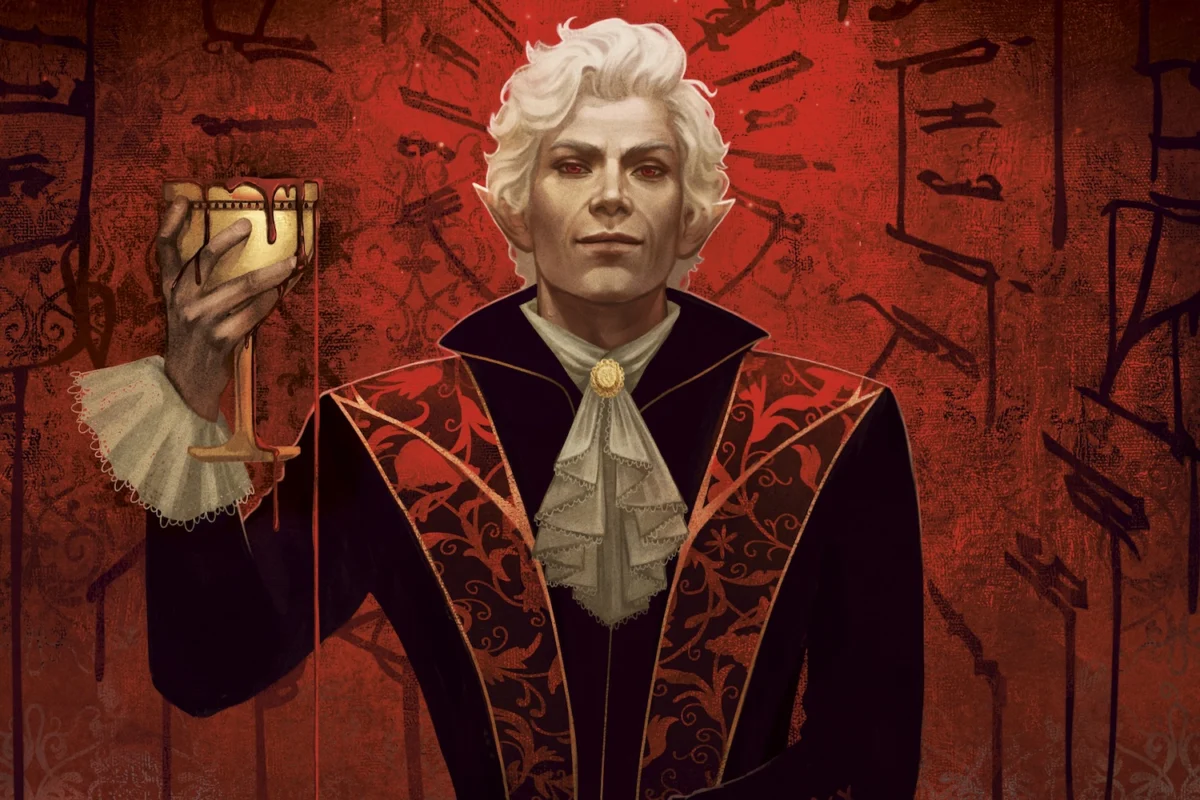
Penguin Random House is expanding its successful literary universe surrounding the critically acclaimed video game Baldur’s Gate 3 with a series of tie-in novels. Among these upcoming releases, a particular focus has been placed on an anticipated prequel novel penned by renowned SFF author T. Kingfisher, titled Astarion. This novel promises to delve into the intricate and often harrowing past of the fan-favorite vampire spawn character, Astarion, detailing his years of servitude under the tyrannical vampire lord Cazador Szarr. The book is slated for release on September 29, 2026, offering players and readers alike a deeper understanding of one of the game’s most complex protagonists.
Unveiling Astarion’s Dark Past
The announcement of T. Kingfisher’s involvement in crafting Astarion’s origin story has generated significant excitement within the SFF community. Kingfisher, known for her distinctive voice and ability to blend horror, humor, and compelling character development, is expected to bring a unique perspective to Astarion’s formative years. The novel will explore the period leading up to the events of Baldur’s Gate 3, a time marked by Astarion’s enslavement and his struggle for survival within Cazador’s cruel domain.
According to an official press release from Penguin Random House, the novel will follow Astarion during his time as a spawn, a far cry from the magistrate he was destined to be. The narrative is set to explore the grim reality of his existence, from hunting for sustenance – the blood of rats, in his case, rather than the fine wines he presumably once enjoyed – to his desperate, underlying hope for freedom. The press release highlights that Astarion’s journey is one of quiet defiance, a persistent search for a way out of his nightmarish circumstances.
The official cover copy, made available through Penguin Random House, provides a more detailed glimpse into the plot:
"Astarion Ancunin was supposed to be a magistrate, not a vampire spawn. He was supposed to serve the law, not the vicious vampire lord Cazador Szarr. And he was supposed to drink fine wine, not rat blood. Alas—the city of Baldur’s Gate cares little for what’s supposed to happen.
Though he has been powerless to resist his master’s bidding, haunting the nighttime streets to fetch warm blood, Astarion has never surrendered his hope. One day, this nightmare must end. He just has to find out how.
When the vampire lord announces a twisted competition for his favor, an opportunity presents itself in the form of a rare prize… and an unlikely alliance. The blood of a dead god is buried deep beneath Baldur’s Gate, and, to get it, Astarion will need the help of a handsome Aasimar paladin named Hahn den Suriel.
There are just a few problems. Astarion is not supposed to trust his fellow spawn. He’s not supposed to go out into the city for his own ends rather than the vampire lord’s. And he’s certainly not supposed to strike a deal with a stranger whose golden eyes can snare even a blackened, undead heart.
But the city of Baldur’s Gate cares little for what’s supposed to happen."
This synopsis immediately establishes the core conflicts: Astarion’s internal struggle against his vampiric nature and Cazador’s control, his desperate pursuit of an artifact of immense power, and the introduction of a potentially significant new character in Hahn den Suriel, an Aasimar paladin. The narrative promises a blend of dark fantasy, moral ambiguity, and the potential for unexpected alliances, all set against the richly detailed backdrop of the Baldur’s Gate universe.
Ensuring Lore Authenticity
To guarantee that the novel remains faithful to the established lore of Baldur’s Gate 3, Penguin Random House has confirmed that Stephen Rooney, one of the game’s senior writers, was consulted during the development process. This collaborative effort aims to ensure the novel’s narrative seamlessly integrates with the existing game world, providing a consistent and authentic experience for fans. Such close collaboration between game developers and tie-in authors is increasingly becoming a standard practice, reflecting a commitment to quality and fan satisfaction in expanding fictional universes.
The importance of this consultation cannot be overstated, particularly for a character as nuanced and beloved as Astarion. His backstory, as revealed through dialogue and in-game quests, is central to his appeal. A well-crafted prequel can illuminate the events that shaped his cynicism, his survival instincts, and his deeply buried vulnerabilities. The press release’s emphasis on Rooney’s involvement suggests a deliberate effort to avoid lore inconsistencies that have sometimes plagued tie-in media in the past.

The Audiobook Experience
Adding another layer of anticipation, the audiobook version of Baldur’s Gate 3: Astarion will be narrated by Neil Newbon, the very actor who provides the voice for Astarion in the video game. This decision is a significant boon for fans, as Newbon’s performance has been widely praised for its depth, charisma, and ability to capture Astarion’s complex personality. Hearing the story through the voice that players have come to know and love promises an immersive and emotionally resonant experience. The synergy between the game’s original voice actor and the author of its prequel novel is a powerful marketing and creative choice, reinforcing the connection between the two media.
A Prolific Year for T. Kingfisher
The release of Baldur’s Gate 3: Astarion marks the third novel by T. Kingfisher scheduled for publication in 2026. Her other forthcoming titles include Wolf Worm, which is already available, and Daggerbound, set for release on August 26, 2026. This prolific output underscores Kingfisher’s status as a prominent and productive voice in contemporary SFF literature. Her consistent presence in the market, coupled with her unique storytelling style, has cultivated a dedicated readership eager for her next work. The inclusion of a Baldur’s Gate 3 tie-in demonstrates the growing influence of video games as a source of inspiration and narrative expansion for the publishing industry.
The Broader Landscape of Gaming Literature
The Baldur’s Gate 3 tie-in series extends beyond just novels, with other planned releases including cookbooks and coloring books. This multifaceted approach reflects a broader trend in the gaming industry to create comprehensive merchandise ecosystems that engage fans on multiple levels. While cookbooks and coloring books cater to a more casual fan base, the inclusion of a substantial novel by a respected author like T. Kingfisher signals a commitment to deeper narrative exploration and catering to a more discerning SFF audience.
This strategy is not new. Major video game franchises have a long history of expanding their universes through novels, comics, and animated series. For instance, the Warcraft and Halo franchises have extensive literary bibliographies that have contributed significantly to their lore and fan engagement. The success of Baldur’s Gate 3, with its rich narrative and complex characters, provides fertile ground for such literary expansion. The game’s commercial and critical triumph, including its numerous Game of the Year awards in 2023, has undoubtedly created a robust market for related content. Industry analysts estimate that the global video game market continues to grow, and the ancillary media market, including tie-in literature, often sees a proportional increase in demand.
Implications for the Gaming and Publishing Industries
The collaboration between Larian Studios, the developer of Baldur’s Gate 3, and Penguin Random House highlights the increasingly blurred lines between interactive entertainment and traditional media. This partnership allows for a richer storytelling experience, where the narrative depth of a video game can be further explored and amplified through literary works. For players, these novels offer a chance to revisit beloved characters and settings, or to delve into aspects of the game world that may not have been fully explored in the interactive medium.
For the publishing industry, tie-in novels based on successful video games represent a significant market opportunity. These projects leverage existing fan bases, reducing the risk associated with launching new intellectual properties. The success of authors like T. Kingfisher in this space suggests that there is a discerning audience that appreciates quality writing, even within the context of a pre-established fictional universe. The involvement of a seasoned writer like Kingfisher, rather than solely relying on ghostwriters or lesser-known authors, elevates the prestige and appeal of these tie-in projects.
The trend also speaks to the evolving nature of storytelling. As video games become more cinematic and narrative-driven, they are increasingly seen as legitimate sources for expanded literary universes. The success of games like Baldur’s Gate 3, which offer complex plots, intricate character development, and expansive worlds, naturally lends itself to adaptation and expansion into other media. This cross-pollination benefits both industries by introducing new audiences to existing franchises and by creating new avenues for creative expression.
Astarion: A Character Study
Astarion Ancunin, the character at the heart of this prequel novel, is a testament to the sophisticated character writing found in modern video games. Introduced as a charming, roguish elf with a penchant for biting sarcasm and a deep distrust of authority, his true nature as a vampire spawn under the millennia-long dominion of Cazador Szarr is a core element of his narrative arc in Baldur’s Gate 3. His struggle for autonomy, his morally gray decisions, and his deeply scarred psyche have resonated with a vast player base.
The game itself provides glimpses into Astarion’s past, hinting at his life before his vampiric transformation, his gradual descent into servitude, and the psychological toll of his existence. The novel Astarion is poised to flesh out these details, exploring the specific events that led to his enslavement, the nature of his relationship with Cazador, and the methods he employed to survive and maintain a flicker of his former self. The mention of an "opportunity presenting itself in the form of a rare prize… and an unlikely alliance" suggests a pivotal moment in his long, arduous journey toward freedom, likely involving the "blood of a dead god." This artifact could be the key to breaking Cazador’s hold or achieving a level of power that allows Astarion to escape his tormentor.
The introduction of Hahn den Suriel, described as a "handsome Aasimar paladin," introduces an interesting dynamic. The juxtaposition of a vampire spawn and an Aasimar paladin, beings often seen as diametrically opposed, immediately sparks curiosity. Their "unlikely alliance" promises conflict, potential betrayal, and perhaps even a surprising connection. The description of Hahn’s "golden eyes" that can "snare even a blackened, undead heart" hints at a potentially potent or significant force, capable of impacting Astarion in ways he might not anticipate.
Anticipation and Future Possibilities
The release of Baldur’s Gate 3: Astarion is more than just a tie-in novel; it represents a significant expansion of a beloved narrative universe. The careful selection of T. Kingfisher as the author, the consultation with the game’s writers, and the involvement of the original voice actor all point towards a high-quality product that respects the source material. As the gaming and publishing industries continue to intersect, projects like this demonstrate the potential for rich, multi-platform storytelling that can engage audiences across different media. The success of this novel could pave the way for further literary explorations of other characters and storylines within the Baldur’s Gate universe, deepening the lore and offering fans more ways to immerse themselves in this critically acclaimed world. The date September 29, 2026, is now a key date for many SFF and Baldur’s Gate 3 enthusiasts.