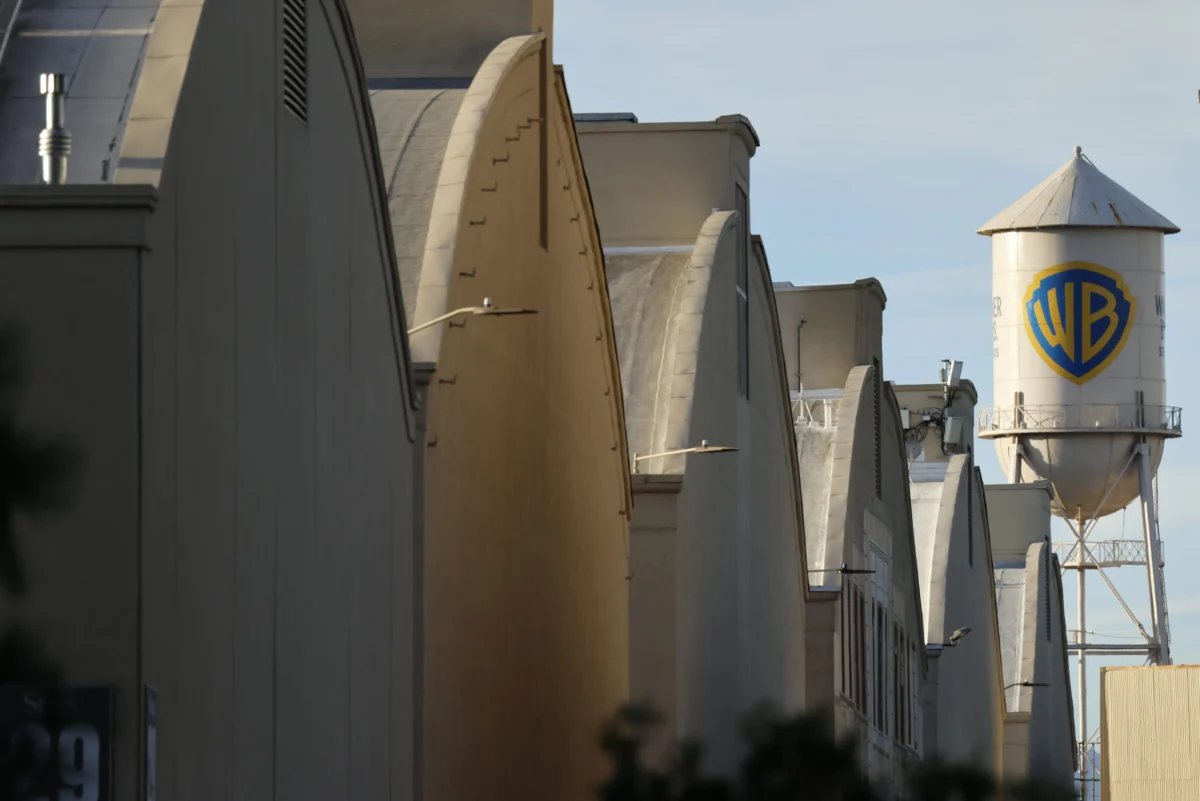
The media landscape stands at a critical juncture as discussions surrounding a potential merger between Paramount Global and Warner Bros. Discovery (WBD) intensify, signaling a move that analysts warn could result in an anti-competitive, debt-laden entity. If realized, this consolidation would combine two of Hollywood’s most storied "Big Five" studios, creating a corporate giant burdened by approximately $79 billion in total debt. Critics and financial experts suggest that the resulting company would be forced into a cycle of aggressive cost-cutting and massive workforce reductions simply to maintain its interest payments, potentially stifling creative output and raising consumer prices across the streaming and theatrical sectors.
The Financial Architecture of a Proposed Behemoth
The primary driver behind the proposed merger, championed by figures such as Skydance Media’s David Ellison and Warner Bros. Discovery CEO David Zaslav, is the pursuit of "scale." In the modern streaming era, scale is often viewed as the only defense against the dominance of tech-led platforms like Netflix, Amazon, and Apple. By combining the libraries of Paramount—home to franchises like Star Trek and Top Gun—with WBD’s portfolio, including Game of Thrones, Harry Potter, and the DC Universe, the proponents argue for a more robust competitive position.
However, a closer look at the balance sheet reveals a precarious foundation. The combined entity would enter the market with a staggering $79 billion in debt, yet it would generate only an estimated $3 billion in annual free cash flow. This creates a leverage ratio of approximately 6.5 times EBITDA (Earnings Before Interest, Taxes, Depreciation, and Amortization). To put this in perspective, financial health in the media sector is typically associated with much lower ratios. When The Walt Disney Company acquired 21st Century Fox in 2019, its leverage rose to 2.8 times EBITDA. When Discovery, Inc. merged with WarnerMedia in 2021, the ratio was 4.3 times. A jump to 6.5 times represents a level of financial strain that threatens the operational viability of the studios involved.
A Chronology of Consolidation and Shifting Market Conditions
The path toward this potential merger follows a decade of rapid consolidation within the entertainment industry, but the economic climate has shifted dramatically since previous mega-deals were inked.
- 2019: The Disney-Fox Era: Disney acquired the majority of 21st Century Fox’s assets for $71.3 billion. This deal occurred in a low-interest-rate environment, allowing Disney to service its debt with relatively cheap capital.
- 2021-2022: The WarnerMedia-Discovery Merger: Discovery acquired WarnerMedia from AT&T in a $43 billion deal. While the debt was significant, Treasury yields remained near historic lows, providing a buffer for integration.
- August 2024: The Skydance-Paramount Agreement: David Ellison’s Skydance Media reached a deal to acquire Shari Redstone’s National Amusements, the controlling shareholder of Paramount Global. This deal projected $2 billion in "synergies," a corporate euphemism for cost-cutting and layoffs.
- Present Day: The potential inclusion of Warner Bros. Discovery into the Skydance-Paramount framework introduces a new layer of complexity. Today’s high-interest-rate environment makes borrowing significantly more expensive. Paramount’s credit rating has already faced downgrades from two of the three major agencies, and a looming $49 billion bridge loan must be refinanced within the next ten months, creating a high-stakes dependency on volatile credit markets.
The Mathematical Reality of Debt Servicing
The cash demands on a combined Paramount-WBD entity would be exhaustive. Financial models indicate that annual interest expenses alone could fluctuate between $5 billion and $6 billion. This would consume nearly half of the company’s projected $12 billion EBITDA.
Beyond interest, the company must sustain its core business functions. Production costs for film and television typically require $3 billion to $5 billion annually, while streaming technology and content acquisition for platforms like Max and Paramount+ demand another $3 billion to $4 billion. Integration expenses—the costs associated with merging two massive corporate infrastructures—are estimated at $2 billion to $3 billion. Furthermore, the company faces upcoming negotiations with the NFL for lucrative sports rights, which will likely require a significant increase in capital allocation.
Without substantial free cash flow, the company risks falling into a "leverage trap." In this scenario, the entity is unable to pay down the principal of its debt and must instead borrow more capital just to stay operational. Projections suggest debt could climb from $79 billion at the time of closing to over $90 billion within three years if cost savings are not realized immediately or if the advertising market weakens.
The Human Cost: Projections of Workforce Reductions
One of the most immediate and devastating consequences of such a merger is the anticipated loss of jobs. Historically, large-scale media mergers have relied on "synergies" to appease shareholders, which almost always translates to layoffs.
When Disney integrated Fox, the industry saw an estimated 14,000 jobs vanish. This included roughly 4,000 direct employees and 10,000 indirect workers—vendors, contractors, security personnel, caterers, and VFX houses that rely on a steady stream of productions.
The Paramount-WBD merger is projected to seek $6 billion in synergies over three years. Financial analysts suggest that reaching this goal would require the termination of more than 10,000 direct employees. However, the ripple effect on the broader "gig economy" of Hollywood could be much larger, impacting tens of thousands of indirect workers. If the combined company reduces its theatrical output—despite pledges to maintain production levels—the fallout would extend to movie theater chains, which are already struggling with a lack of consistent product.
Anti-Competitive Concerns and Regulatory Hurdles
The merger would fundamentally alter the competitive landscape of the American film industry. If approved, the number of major Hollywood studios would effectively drop from five to four, with two of the most significant entities controlled by a single owner. This concentration of power raises significant antitrust concerns.
Regulatory bodies, including the Department of Justice (DOJ) and the Federal Trade Commission (FTC), are expected to scrutinize the deal for its impact on:
- Talent Competition: With fewer studios, there are fewer buyers for scripts and less competition for the services of actors, directors, and below-the-line talent, likely driving down wages and creative leverage.
- Distribution Control: A single company controlling both HBO Max and Paramount+ would have unprecedented power over where content is streamed, how long films remain in theaters, and the pricing structures for consumers.
- Theatrical Booking: The combined entity would possess immense leverage over theater owners regarding film rentals and screen allocation, potentially squeezing out independent or mid-budget films.
The Role of Sovereign Wealth and Foreign Ownership
A notable development in the financing of this potential merger is the involvement of Gulf sovereign wealth funds. Reports indicate that these funds have pushed for highly favorable terms in exchange for providing approximately $24 billion in capital.
The proposed deal structure includes preferred pricing, price caps, and warrants as "sweeteners." This could result in foreign sovereign wealth funds owning approximately 50 percent of the combined entity. As the largest equity stakeholders, these funds would hold significant influence over two of America’s most prominent cultural institutions. This introduces new questions regarding the long-term strategic direction of the studios and the potential for foreign influence over American media output and distribution.
Implications for the Future of Creative Risk
Perhaps the most profound impact of the merger would be on the quality and variety of content produced. In an environment where the primary mission of a company is to service massive debt, financial calculation often supersedes creative risk-taking.
Industry veterans express concern that the "mid-budget" film—the $30 million to $70 million drama or comedy that once defined Hollywood—will disappear entirely. Instead, the focus would likely shift toward "safe" franchise installments and high-budget spectacles designed for global box office appeal, leaving little room for original storytelling or experimental projects.
The traditional studio model is already under pressure from fragmented audiences and declining television revenues. To survive, companies require the flexibility to invest, experiment, and even fail. A merger of this magnitude, financed by extreme leverage, creates a fragile institution rather than a strong one.
Conclusion: A High-Stakes Gamble for Hollywood
The proposed combination of Paramount and Warner Bros. Discovery is being marketed as a necessary evolution for the streaming era. However, the financial data suggests a more precarious reality. With a debt-to-EBITDA ratio that far exceeds previous industry mergers and an economic environment characterized by high borrowing costs, the new company would face an uphill battle for survival.
The potential for massive layoffs, reduced competition, and the surrender of equity to foreign sovereign wealth funds presents a sobering outlook for the industry. While scale is a valuable asset in the digital age, scale built on a foundation of unsustainable debt may ultimately lead to the erosion of the very creative engines that made these studios iconic. As the deal moves toward potential regulatory review, the industry remains watchful of whether this consolidation will provide the intended stability or if it will mark the beginning of a period of significant financial and creative retrenchment for Hollywood.