In a seismic shift that defies conventional Hollywood wisdom, the undisputed champion of this summer’s cinematic landscape is not a caped crusader, an extraterrestrial invader, or a corseted period piece. Instead, the season’s biggest draw is an ambitious, big-budget adaptation of a nearly 3,000-year-old epic poem. Director Christopher Nolan, fresh off the critical and commercial triumph of "Oppenheimer," his unflinching examination of the dawn of the nuclear age, has turned his formidable directorial prowess to "The Odyssey," the foundational Greek saga that, alongside its companion epic "The Iliad," forms a cornerstone of Western civilization. This audacious move marks Nolan’s most expensive project to date, with an estimated production budget of $250 million, signaling a significant investment in a narrative that predates modern cinema by millennia.
Nolan, a filmmaker renowned for his intricate narratives and large-scale productions, including mind-bending thrillers like "Memento," the universally acclaimed "Dark Knight" trilogy, and the visceral war epic "Dunkirk," has assembled a star-studded cast for his interpretation of Homer’s timeless tale. The ensemble features established Hollywood luminaries such as Matt Damon and Anne Hathaway, alongside contemporary fan favorites like Zendaya and Tom Holland, whose recent success as Spider-Man has cemented their status as generational talents. The cast is further enriched by idiosyncratic yet celebrated performers including Lupita Nyong’o, Mia Goth, Samantha Morton, and fellow director Benny Safdie, suggesting a diverse and compelling portrayal of the epic’s characters.
"The Odyssey," attributed to the ancient Greek poet Homer and composed around the 8th century BCE, serves as a sequel to "The Iliad." It chronicles the arduous, decade-long journey of the hero Odysseus as he strives to return to his wife, Penelope, and son, Telemachus, following the devastating siege of Troy. Nolan, in an interview with The New York Times, articulated his motivation for undertaking such a monumental task. "As a filmmaker, you have to move in impulsive ways," he stated. "I was looking to challenge myself with a completely different type of storytelling and I was looking for a gap in the culture." This sentiment underscores Nolan’s consistent drive to push creative boundaries and explore narratives that resonate beyond immediate trends.

The Enduring Resonance of a Timeless Epic
The contemporary relevance of "The Odyssey" is a central theme driving the film’s anticipated impact. Professor Mary Beard, a distinguished emeritus professor of classics at Cambridge University, expressed her optimism for the film’s potential to reignite public interest in the ancient world. "Films always bring people’s attention back to the ancient world and of the whole modern resonance of the classics," Beard remarked. "What are the big questions raised by the Odyssey and are they still ours? What does it mean to go home? What does war do to those left behind? Where does the boundary between civilization and barbarity really lie?" These profound questions, embedded within Homer’s narrative, continue to echo in contemporary society, addressing universal human experiences of longing, resilience, loss, and the fundamental search for belonging.
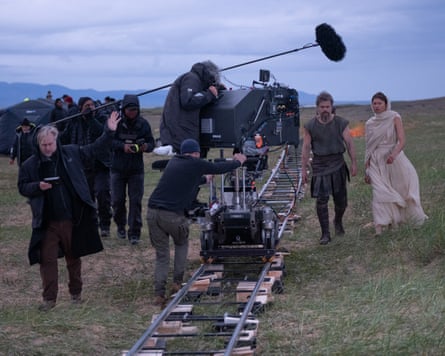
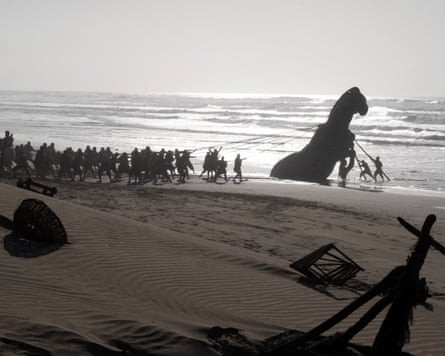
Shot entirely on IMAX film, a format for which Nolan famously utilized an unprecedented 2 million feet of film, "The Odyssey" eschews digital shortcuts in favor of practical filmmaking. This commitment to tangible world-building, a hallmark of Nolan’s directorial philosophy, extends to the meticulous recreation of key elements from the epic, including the legendary Trojan Horse and Odysseus’s ship. "By embracing the physicality of the real world in the making of the film, you do inform the telling of the story in interesting ways," Nolan explained. "Because you’re confronted on a daily basis by the world pushing back at you." This hands-on approach aims to imbue the film with an authenticity and weight that digital effects often struggle to replicate, promising a deeply immersive cinematic experience for audiences.
Industry Acclaim and Box Office Predictions
Industry insiders recognize Nolan’s unique position to command such extensive resources. Wendy Mitchell, contributing editor for Screen International, observed, "Nolan gets those huge greenlights for films because he gets huge audiences. I really do think audiences are smart enough to see what’s been done in reality, or in camera, which Nolan is a stickler for, and I know we’re going to feel that on screen as an audience." Her sentiment is echoed by many in the film community who laud Nolan’s dedication to traditional filmmaking techniques in an era increasingly dominated by digital manipulation and artificial intelligence. "The whole industry really respects his approach to cinema, and shooting on film, in a digital age when we’re going to start to see more shortcuts with AI or tech tools," Mitchell added. "Nolan is the guy not afraid to do it the old-fashioned way and I think there is a lot of respect for him doing it like that."
The decision to adapt "The Odyssey" arrives at a pivotal juncture for Hollywood. With the superhero genre experiencing a perceived plateau in audience engagement and smaller-scale internet-originated films like "Backrooms" and "Nirvanna: The Band the Show The Movie" garnering critical acclaim and unexpected box office success, the industry is in a state of flux. "The Odyssey" is positioned to be a significant cultural event, with early box office projections anticipating an opening weekend of $80 million to $100 million in North America alone. This forecast suggests that Nolan, much like the classical heroes he is now bringing to life, might be the very figure poised to revitalize the blockbuster landscape.
Navigating Cultural Currents and Criticisms
"The Odyssey" has, perhaps inevitably, become a focal point for contemporary cultural discourse. Controversies have emerged regarding casting decisions, particularly the portrayal of Helen of Troy by Lupita Nyong’o, which has drawn criticism from some quarters, including amplified rhetoric from figures like Elon Musk, who accused Nolan of "want[ing] to destroy western civilisation." The debate surrounding the casting of non-Greek actors in roles traditionally associated with Greek heritage has also sparked discussions, with some critics questioning the industry’s relationship with its source material and its responsibility to diverse representation.
Nolan’s decision to incorporate modern dialogue, a practice also seen in contemporary translations like Emily Wilson’s widely discussed rendition of "The Odyssey," has also been a point of contention for some purists. However, Professor Beard defends this approach, asserting, "Translations are never neutral renderings of the original. We have to remember that there is no one-to-one correspondence between Greek and English: the Greek languages encode the world differently. New translations show us new things, for us, about the texts." She cites Wilson’s revision of "serving girls" to "slaves" as an example of how modern scholarship can illuminate the realities of ancient societies, arguing that acknowledging the presence of slavery in a slave-owning society does not diminish the epics’ enduring power.
Despite these debates, industry analysts remain optimistic about the film’s broad appeal. "I think it’s going to reach everyone," Mitchell predicts. "People will want to be in the cultural conversation. It feels like if you care about movies at all, and even if you just see one movie per year, The Odyssey is going to be that movie." This sentiment suggests that "The Odyssey" transcends niche appeal, aiming for a universal resonance that can captivate a wide spectrum of moviegoers.
A Legacy of Classical Adaptations on Screen
Nolan’s foray into classical epic is not an isolated phenomenon in recent cinema. The enduring appeal of ancient myths and histories has been a recurring theme for filmmakers:
-
Hercules: The legendary strongman has been a recurring figure on screen, from Steve Reeves’s iconic 1958 portrayal and Arnold Schwarzenegger’s early film career to Dwayne Johnson’s 2014 take. However, Disney’s animated 1997 musical, "Hercules," remains a beloved and less serious interpretation.
-
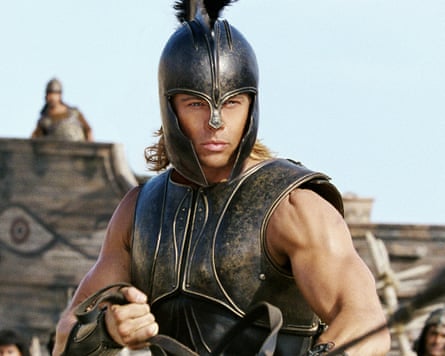
Troy (2004): Wolfgang Petersen’s star-studded adaptation of Homer’s "The Iliad" featured Brad Pitt as Achilles and Sean Bean as Odysseus. Despite its ambition, the film received mixed reviews, with some critics finding it visually impressive but lacking emotional depth.
-
Percy Jackson Series (2010-2013): Based on Rick Riordan’s popular young adult novels, these films attempted to translate Greek mythology into a contemporary setting for a younger audience. While a planned franchise was envisioned, the initial installments, "The Lightning Thief" and "Sea of Monsters," failed to capture widespread audience enthusiasm.
-
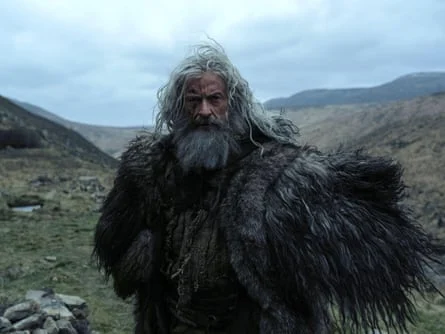
The Return (2024): This more recent adaptation, conceived by the late playwright Edward Bond and starring Ralph Fiennes and Juliette Binoche, offered a profound and emotionally resonant interpretation of "The Odyssey," delving into the psychological aftermath of war and loss.
-
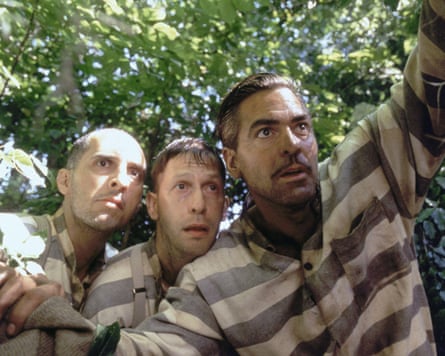
O Brother, Where Art Thou? (2000): The Coen Brothers’ critically acclaimed southern prison-escape comedy offered a uniquely stylized, loose interpretation of Homer’s epic, transplanting Ulysses Everett McGill and his journey to the American South.
-
Oedipus Rex (1967) and Medea (1969): Pier Paolo Pasolini’s ambitious cinematic interpretations of Sophocles and Euripides brought operatic intensity and a distinct visual style to these foundational Greek tragedies, with Maria Callas delivering a commanding performance in "Medea."
-
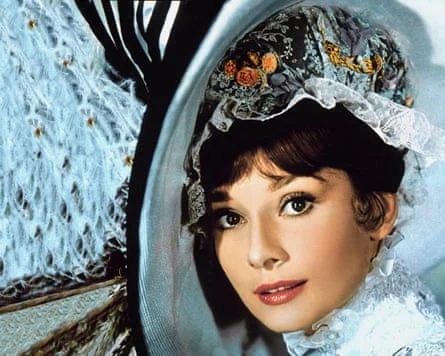
My Fair Lady (1964): This classic musical, based on George Bernard Shaw’s play "Pygmalion," itself an adaptation of the Pygmalion and Galatea myth, remains a beloved cinematic experience, celebrated for its music, performances, and enduring story of transformation.
-
Jason and the Argonauts (1963) and Clash of the Titans (1981): Ray Harryhausen’s pioneering stop-motion animation brought mythical creatures and epic battles to life, defining the visual language of fantasy cinema for a generation. "Jason and the Argonauts" is particularly celebrated for its groundbreaking skeleton battle sequence.
-
Orphée (1950): Jean Cocteau’s surreal and poetic exploration of myth, death, and art, featuring mesmerizing mirror effects, offers a unique and enduring vision of the Orpheus myth.
Christopher Nolan’s "The Odyssey" enters this rich cinematic tradition not merely as another adaptation, but as a potential paradigm shift, demonstrating that timeless narratives, when approached with audacious vision and immense craft, can still command the cultural and commercial attention of a modern global audience. The film’s success or failure will undoubtedly be closely watched, not just for its artistic merits, but for what it portends about the future of ambitious, large-scale filmmaking in an ever-evolving entertainment landscape.