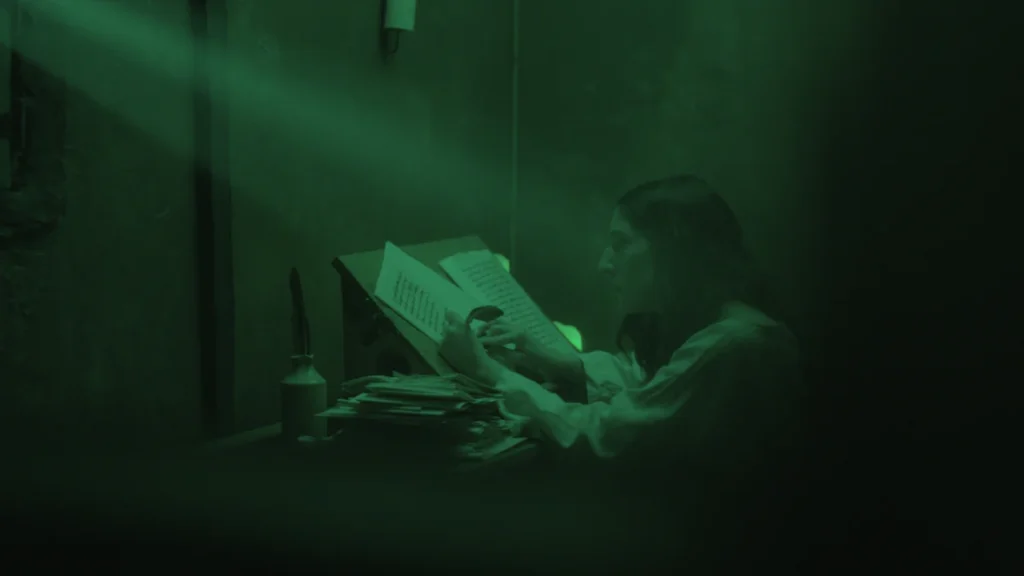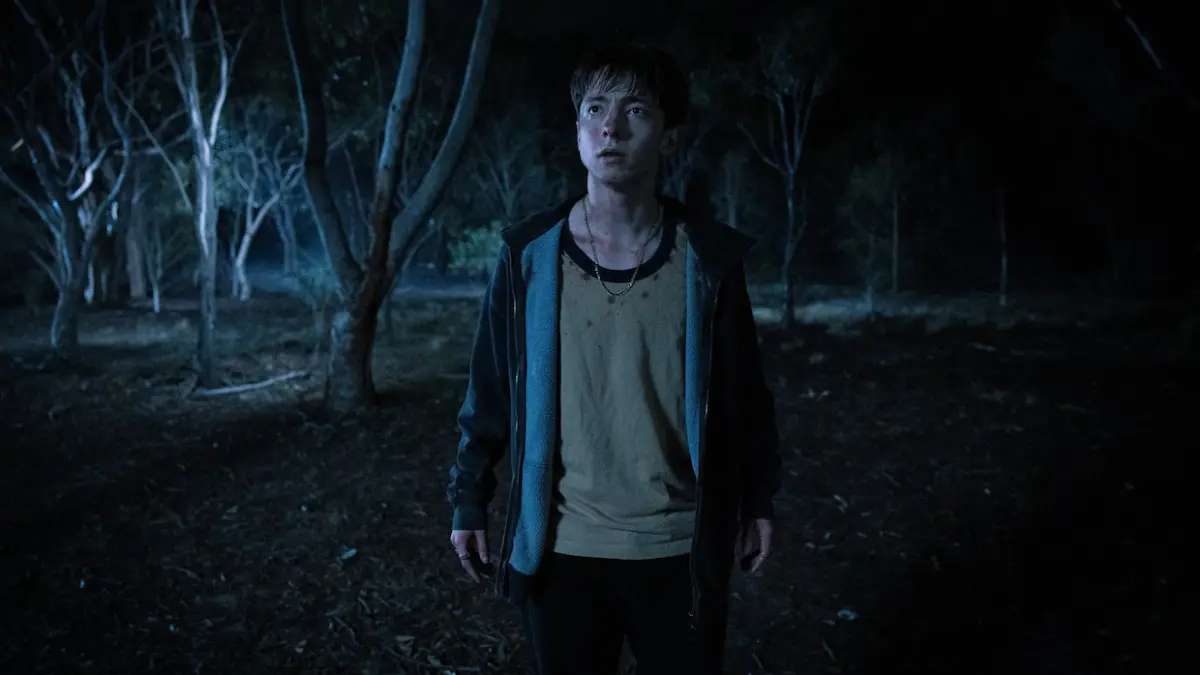
The intersection of genre cinema and socio-political commentary has long served as a vital vehicle for marginalized communities to articulate collective trauma. In Adrian Chiarella’s feature-length directorial debut, Leviticus (2026), this tradition is rigorously examined through the prism of psychological horror and supernatural allegory. Set within the sun-bleached yet desolate industrial backdrop of the Australian boondocks, the film centers on a community bound by religious orthodoxy and a covertly weaponized punitive system designed to suppress queer youth. By fusing the mechanics of classic 1980s creature features with the stark realities of modern bigotry, Leviticus constructs a narrative wherein the societal strictures placed upon marginalized adolescents manifest as literal, predatory entities. The release of the film arrives at a critical juncture in contemporary media discourse, directly challenging the prevailing assumption that systemic prejudice against sexual minorities has been effectively relegated to the past.
Main Facts of the Production and Narrative Framework
Leviticus opens with a chilling cold open establishing the stakes of its central mythology: a lesbian lifeguard falls victim to an invisible, shape-shifting entity in a poolside shower, an illicit moment of intimacy cut brutally short by murder. This supernatural predator is subsequently revealed to be the byproduct of a dark hex cast by the local church establishment under the guise of institutional conversion therapy. Operating on the pious, psychological dictum that queer desires are inherently fatal—summarized by the chilling implication that one’s very affections will destroy them—the entity assumes the physical form of its victims’ most deeply desired companions.
The narrative proper focuses on Naim, a reticent newcomer portrayed by Joe Bird, whose life intersects with Ryan, a charismatic and unapologetic classmate played by Stacey Clausen. Their tentative romance develops against a landscape marked by industrial decay and claustrophobic pastoral isolation. The tension escalates when Hunter, the closeted son of the local preacher portrayed by Jeremy Blewitt, inserts himself into their dynamic through a volatile encounter. Driven by a complex mix of jealousy and fear of exposure, Naim commits a transgressive act by reporting the tryst, expecting a manageable censure rather than the inescapable spiritual warfare that follows. The narrative structure honors a foundational tenet of horror cinema: transgression inevitably invites catastrophic retribution.
Chronology and Narrative Progression
The progression of Leviticus unfolds through a carefully calibrated sequence of alienation and psychological deterioration. Following Naim’s disclosure of the illicit encounter, the town’s underlying hostilities surface, trapping the young protagonists in an environment where safety is an illusion. Because the supernatural entity preys upon isolation—appearing only when its targets are alone, yet capable of mimicking trusted lovers when backs are turned—Naim and Ryan are forced into a precarious defensive alliance.
Seeking answers, the teenagers track down the surviving partner of the lifeguard killed in the film’s opening sequence. Holed up in a local hospital, this character serves as a tragic inversion of the cinematic recluse trope, forced to surround herself with people to evade the entity while remaining fundamentally isolated. This theme of deceptive safety permeates the subsequent timeline of the film. An olive branch extended by Hunter’s sister proves to be a malicious trap, while a rare moment of maternal tenderness shown to Naim by his mother, played by Mia Wasikowska, is immediately undercut by ideological betrayal. The timeline culminates in a climax where the boundaries between supernatural threat and domestic oppression dissolve completely, leaving the characters to navigate a landscape where even familial protection functions as a form of subjugation.
Background Context and the Evolution of Queer Horror
The conceptual genesis of Leviticus is deeply rooted in the historical relationship between the queer community and the horror genre. For decades, audiences marginalized by mainstream storytelling have found refuge in horror, interpreting subtextual anxieties as reflections of their own lived experiences. Director Adrian Chiarella has frequently cited foundational works from the genre as formative influences, noting the enduring legacy of films such as A Nightmare on Elm Street 2: Freddy’s Revenge (1985), widely recognized as a cinematic metaphor for the closet, and John Carpenter’s The Thing (1982), which explores the profound distrust between the self and the perceived other.
This cinematic lineage informs the thematic architecture of Leviticus. In the decades preceding the film’s release, global discourse surrounding LGBTQ+ rights has experienced a complex trajectory, characterized by legislative victories running parallel to significant cultural pushback and a documented resurgence in institutional bigotry. Chiarella developed the project as an explicit response to this socio-political regression, utilizing the horror genre not merely for escapism, but as a blunt instrument to demand empathy. By reviving tropes associated with the conservative moral panics of the late 20th century, the film draws a direct line between historical tactics of conversion therapy and contemporary legislative efforts aimed at restricting the visibility and autonomy of queer youth.
Cinematic Style and Visual Metaphors
Visually, Leviticus distinguishes itself through a rigorous approach to production design and cinematography that mirrors the internal psychological states of its subjects. The Australian industrial and pastoral landscapes are rendered with a dreary, vacant hostility that reflects the ideological confinement of the narrative setting. By contrasting man-made structures with untamed natural environments, the filmmakers visually articulate the tension between human emotional imperatives and rigid, dogmatic edicts.
The cinematography consistently reinforces the theme of perception. Action is frequently observed through restrictive frames—windows, mirrors, and security cameras—or filtered through the indifferent gaze of community bystanders. Crucially, the supernatural curse operates selectively: individuals unburdened by or complicit in the institutional trauma cannot perceive the entity, mirroring the willful ignorance often displayed by those who dismiss queer identity as a fleeting phase or external influence. Even Naim’s perspective is continually compromised, as his own eyes betray him by substituting the monstrous double for the genuine article. This persistent manipulation of visual truth underscores the film’s central premise that within oppressive environments, seeing is believing, yet belief itself can be weaponized against the vulnerable.
Statements and Creative Intent
In interviews surrounding the release and production of Leviticus, Adrian Chiarella has elaborated on the thematic ambitions driving the project. Rather than relying on the sanitized narratives of corporate diversity initiatives, the production sought to re-engage with the grit and unresolvable trauma characteristic of 1970s and 1980s independent horror.
"I started thinking about what would be personal for me," Chiarella noted during early press discussions regarding the film’s development. Reflecting on his adolescence, he emphasized the role that forbidden media played in his own understanding of identity: "Horror movies were something that I turned to as a young queer teenager. I don’t think I was alone in that. The genre has been important to the community for a very, very long time. I was always told not to watch those films, which only made me want to watch them more."
This rebellious engagement with taboo subject matter translates directly into the film’s handling of authority figures. When Naim’s mother attempts to justify her actions by asserting the necessity of fear—blurring the boundary between protection and oppression—the dialogue echoes the rationalizations historically provided by practitioners of conversion therapy and religious dogmatists. Chiarella sought to construct a cinematic world where traditional safe havens are systematically dismantled, forcing characters and audiences alike to question the reliability of their immediate social circles.
Broader Impact and Industry Implications
The arrival of Leviticus in 2026 marks a notable shift in contemporary queer cinema. While much of the mainstream media landscape over the preceding decade gravitated toward sanitized coming-of-age narratives or historical dramas focused on resilience and ultimate triumph, Leviticus deliberately returns to a darker, more confrontational register. By utilizing the visceral grammar of horror, the film addresses contemporary disquietude and the persistent threat of systemic regression.
The film’s conclusion rejects the clean resolutions typical of conventional commercial features, opting instead for an ambiguous finality. By subverting the classic horror trope of the monster crawling back in the final frame, the narrative posits that systemic trauma and institutionalized homophobia do not simply vanish with the defeat of a singular supernatural manifestation. Instead, the scars remain, suggesting a prolonged process of recovery that extends far beyond the runtime of the film.
Through its uncompromising synthesis of genre convention and socio-political critique, Leviticus establishes Adrian Chiarella as a distinct voice in modern independent cinema. By leveraging the visceral discomfort of psychological horror, the production succeeds in illuminating the quiet, daily terrors of living under the weight of institutional bigotry, offering an artistic testament to the endurance required to survive in hostile environments.