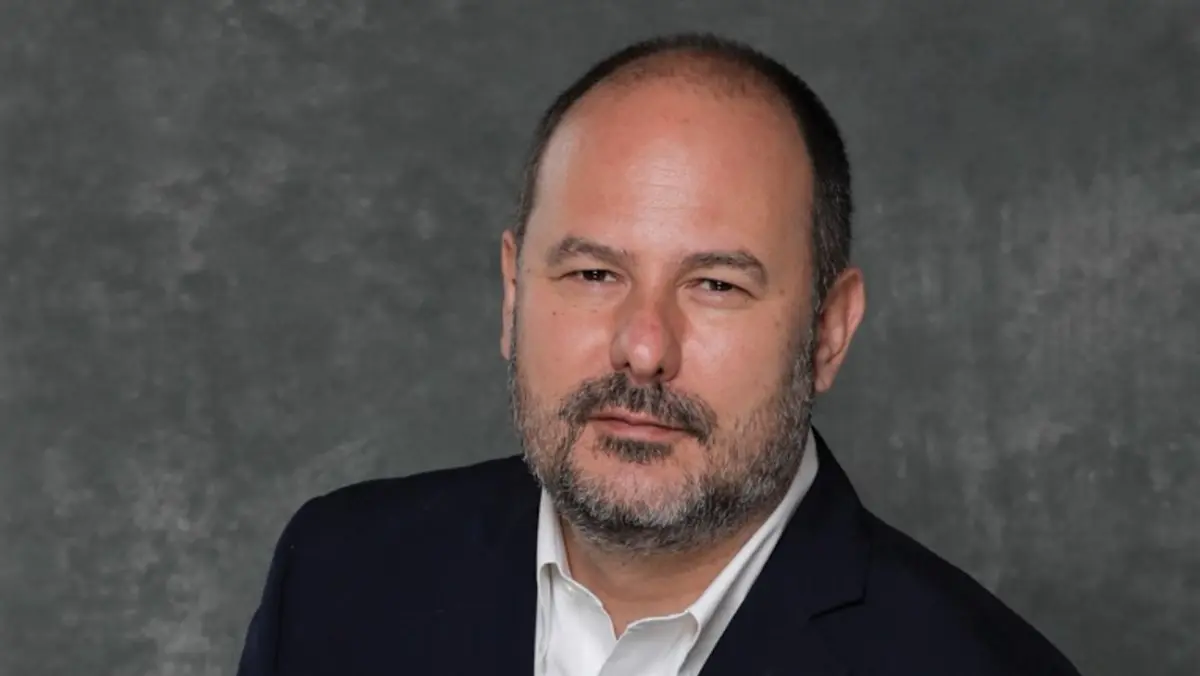
The landscape of global media production is set for a significant leadership transition as Fremantle announced that Andrea Scrosati, the architect behind the company’s aggressive push into premium film and high-end scripted drama, will step down from his roles as Group COO and CEO of Continental Europe. Scrosati, who joined the RTL-owned production powerhouse in 2018 following a tenure at Sky Italia, has been the primary engine driving Fremantle’s evolution from a format-heavy entertainment giant into a multifaceted global production conglomerate.
According to the official announcement released Friday, Scrosati will remain with the company through January 2027 to oversee a seamless transition of his responsibilities. His departure marks the end of a pivotal chapter for the group, characterized by a rapid succession of high-profile acquisitions and a concerted effort to pivot toward intellectual property that commands critical acclaim and global prestige.
A Legacy of Aggressive Consolidation
When Scrosati assumed his position in 2018, Fremantle was largely recognized for its mastery of global unscripted formats—shows such as American Idol, Got Talent, and The X Factor. However, under his strategic oversight, the company pivoted toward a "portfolio" model. This approach sought to mitigate the volatility of the unscripted market by diversifying into premium scripted content, independent cinema, and specialized documentary production.
The chronology of this transformation is marked by a series of strategic maneuvers that reshaped the industry’s competitive map:
- 2018: Scrosati joins Fremantle from Sky Italia, tasked with revitalizing the group’s European operations and long-term production strategy.
- 2021: Promoted to CEO of Continental Europe, Scrosati accelerates the firm’s M&A activity, aligning with parent company RTL Group’s goal to reach €3 billion in annual revenue.
- 2022-2024: Fremantle executes a string of high-profile acquisitions, including Element Pictures (Dublin), Lux Vide (Italy), and the Asacha Media Group, expanding its footprint into the U.K., France, and Italy.
- 2026: Launch of Imaginae Studios, a dedicated artificial intelligence production label, signaling the company’s intent to integrate machine learning into its content pipeline.
These acquisitions were not merely additive; they were structural. By acquiring Element Pictures—the team behind Oscar-winner Poor Things and the hit series Normal People—Fremantle effectively bypassed the traditional development hurdles of the film industry, instantly securing a pipeline of high-caliber talent and intellectual property.
Quantifying the Creative Dividend
The strategic pivot was, by many metrics, a creative success. The company’s investment in independent cinema resulted in a period of unprecedented prestige for the distributor. Between 2018 and 2025, Fremantle-backed projects garnered 17 Academy Award nominations and four wins. Key productions such as Yorgos Lanthimos’ Poor Things, Sebastián Lelio’s The Wonder, and Ali Abbasi’s The Apprentice demonstrated that Fremantle could operate successfully at the intersection of commercial viability and high-art cinema.
Beyond film, Scrosati expanded the company’s reach into the burgeoning FAST (Free Ad-Supported Streaming Television) channel ecosystem. By leveraging its vast archive of legacy content, Fremantle sought to maximize the monetization of its library in an era where traditional linear television ratings were in decline. The development of Imaginae Studios further highlighted this forward-looking approach, with the 2026 launch of Art Awakens representing one of the first major industry attempts to utilize generative AI in long-form storytelling.
Financial Realities and the €3 Billion Ambition
While the creative transformation was undeniably successful, the financial targets set by parent company RTL Group remain a subject of industry analysis. In 2021, RTL set a rigorous mandate: double Fremantle’s annual revenue to €3 billion ($3.3 billion) by 2025.
The subsequent years proved to be a volatile environment for global media companies, marked by a cooling of the "streaming wars" and a contraction in spending by major platforms. Fremantle’s financial trajectory showed steady growth initially, with revenue peaking at approximately €2.27 billion in 2023. However, subsequent years saw a slight decline—dipping to €2.254 billion in 2024 and reaching approximately €2.043 billion in 2025.
Falling roughly €1 billion short of the ambitious €3 billion goal, the company has had to recalibrate its long-term financial strategy. Analysts note that while the shortfall is significant, the structural foundation laid by Scrosati—a diverse portfolio of independent production labels—provides a more robust buffer against market downturns than the company’s previous reliance on format licensing. RTL Group has signaled that the €3 billion revenue target remains a long-term aspiration, albeit one that will now be pursued under a new operational framework.
Corporate Perspectives and Future Trajectory
The official reaction to Scrosati’s departure has been one of professional appreciation, with Fremantle Global CEO Jennifer Mullin emphasizing his role as a catalyst for institutional change. "Andrea has been instrumental in our growth and transformation," Mullin stated. "He helped build Fremantle into a true portfolio company, led our M&A strategy, and constantly pushed us to think differently about innovation."
For his part, Scrosati has framed the move as a natural progression. In a statement, he noted that after eight years of intense operational focus, the timing was right for him to pivot toward a new entrepreneurial venture. "I leave with enormous pride in what we have achieved together," he remarked, underscoring the collaborative nature of the company’s expansion.
Implications for the Media Sector
The departure of a high-level executive so closely tied to a company’s M&A strategy often prompts speculation regarding the future direction of the organization. With the primary wave of acquisitions largely complete, industry observers suggest that Fremantle may now enter a phase of "consolidation and optimization." The challenge for the incoming leadership will be to extract maximum value from the existing labels—such as Lux Vide and Asacha—while managing the integration of these disparate entities into a unified corporate culture.
Furthermore, the focus on AI through Imaginae Studios suggests that the next phase of Fremantle’s evolution will be defined by technological integration rather than just asset acquisition. As the industry grapples with the ethical and creative implications of artificial intelligence in production, Fremantle’s early experiments in this space will likely serve as a benchmark for the broader sector.
The transition period through January 2027 provides the group with a lengthy runway to ensure continuity. As Fremantle enters this new phase, the departure of Scrosati serves as a bookend to an era defined by aggressive international growth, setting the stage for a period where the focus shifts from building the company to maximizing the creative and financial output of its global network. The legacy of his tenure will ultimately be judged by the long-term sustainability of the production ecosystem he constructed, and whether the "portfolio" approach can weather the ongoing instability of the global media landscape.