The latest installment of the series shifts the narrative focus away from the high-stakes tension of the hunting competition, opting instead to reframe the conflict through the perspective of Rosemyne. By eschewing a linear progression of events, the narrative structure forces a deeper examination of the internal logic governing the nobility, specifically regarding the "order of operations" that dictates the lives of high-ranking children. While the previous episode concluded with a cliffhanger concerning Wilfried’s actions at the competition, the narrative now prioritizes the immediate administrative and health-related constraints placed upon Rosemyne, effectively establishing a new timeline for the season’s climax.
The Jureve and the Implied Timeskip
Central to this week’s narrative development is the status of Rosemyne’s health-restoring jureve. Having secured all the necessary components for the concoction, Rosemyne is confronted with the logistical reality of its administration. Medical and magical practitioners within the duchy have mandated that the remedy will induce a prolonged state of magical hibernation—a mana-induced coma—required for the patient’s body to fully integrate the treatment.
However, the timing of this treatment is subject to political oversight. Because of her essential duties as a high bishop, Rosemyne is prohibited from entering this recovery phase immediately. This delay serves as a structural mechanism for the series, creating an "in-universe" timeskip that looms over the plot. From an analytical perspective, this creates a ticking clock, forcing the audience to consider how the narrative will resolve her responsibilities before she is rendered incapacitated. The juxtaposition of her urgent physical need against the rigid demands of the state highlights the overarching theme of individual agency versus institutional obligation.
The Role of Princess Charlotte and Familial Dynamics
Amidst the mounting political pressure, Rosemyne finds a new focal point for her attention: the introduction of Princess Charlotte. The narrative portrays Rosemyne’s role as an elder sister with significant emotional weight, rooted in her past life’s desire to care for her younger brother. While the show treats Charlotte as a relatively passive character at this stage, her presence serves as a catalyst for Rosemyne’s development.
The inclusion of Charlotte is not merely sentimental; it functions as a barometer for character integrity. Within the rigid social hierarchy of the duchy, children are often viewed as assets or tools by their parental figures. By positioning Charlotte as a character who is "what you see is what you get," the show contrasts her relative innocence with the calculated manipulation faced by Wilfried. This dynamic suggests that the next generation of nobility will be defined by their ability to resist or succumb to the political indoctrination imposed upon them.
The Garden Party and the Courtroom Drama
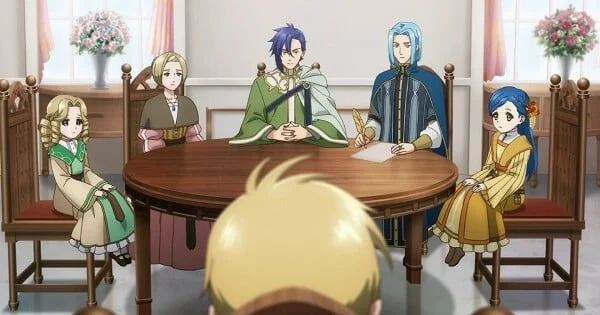
The narrative eventually circles back to the hunting competition and the subsequent garden party, framing the events as an informal courtroom proceeding. The audience learns that Wilfried was manipulated into participating in a series of events—including a deceptive game of hide-and-seek—designed to undermine his standing and sow discord within the ducal family.
The gravity of these actions is underscored by the presence of high-ranking adults, who serve as judges and witnesses. The inclusion of Charlotte in these proceedings is particularly notable; while she lacks the political authority to influence the outcome, her presence forces the participants to address the emotional stakes of the situation. The proceedings reveal a significant divide in strategy: while Ferdinand and other advisors advocate for the outright disinheritance of Wilfried due to his perceived incompetence, Rosemyne attempts to navigate the situation with a degree of leniency.

Strategic Implications and Political Vulnerability
The events surrounding Wilfried serve as a microcosm for the broader successor-faction subplot. The manipulation of high-status children, often directed by imprisoned or sidelined elders, is a recurring theme. The episode confirms that the instigators behind the harassment of Rosemyne are operating with a clear, utilitarian objective: to destabilize the current power structure by exploiting the vulnerability and density of the younger generation.
Data regarding the internal stability of the duchy suggests that such provocations are intended to force the Archduke’s hand. By creating a scenario where a successor acts against established protocols, the instigators aim to weaken the legitimacy of the Archduke’s chosen heirs. Rosemyne’s realization that these provocations are designed specifically to harass her faction—rather than achieve a larger strategic goal—marks a pivotal moment in her growth as a political actor. She is beginning to perceive the "long game" played by the nobility, moving beyond the idealistic compromises that characterized her early tenure.
The Conflict of Ideology: Naivety vs. Pragmatism
The resolution of the dispute—in which Rosemyne proposes a merciful path for Wilfried rather than the harsh exile suggested by Ferdinand—highlights a fundamental ideological divide. Ferdinand remains a staunch proponent of pragmatism, viewing Rosemyne’s approach as "naive." He operates under the belief that in the world of the nobility, sentimentality is a liability that can be exploited by rivals.
Conversely, Rosemyne’s approach represents an attempt to integrate her personal ethics into a system that largely rejects them. By securing a resolution that preserves Wilfried’s position—albeit with the loss of his absolute certainty for succession—Rosemyne manages a "unilateral win." She not only mitigates a disaster but also utilizes the opportunity to introduce a magical memory-reading device, positioning it as a tool for future stability.
Broader Implications for the Duchy
The aftermath of the garden party incident sets a new baseline for the series. The decision to spare Wilfried, while controversial among the adult advisors, establishes Rosemyne as a formidable political entity capable of balancing mercy with strategic necessity. However, the tension between her and Ferdinand regarding the management of the next generation of leadership remains unresolved.
As the season progresses, the following factors will likely dominate the narrative:
- The Mana-Induced Coma: The impending recovery period will force a power vacuum or necessitate a shift in administrative responsibilities, likely testing the loyalty of those surrounding Rosemyne.
- Succession Stability: With Wilfried’s status diminished but intact, the rivalry for the ducal seat remains a primary source of internal friction.
- The Role of the Next Generation: The further development of Charlotte will be crucial in determining whether she becomes a genuine political player or remains a tool for those vying for control.
The narrative choice to center the episode on Rosemyne’s internal process rather than the external events of the hunting competition was a deliberate stylistic decision. It allowed for a deeper exploration of how she reaches her conclusions, moving away from the "stuff that happens" model to a more character-driven political analysis. While the structure initially appeared disjointed, it ultimately served to emphasize the burden of decision-making placed upon Rosemyne, cementing her role as a central figure in the future of the duchy. The series continues to challenge the viewer to look past the surface-level antics of its child cast, revealing a complex, often cynical, political landscape that requires constant navigation and, at times, a willingness to challenge the status quo.