Kane Parsons’s feature film Backrooms (2026) arrives as a compelling cinematic exploration of a unique internet phenomenon, encapsulating a profound paradox of embodiment and time that resonates deeply with contemporary digital anxieties. An adaptation of Parsons’s wildly popular YouTube series of the same name, the film traces its origins to an unassuming photograph taken in 2003 of a former furniture store undergoing renovations in Oshkosh, Wisconsin. This image, uploaded anonymously to 4chan in 2019, inadvertently ignited a global phenomenon, spawning a vast, diffuse, and unsettling "Lovecraftian latticework" of anonymous mythmaking and creepypasta. The lore, centered around an infinite maze of eerily familiar yet unsettlingly vacant spaces, subsequently migrated to Reddit, where it fractured into distinct communities of "originalists" and "revisionists," each contributing to its prolific, ever-expanding narrative. This collaborative digital creativity is a striking example of hypermodern storytelling, predicated on the surreal anachronism of physical spaces that predate the advent of Web 2.0, imbued with a complex, often "curdled nostalgia" for a less mediated past.
The Genesis of a Digital Myth: From 4chan to Global Phenomenon
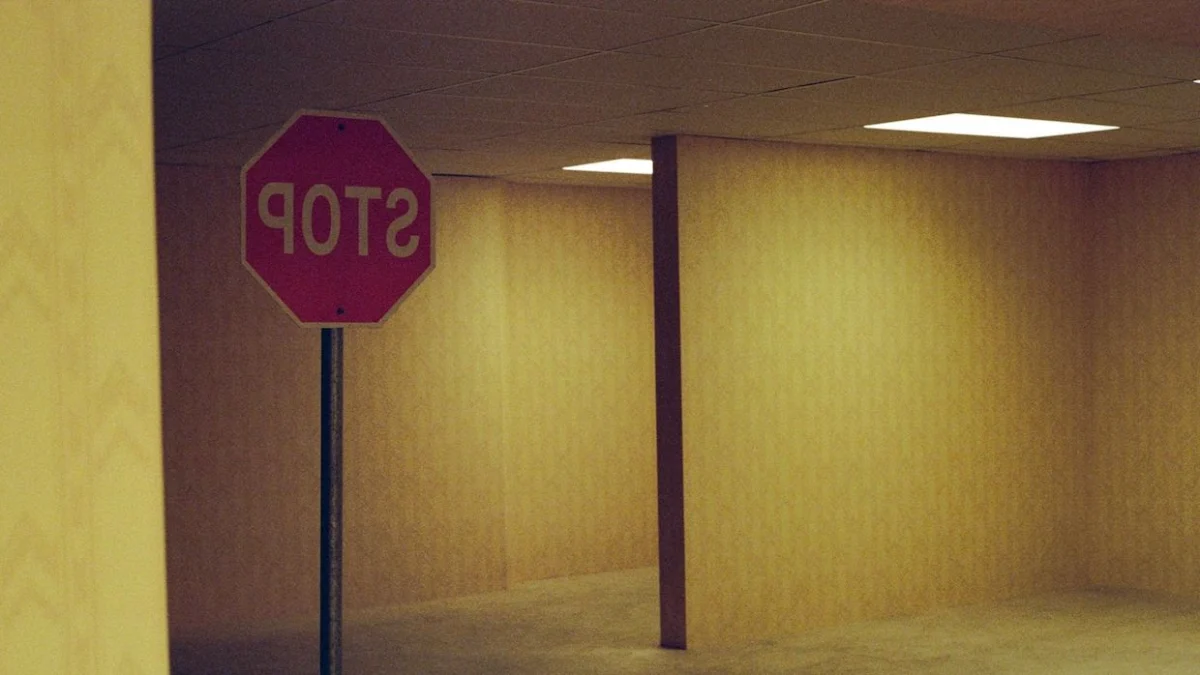
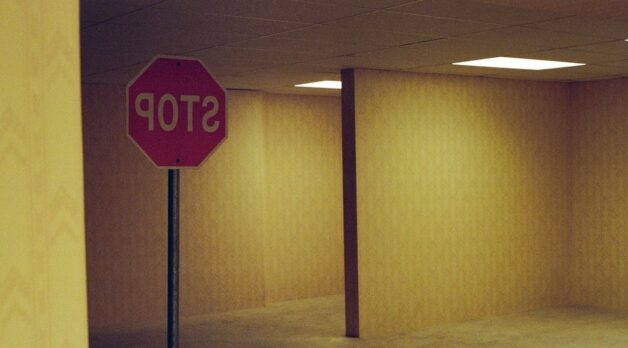
The journey of the Backrooms from a single photograph to a full-length feature film is a testament to the power of collective online imagination. The initial 2003 photograph, depicting a mundane, slightly unsettling interior of what appeared to be an office or retail space, contained elements that would become synonymous with the Backrooms aesthetic: drop ceilings, stained or unfinished walls, sodium-vapor fluorescent lighting, and cheap linoleum tile. When this image resurfaced on 4chan’s /x/ (paranormal) board in 2019, it was accompanied by a caption that described it as a place one might enter by "noclip[ping] out of reality," leading to an infinite maze of empty, yellow-wallpapered rooms. This simple premise quickly captivated users, tapping into a primal fear of being lost, isolated, and disoriented in a world that feels both familiar and fundamentally wrong.
The concept resonated so strongly that it rapidly evolved beyond the original image. Users began creating their own stories, images, and videos, expanding the lore to include various "levels" of the Backrooms, different entities inhabiting them, and elaborate survival guides. This collaborative storytelling, often referred to as "creepypasta" (horror-related legends or images copied and pasted across the internet), transformed a simple image into a sprawling, intricate mythos. Reddit became a central hub for this development, with subreddits like r/backrooms and r/liminalspaces emerging as key forums for sharing content, discussing theories, and further developing the lore. The distinction between "originalists," who sought to maintain the austere simplicity of the initial concept, and "revisionists," who introduced new creatures, levels, and narrative complexities, highlights the organic and often contentious nature of decentralized digital myth-making.
The Aesthetic of Liminality and Uncanny Nostalgia
The visual language of the Backrooms is crucial to its appeal. It draws heavily from the "trappings of early-aughts retail and domestic architecture," spaces that evoke a sense of uncanny familiarity for many, particularly American millennials and even younger generations. These are the nondescript hallways of a forgotten office building, the endless corridors of a vacant mall, or the quiet, sterile waiting rooms of an abandoned clinic. The most important characteristic is their "ominously empty" nature, transforming them into "Escheresque maze[s] to be explored at one’s own risk."
This aesthetic taps into the broader cultural phenomenon of "liminal spaces," a term that gained significant traction on social media platforms like TikTok and Instagram. Hashtags such as #nostalgiacore and #liminalcore have surged in popularity, particularly since the onset of the global pandemic. The pandemic, with its forced isolations and disruption of collective spaces, profoundly "broke our collective sense of time and troubled our sense of safety in common spaces." In this context, the yearning for an "unplugged past" became a prevalent coping mechanism, often manifested through "deceptive retrobait content" or "AI-generated imagery" depicting idealized, yet often subtly unsettling, versions of the past. These digital artifacts, even at their most ominous, are frequently "heavily sentimentalized in tone," creating a paradoxical mash-up of technologies and time periods that is essential to their aesthetic and emotional weight.
Cultural commentators suggest that this digital nostalgia, particularly among younger generations like Gen Z (who are "natives of these Backrooms," as the article notes Kane Parsons was seventeen when he began his web series), is a "double-edged sword of comfort and anxiety." While it offers a comforting escape to perceived simpler times, it also highlights a deep-seated anxiety about the present and future. The images often depict scenes of decay – Blockbusters overgrown with weeds, low-res shots of parking lots with tipped-over shopping carts, half-dead Toys ‘R’ Us signs, and vacant malls. As observers, both academic and amateur, have pointed out, the "entropic solipsism" of this media is "predicated on a deep sense of loss motivated by the modern internet itself." The common refrain, "I want to go there," underscores a longing for a past that is, by its very nature, unattainable.
The Film’s Narrative: A 1990s Lens on Future Anxieties
Parsons’s Backrooms grounds this sprawling internet lore in a specific, historical context: Santa Clara, California, in June 1990. This setting serves as a "technological and cultural point of no return," a pivot point just before the internet’s widespread adoption irrevocably reshaped society. The film introduces Clarke (Chiwetel Ejiofor), the owner of a failing furniture store named Ottoman Empire, whose cheap wares and impending liquidation mirror a collapsing economic and cultural landscape. His struggles symbolize a broader societal obsolescence, where the familiar structures of the past are crumbling under the weight of an uncertain future.
Parallel to Clarke’s plight is that of Mary (Renate Reinsve), his therapist, who grapples with the loss of her childhood home, demolished to make way for prefab condos. Her act of preserving a "chunk as a talisman against further dislocation" speaks to a profound human need to cling to physical memories in a world increasingly characterized by ephemerality. These personal narratives of loss and displacement are skillfully interwoven with the broader theme of technological transition. The film opens with Blair Witch-style DV-cam found footage of the Backrooms’ impossible byways, immediately establishing a raw, unsettling aesthetic reminiscent of early digital media. This quickly shifts to scenes featuring "floppy disks and a chunky old computer monitor," juxtaposing analog technologies on the cusp of obsolescence with the terrifying, emergent digital "void."
The pervasive "cybertechnological progress" is depicted as a "pressing specter." Outdated low-budget cable TV ads and self-help cassettes duel for attention on clunker TV sets, with announcers ironically asking, "Are you still using paper folders?" This portrays a society teetering on the edge of a technological revolution, grappling with the rapid pace of change. A poignant line from an explorer in the interdimensional lacunae, "We used to build MRI machines… Now we do this," highlights a societal shift in labor and purpose, where complex, tangible endeavors give way to something less defined, more abstract, and potentially meaningless. This sentiment underscores a collective disorientation, a sense that "no one has any idea what’s going on," and that the world is "changing too fast, getting too big to understand."
Mary’s observation, "We all have our loops," referring to repetitive patterns of anxiety, is central to the film’s thematic core. The Backrooms, which Clarke initially perceives as "windows into his own mind," are ultimately revealed as "a backdated representation of internet-enabled collective intelligence." This conceptualization highlights how technology, particularly the internet, compels us to "share those loops," to "doomscroll each other’s septic mindsets," creating a pervasive sense of shared anxiety even as it paradoxically fosters feelings of disconnection. However, the film’s "sharpest intercession into this now familiar strain of technoskepticism" is its nuanced ambivalence: "on every level, the world these characters live in, on the eve of today’s technological regime, wasn’t viable either." This suggests that the past was not a simpler, more stable alternative, but merely a different form of precarity, leaving characters with little recourse but to "go through the looking glass, become a glitch."
The Meta-Hauntological Dimension: AI, Memory, and the Digital Self
While the film’s "actual narrative… is rather run-of-the-mill, heavy-handed horror trauma-plotting," its true power lies in its "meta-hauntological tone-poem" on the ambivalent nature of our engagement with online nostalgia and the internet itself. Will Soodik’s screenplay is credited for its "highly calibrated ambiguity," particularly in never explicitly explaining the Backrooms’ existence. Instead, their emergence "at the precise moment when history is about to ‘end,’ before new media reshapes the world," transforms the film into "a kind of ghost story for the noncybernetic individual self." It mourns a form of human existence that is being irrevocably altered by technology.
A crucial dimension of the film’s commentary lies in its explicit parallel between the Backrooms and artificial intelligence. Both are depicted as being "based upon predictive models of iteration." The unsettling analogy, "It’s like describing a dog to someone who’s never seen a dog and then asking them to draw it," spoken by multiple characters, powerfully illustrates the generative void’s distorted "memory" for people, places, and things as it "mutates ad infinitum." This comparison draws a direct link between the infinite, algorithmically generated spaces of the Backrooms and the way AI constructs realities based on vast, yet incomplete or biased, datasets. It speaks to a fundamental anxiety about authenticity, originality, and the nature of reality in an age dominated by generative technologies.
Ejiofor’s character, Clarke, becomes the embodiment of this existential dread. "Fundamentally devoid of human connection, financial stability, or a viable future as the country transforms around him," he succumbs to "the false comfort of his own personal form of AI hallucination." His eventual fate, becoming "just another creepypasta on a Reddit subthread, made briefly tangible on film before returning to the liminal space of internet discourse once more," serves as a stark metaphor for the individual’s dissolution into the collective, often anonymous, narratives of the digital age. It’s a poignant statement on how individual identity can be absorbed, reinterpreted, and endlessly iterated upon within the vast, generative landscape of the internet, becoming a digital ghost in the machine.
Broader Implications and Cultural Impact
Backrooms (2026) stands as more than just a horror film; it is a significant cultural artifact that bridges the gap between internet subculture and mainstream cinema. Its critical reception will undoubtedly hinge on how effectively it translates the diffuse, experiential nature of the online Backrooms lore into a cohesive narrative, and how well its deeper philosophical themes resonate with audiences. Film critics are likely to praise Parsons’s visionary direction and his ability to elevate a niche internet phenomenon into a potent commentary on contemporary anxieties. The performances by seasoned actors like Chiwetel Ejiofor and Renate Reinsve lend gravitas to what could otherwise be dismissed as a mere genre exercise, grounding the surreal in human emotion.
The film’s exploration of "liminal spaces" and "digital nostalgia" reflects a broader societal reckoning with rapid technological shifts. The popularity of #nostalgiacore on platforms like TikTok, which boasts billions of views, underscores a pervasive yearning for simpler times, often romanticized through the lens of early internet aesthetics or pre-digital eras. This trend is not merely a benign appreciation of the past; it often carries undertones of "conservative political overtones," as some scholars and online commentators have noted, suggesting a desire to retreat from the complexities of the present into a perceived ideological comfort zone. Backrooms critically engages with this sentiment, exposing the "worryingly metastatic duality" of nostalgia-bait – "as a carcinogen, mutating the present into something brittle, passive, and self-annihilating."
Furthermore, the film’s commentary on AI and generative models is particularly timely, given the explosive growth of artificial intelligence technologies in the mid-2020s. The analogy of AI’s "memory" and iterative creation parallels the very process by which the Backrooms lore evolved online: a collective, iterative generation of content based on initial prompts and shared understanding, which then takes on a life of its own. This positions Backrooms as a prescient piece of speculative fiction, reflecting anxieties about the nature of reality, authenticity, and human agency in an increasingly algorithm-driven world.
In conclusion, Backrooms (2026) is poised to be a landmark film, not only for its audacious adaptation of internet lore but for its profound engagement with the anxieties of the digital age. By transforming a creepypasta into a cinematic experience, Kane Parsons offers a surprisingly nuanced understanding of the paradoxes inherent in our relationship with technology, memory, and the elusive nature of "simpler times." It challenges viewers to confront the uncomfortable truth that the past was never truly simple, and that the relentless pursuit of an idealized bygone era, particularly through mediated digital channels, is often a "knowingly futile" exercise that ultimately reshapes our present in unsettling ways. The film invites us to consider what it means to be human in an era where the boundaries between the physical and the digital, the real and the generated, are increasingly blurred, and where the very concept of individual identity risks dissolving into the vast, echoing corridors of collective digital consciousness.