The journey of Toho’s iconic kaiju franchise reached a historic milestone in March 2024 when Takashi Yamazaki’s Godzilla Minus One captured the Academy Award for Best Visual Effects. Operating on a lean budget estimated at less than $15 million, the Japanese production outpaced heavily financed Hollywood blockbusters to secure the franchise’s first-ever Oscar win. Now, attention has turned to its anticipated follow-up, Godzilla Minus Zero. As the film prepares for its theatrical rollout and subsequent awards-season campaign, industry analysts are evaluating whether this new installment can replicate its predecessor’s unprecedented Oscar triumph, particularly as it prepares to square off against Denis Villeneuve’s Dune: Part Three.
The Path of the King of the Monsters: A Chronological Retrospective
To understand the current Oscar trajectory of Godzilla Minus Zero, one must examine the meteoric rise of the modern Japanese-language Godzilla era. For decades, Toho’s legendary creature features were celebrated globally as cult classics of practical effects and miniature modelwork, yet they remained largely outside the consideration of mainstream Western prestige awards. That paradigm shifted permanently with the late 2023 release of Godzilla Minus One.
Directed, written, and with visual effects supervised by Takashi Yamazaki, the film set a new benchmark for the franchise. It grossed over $115 million worldwide—making it one of the most successful live-action Japanese films in U.S. box office history—and garnered critical acclaim, maintaining a 99 percent approval rating on Rotten Tomatoes based on more than 200 reviews.
The momentum culminated during the 96th Academy Awards ceremony. Nominated alongside major studio tentpoles such as The Creator, Guardians of the Galaxy Vol. 3, Mission: Impossible – Dead Reckoning Part One, and Napoleon, Godzilla Minus One achieved what many thought impossible: it won the Oscar for Best Visual Effects. This victory broke a decades-long streak of Hollywood dominance in the category, placing the Japanese production alongside recent winners such as Dune, Avatar: The Way of Water, and Dune: Part Two.
Following this historic win, development and anticipation for the sequel, Godzilla Minus Zero, intensified. Early promotional materials and trailers indicate that Yamazaki has once again taken the helm, expanding the scope and scale of the narrative while preserving the human-centric emotional core that defined the 2023 predecessor.
Analyzing the Technical Scale and Visual Aesthetics of Godzilla Minus Zero
From a purely technical standpoint, Godzilla Minus Zero is engineered to elevate the visual lexicon established in the previous film. While the original relied heavily on post-World War II devastation and isolated coastal attacks to maximize its limited budget, the sequel introduces significantly more complex action sequences and dynamic environmental variables.
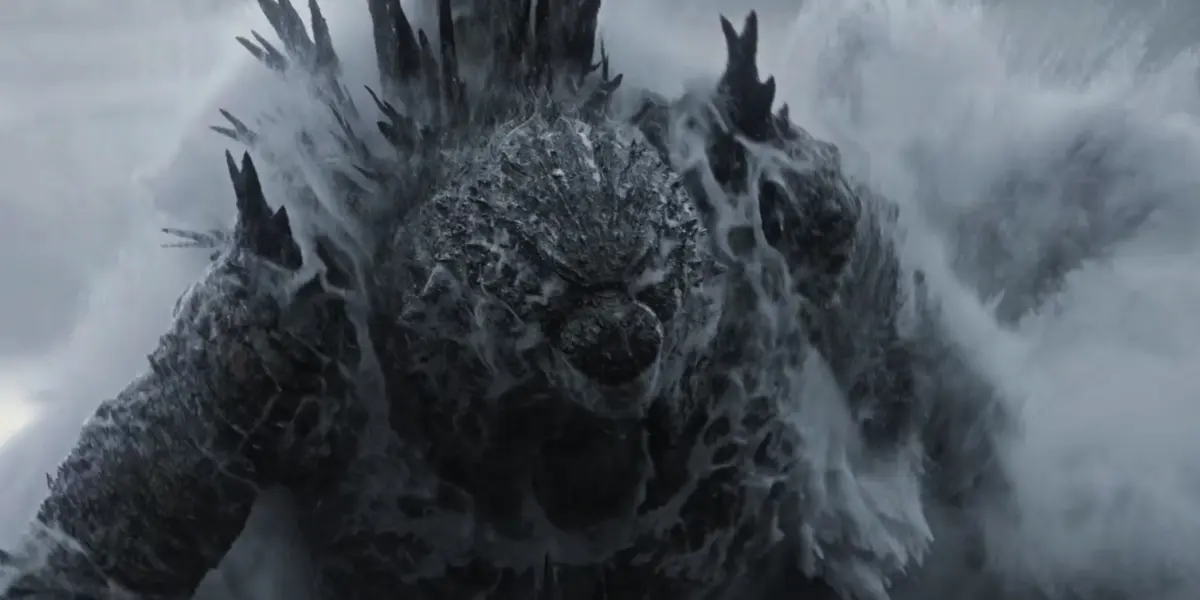
Industry professionals who have reviewed early footage note a marked increase in visual fidelity, particularly in intricate close-up work on Godzilla’s facial features, where micro-details in the creature’s eyes convey a heightened sense of menace and realism. Despite the larger canvas, the production maintains the philosophy that digital effects must serve narrative gravity rather than empty spectacle.
However, visual ambition alone does not secure Academy recognition. The technical branches of the Academy of Motion Picture Arts and Sciences evaluate contenders based on innovation, seamless integration, and artistic contribution to the storytelling. While Godzilla Minus Zero boasts a distinct advantage in showcasing overt, undeniable computer-generated imagery—where the audience immediately recognizes the digital creation of the title character—it enters an extremely competitive field.
The Ultimate Clash: Godzilla Minus Zero Versus Dune: Part Three
The central narrative of the upcoming visual effects race centers on a high-stakes collision between Godzilla Minus Zero and Dune: Part Three. This matchup serves as a direct test of historical voting patterns within the Academy’s Visual Effects branch.
In recent years, the Best Visual Effects category has frequently favored expansive science-fiction epics that blur the lines between practical production design and digital enhancement. The Dune franchise, under the direction of Denis Villeneuve, has established a firm stronghold over the category, winning for the first installment and widely expected to dominate with the third chapter. These films utilize seamless CGI that integrates so fluidly with physical sets and location shooting that audiences often cannot distinguish between the physical and the digital.
Conversely, Godzilla Minus Zero represents the triumph of distinct, artistry-driven digital creation executed under financial constraints that are a fraction of typical Hollywood studio budgets. This dynamic mirrors the famous 2016 Oscar race where Alex Garland’s lower-budget sci-fi psychological thriller Ex Machina triumphed over George Miller’s technical tour-de-force Mad Max: Fury Road. In that instance, the Academy voters looked past the heavy technical footprint of the frontrunner to reward the focused, high-impact digital artistry of the underdog.
Beyond Visual Effects: Potential Nominations and Below-the-Line Prospects
While the Visual Effects category remains the primary battleground for Godzilla Minus Zero, industry observers are closely monitoring whether the film can expand its footprint into other below-the-line categories.
The original Godzilla Minus One faced an uphill battle to secure its single nomination, ultimately missing out on broader branch recognition despite critical praise for its musical score, sound design, and historical recreation. For Godzilla Minus Zero, a similar trajectory is anticipated, though certain branches present viable pathways for surprise support.
Chief among these is the Makeup and Hairstyling branch. The Academy has demonstrated an increasing willingness to recognize international productions in this category, highlighted by recent shortlist appearances and nominations for foreign-language features such as The Ugly Stepsister and Kokuho. Should Godzilla Minus Zero feature a standout, visceral sequence involving physical transformation or trauma—similar to the harrowing radiation-burn depictions in its predecessor—it could capture the attention of makeup artists and hairstylists voting in the branch.
Additionally, critical praise has already begun focusing on the performances, particularly returning lead actor Ryūnosuke Kamiki. Kamiki’s ability to anchor a blockbuster monster movie with a deeply emotional, resonant character arc portraying survivor’s guilt and desperation has drawn international acclaim. While lead acting nominations in major international features remain exceedingly rare for monster movies, the overall prestige surrounding the production elevates the profile of everyone involved.
Broader Industry Implications and Future Outlook
The commercial and critical trajectory of the modern Godzilla franchise carries significant implications for the global film industry. For decades, the visual effects landscape has been dominated by a handful of major American studios outsourcing work to massive multinational VFX houses. The success of Yamazaki’s films demonstrates that high-tier visual artistry can be achieved efficiently through centralized Japanese creative pipelines, challenging traditional budget assumptions.
Furthermore, if Godzilla Minus Zero manages to secure a nomination—or pull off an upset win—against a major studio heavyweight like Dune: Part Three, it would signal a permanent shift in how international genre cinema is evaluated by Western awards bodies. It would validate that passion, distinct artistic vision, and innovative storytelling can transcend language barriers and economic disparities on Hollywood’s biggest night.
As the release date approaches and the campaign season takes shape, the film industry will be watching closely to see if lightning can strike a third time for Takashi Yamazaki and Toho’s enduring cinematic creation.