The Systematic Deconstruction of the Bowden Household
The episode opens in the immediate aftermath of a horrifying domestic discovery. For weeks, the Bowden family had been plagued by a sense of being watched, a tension that culminated in the revelation that Nevaeh, played by Malia Pyles, had been living within the very walls of their home. This element of "phrogging"—the act of living in a house secretly—adds a layer of Gothic horror to the series. Nevaeh’s presence was not merely a physical intrusion but a psychological one, as she had been systematically grooming the Bowdens’ son, Zach (Joe Anders), turning him against his parents.
While Zach begins the arduous process of therapy to undo the damage of Nevaeh’s influence, the episode quickly establishes that the family’s respite is an illusion. The police search of Max Cady’s home, prompted by a break-in orchestrated by Anna’s estranged father, Brandon (Ted Levine), initially appears to be a victory for the Bowdens. However, Cady’s legal acumen and foresight allow him to turn the investigation into a trap. The episode highlights a recurring theme in this iteration of Cape Fear: the law is not a shield for the innocent but a weapon for those who know how to wield its technicalities.
A Gruesome Discovery and the Framing of Tom Bowden
The narrative takes a macabre turn involving Natalie Bowden (Lily Collias), who has become increasingly susceptible to Cady’s manipulation. Believing Cady might be her biological father, Natalie accompanies him on a "field trip" to his childhood home. During this excursion, the horror of Cady’s character is fully realized. He drugs Natalie, creating a window of opportunity to execute a brutal murder using Tom Bowden’s personal firearm. The victim is Ray, played by Jamie Hector, a close friend of Anna’s who had been investigating Cady’s past.
The discovery of the crime is staged with cinematic brutality. Natalie, attempting to clear her head with a swim, finds a chest at the bottom of the family pool. Expecting perhaps a hidden treasure or a secret, she is instead confronted with Ray’s dismembered remains, including his decapitated head. This moment serves as the episode’s primary catalyst, shifting the police investigation from a harassment case to a high-profile homicide. Because Cady utilized Tom’s gun, the forensic evidence immediately points toward the patriarch of the Bowden family, effectively flipping the roles of victim and aggressor.
The Betrayal of Brandon and the Legal Quagmire
The complexity of the Bowden family’s internal rot is further explored through Anna’s relationship with her father, Brandon. Seeking answers and an escape route, Anna visits Brandon, only to find that he has been compromised. After being bitten by Cady’s dog during his earlier break-in, Brandon’s loyalty shifts from his daughter to his own self-preservation. In a move that underscores the mercenary nature of the characters surrounding the Bowdens, Brandon demands $100,000 for his silence and cooperation.
This betrayal is compounded when Cady and his legal team spin a narrative that Ray had discovered Tom’s intent to frame Cady. By the middle of the episode, the structural integrity of the Bowden marriage collapses. Tom discovers photographs on Ray’s phone showing a forced kiss between Anna and Max, fueling a fire of distrust. When Natalie, guilt-ridden and confused, admits she gave Cady the gun, the police have sufficient probable cause to arrest Tom. The irony is palpable: Tom, a man who built his life on the foundations of the law, is now being crushed by it, while Cady, a convicted criminal, stands as the "victim" in the eyes of the public and the media.
Historical Context and the Evolution of Max Cady
To understand the weight of Episode 8, one must look at the historical context of the Cape Fear intellectual property. Originally based on John D. MacDonald’s 1957 novel The Executioners, the story has seen two major film adaptations. The 1962 version featured Gregory Peck and Robert Mitchum, while the 1991 Martin Scorsese remake starred Nick Nolte and Robert De Niro. This Apple TV+ series, developed by Nick Antosca and executive produced by Steven Spielberg and Martin Scorsese, expands the narrative into a ten-episode format, allowing for a deeper exploration of the legal and psychological nuances that a two-hour film cannot accommodate.
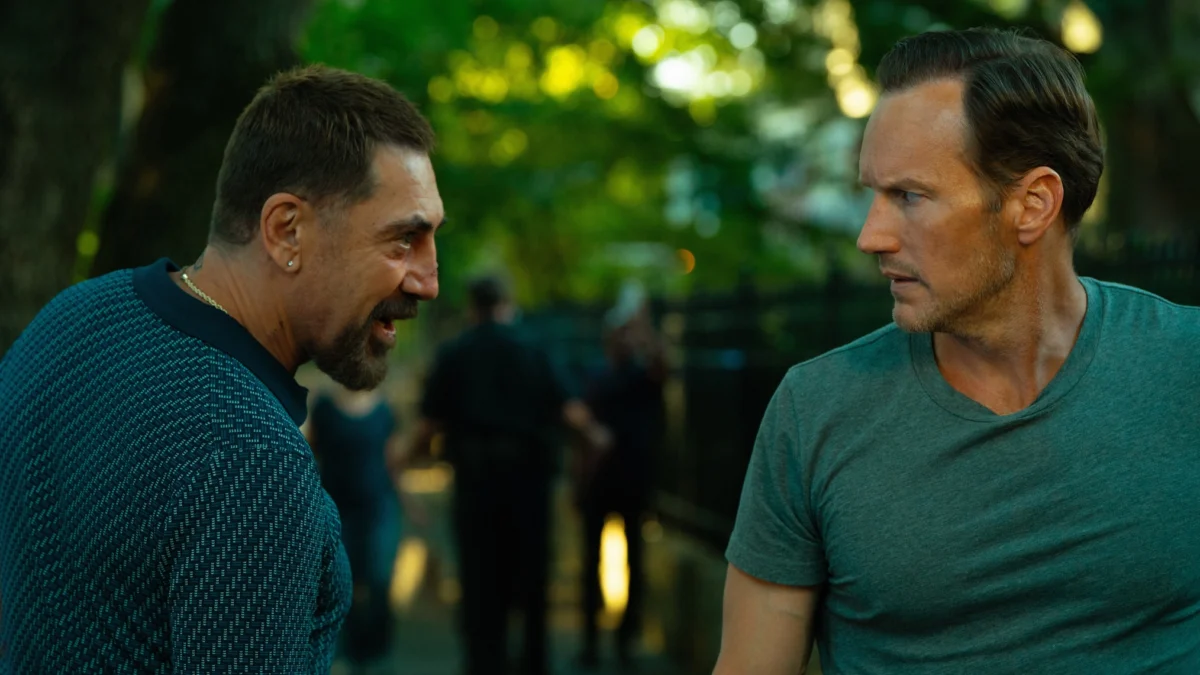
In this version, Javier Bardem’s Max Cady is less of a physical brute and more of a "legal predator." The series emphasizes the failures of the justice system, suggesting that the "truth" is often less important than the "narrative." Episode 8 illustrates this through the scene where Cady convinces Brandon to testify on his behalf on national news, effectively convicting Tom in the court of public opinion before he even reaches a courtroom.

Performance Analysis: The Transformation of Natalie and Zach
The episode’s emotional core is anchored by the performances of Lily Collias and Joe Anders. In interviews following the release of the episode, the actors reflected on the difficulty of portraying characters whose sense of reality has been systematically dismantled.
Lily Collias noted that her character’s journey involved "stripping away her naivety and her youthfulness." She described the process of building Natalie’s courage and "teenage angst" over an eight-month filming period, moving from a "happy-go-lucky" persona to a character defined by secrecy and trauma. This transformation is visible in the scene where Natalie confronts Max with a firearm, a desperate attempt to reclaim agency that ultimately leads to her own arrest.
Joe Anders, discussing his portrayal of Zach, highlighted the intensity of playing a character who begins at such a "low point." He emphasized the importance of making Zach a "living, breathing person" rather than a trope of a troubled teenager. Zach’s arc in Episode 8, where his mental state hangs by a thread after the discovery of Nevaeh’s grooming, serves as a poignant reminder of the collateral damage caused by Cady’s vendetta.
Anna’s Backstory and the Uncertainty of Paternity
A significant portion of Episode 8 is dedicated to unearthing Anna’s buried past. Under confrontation from Natalie, Anna reveals a history of blackouts and substance abuse. She explains that she met Max Cady while he was searching for his missing wife and son. During a period of emotional instability while engaged to another man, Anna and Max shared a brief, intense connection.
The revelation that Anna does not know if Max or her late husband is Natalie’s biological father adds a layer of biological determinism to the horror. For years, Anna attempted to "bury her past" by marrying a stable man and quitting drinking, but Cady’s return forces her to confront the possibility that her family’s foundation was built on a lie. This backstory reframes Cady’s obsession not just as a quest for revenge, but as a twisted attempt to reclaim a family he believes is rightfully his.
Implications for the Season Finale
As the episode concludes, the Bowden family is in a state of total ruin. Tom is incarcerated, Natalie is in juvenile detention—ironically placed in the same vicinity as Nevaeh—and Zach is mentally shattered. The title of the episode, "Los tiempos de Dios son Perfectos," is delivered by Cady with chilling calm in a hospital bed after being shot by Natalie. His insistence that Anna is the one responsible for the deaths of his wife and son suggests a level of delusion or a deeper secret yet to be revealed.
The final moments of the episode see Anna taking a proactive, albeit dangerous, stance. Leaving her broken family behind, she travels to the Cape Fear River, specifically to a boat owned by a character named Crystal (Juliette Lewis). This setting is a direct homage to the climax of the previous film versions, suggesting that the series will conclude with a final confrontation on the water.
Analytical Conclusion: The Law as a Weapon
"Los tiempos de Dios son Perfectos" functions as a critique of the vulnerability of the nuclear family in the face of a dedicated sociopath. By enriching the narrative with legal technicalities, generational trauma, and the weaponization of the media, the showrunners have updated Cape Fear for a contemporary audience. The episode demonstrates that Max Cady’s greatest power is not his physical strength, but his ability to mirror the flaws of his victims. He uses Anna’s secrets, Tom’s gun, and Natalie’s confusion to weave a web that the legal system is seemingly unable or unwilling to untangle.
As the series heads into its final episodes, the central question remains whether Anna can defeat Cady by playing his game, or if the act of fighting him will require her to become the very thing she fears. The episode sets the stage for a finale that promises to explore the limits of justice and the high cost of protecting one’s family from a past that refuses to stay buried.