"Chief of Thieves: Chu Liu Xiang," a 2021 Chinese online production directed by Dong Wei, represents the latest cinematic endeavor to adapt the legendary wuxia hero created by Gu Long. This film draws its narrative foundation from "Xuehai Piaoxiang" (Fragrance of the Sea of Blood), the inaugural novel in Gu Long’s celebrated Chu Liu Xiang series. The production aims to introduce a new generation to the adventures of Chu Liu Xiang, famously nicknamed "Daoshuai" or "Chief of Thieves," a character synonymous with upholding justice while operating outside conventional societal norms by pilfering from the affluent to aid the less fortunate. Known for his exceptional Qinggong, the weightless skill, and his signature metal hand fan, Chu Liu Xiang is unique among martial arts heroes for his unwavering principle of never taking a life. The film explores Chu’s formative years, chronicling his chance encounter with the enigmatic Mu Qianyu and the pivotal experiences that inspire his transformation into the revered Chief of Thieves.
The Enduring Legacy of Gu Long and Chu Liu Xiang
To fully appreciate the context of "Chief of Thieves: Chu Liu Xiang," it is essential to understand the immense cultural impact of its source material and its creator, Gu Long. Alongside Jin Yong, Gu Long stands as one of the two pillars of modern wuxia literature, shaping the genre with his distinctive narrative style, complex character psychology, and often philosophical undertones. While Jin Yong’s works are renowned for their intricate plots, grand historical backdrops, and clear-cut moralities, Gu Long carved his niche with stories characterized by mystery, suspense, fatalism, and a more ambiguous ethical landscape. His protagonists often grapple with internal conflicts and navigate a world of shifting alliances and betrayals, where heroism is less about brute force and more about wit, charisma, and a unique moral code.
Chu Liu Xiang, whose given name "Liu Xiang" translates to "lingering fragrance," embodies many of Gu Long’s signature themes. He is not merely a martial artist but a master detective, a charming rogue, and a symbol of freedom. His adventures often involve solving intricate mysteries, outsmarting powerful adversaries, and charming beautiful women, all while maintaining his code of honor. This multifaceted persona has cemented Chu Liu Xiang’s place as one of the most beloved and frequently adapted characters in wuxia history. The constant reinterpretation of his stories across various media underscores the timeless appeal of his character and the universal themes of justice, adventure, and personal freedom he represents.
A History of Adaptations and the Weight of Expectation
The 2021 online film enters a long lineage of Chu Liu Xiang adaptations, each carrying the weight of audience expectations and comparisons to previous iterations. One of the most iconic portrayals remains Ti Lung’s dashing performance in the Shaw Brothers’ 1977 classic, "Clans of Intrigue." This film, alongside numerous television series, including Adam Cheng’s highly acclaimed portrayal in the 1979 TVB series, has set a high bar for subsequent actors taking on the role. These earlier adaptations, often celebrated for their robust storytelling, charismatic leads, and influential martial arts choreography, have ingrained a particular image of Chu Liu Xiang in the collective consciousness of wuxia enthusiasts.
The proliferation of wuxia adaptations across film and television reflects the genre’s enduring popularity, but also presents significant challenges for new productions. Modern adaptations must navigate the delicate balance between honoring the source material’s essence and introducing contemporary storytelling techniques and visual effects to appeal to new audiences. The transition from traditional theatrical releases to online platforms further influences production choices, budgets, and narrative structures, often favoring faster pacing and direct engagement for a streaming-first audience.
Production and Narrative Structure of the 2021 Film
"Chief of Thieves: Chu Liu Xiang" distinguishes itself as an online production, a format that has gained significant traction in the Chinese entertainment industry. These web-films typically feature shorter runtimes, often around 80-90 minutes, and are designed for direct-to-streaming release on platforms like Tencent Video, iQiyi, and Youku. This model allows for a higher volume of content production and caters to a demographic accustomed to on-demand viewing.
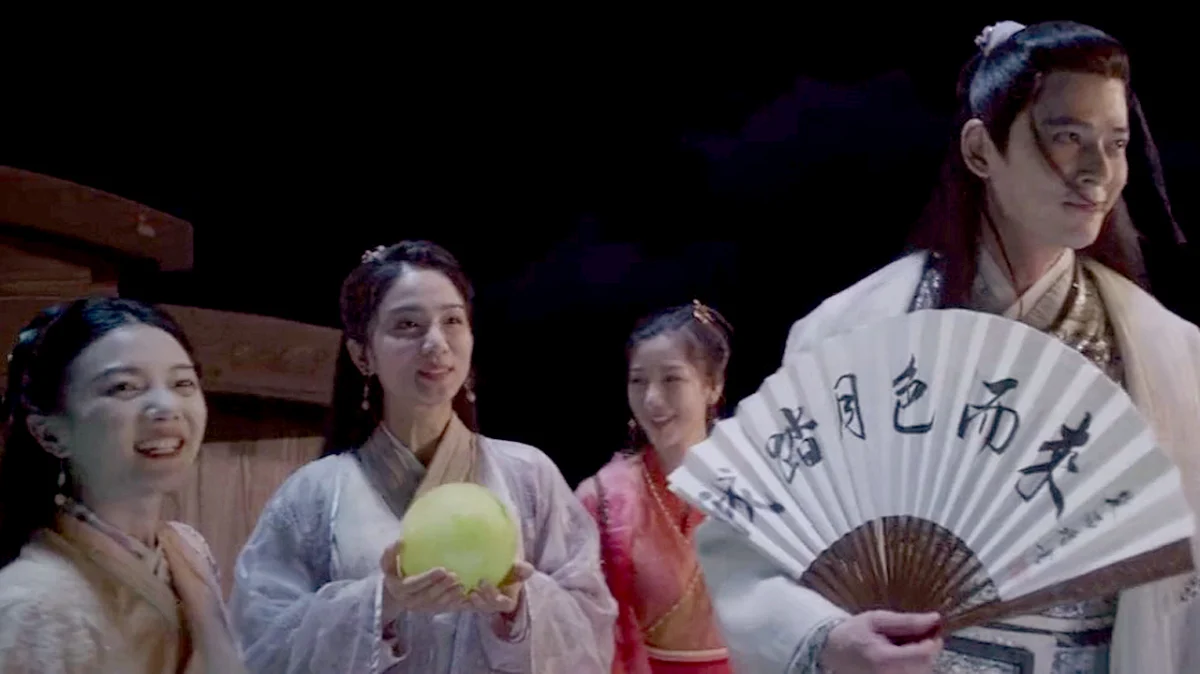
The film’s narrative commences with an action-packed opening scene set on the ocean, showcasing Chu Liu Xiang’s audacious theft of a massive Night Pearl from Lord Wu’s vessel. This sequence, characterized by heavily wire-assisted action and intense fistfights, immediately establishes the film’s tone as a martial arts fantasy. The plot then introduces Mu Qianyu, the newly appointed leader of the all-female Shenshui Palace sect, initially disguised as a man. Her encounter with Chu, her display of the Shenshui Palm technique against a pickpocket, and their subsequent camaraderie play a crucial role in inspiring Chu to embrace his destiny as a grand thief.
The central conflict quickly unfolds with the introduction of a group of ambitious Japanese invaders, led by the ronin Tianfeng Shisilang. Their objective is to seize the "Heavenly Divine Water" of Shenshui Palace, a mystical substance that grants immense power, with the ultimate goal of conquering the Central Plains. The infiltration of Shenshui Palace by a female ninja, disguised as Mu Qianyu, who poisons and kills the supreme leader, plunges the martial arts world into chaos. Chu and the real Mu Qianyu soon find themselves embroiled in this power struggle, becoming prime targets for both the invaders and internal factions.
Casting and Performance: A Mixed Reception
The casting choices for "Chief of Thieves: Chu Liu Xiang" elicited considerable discussion, particularly regarding the lead role. Taiwanese television actor Dylan Kuo, known also as Guo Pinchao, was cast as Chu Liu Xiang during his early years. At the time of production, Kuo was in his forties, a factor that, according to critical assessments, created a noticeable disconnect with the portrayal of a younger Chu. While Kuo reportedly made earnest efforts, his performance was perceived by some as "petty and awkward," struggling to embody the quintessential carefree and dashing essence envisioned by Gu Long and previously captured by actors like Ti Lung. This particular casting choice highlights a common challenge in adaptations: balancing an actor’s established persona with the specific demands of a beloved character’s origins. Industry observers suggest that this discrepancy might have contributed to the film’s portrayal aligning more with generic fantasy melodramas rather than the nuanced depth of Gu Long’s original creation.
In contrast, Chinese actress Kang Ning garnered significant praise for her portrayal of Mu Qianyu. Her "fiery" and "impressive" performance as the new leader of Shenshui Palace and Chu’s love interest stood out. Despite the story centering on Chu, Mu Qianyu’s character was noted for being equally significant and well-developed, adding substantial depth to the narrative. However, the nearly two-decade age difference between Kang Ning and Dylan Kuo was frequently cited as creating an "unlikely and illogical couple" dynamic, which some critics felt detracted from the romantic subplot’s credibility. Supporting roles included Zhou Xiaofei as the palace matriarch Shuimu Taiji, Yue Dongfeng as the old master Su Bufan, and Joyin Cai as his daughter Su Rongrong, who nurses a crush on Chu, each contributing to the ensemble cast.
Technical Execution and Aesthetic Choices
The technical aspects of "Chief of Thieves: Chu Liu Xiang" presented a blend of strengths and areas for improvement. The costume design, under the direction of Chen Yunzhu, was frequently highlighted as a visual strength. The outfits worn by the leaders of Shenshui Palace, in particular, were described as "colorful and detailed," contributing to the film’s overall aesthetic appeal and visual richness. Key visual highlights also included the elaborate town parade and Chu Liu Xiang’s serene mountain retreat, which provided memorable backdrops for the unfolding drama. Furthermore, the film’s ending theme song was noted for being "memorable and catchy," adding to the production’s auditory charm.
However, the action choreography, overseen by Chao Wei, received a more moderate assessment. While the film heavily utilized wirework to emphasize Chu Liu Xiang’s renowned Qinggong or "flying" abilities, critics observed that the overall action sequences were "average" and lacked distinctive standout moments. This observation is significant for a wuxia production, where innovative and impactful martial arts sequences are often a cornerstone of audience engagement and critical acclaim. The reliance on common wire-fu techniques, while standard in many genre films, did not elevate the fight scenes to a level that would distinguish the film in a crowded market of martial arts cinema.
Narrative Coherence and Genre Classification
A recurring point of contention in the critical reception of "Chief of Thieves: Chu Liu Xiang" was its narrative coherence. The plot was described as "heavily contrived and at times hilarious," with a noticeable "lack of logic" in its progression. This included criticisms regarding the main conflict involving the Japanese invaders and Shenshui Palace, which some found "untenable." Moreover, the screenplay was observed to grant lead characters the seemingly arbitrary ability to fluctuate their fighting skills from scene to scene, a narrative device that undermined the consistency of character abilities. An intriguing, albeit somewhat unusual, plot detail was the revelation that the "Heavenly Divine Water" was, in fact, a form of Chi Kung or inner energy, enabling users to extract and project liquid from their bodies as a weapon. This creative interpretation of a mystical element added a unique twist but also contributed to the film’s departure from more traditional wuxia elements.
Ultimately, "Chief of Thieves: Chu Liu Xiang" is best characterized as a "fantasy melodrama with a bit of kung fu thrown in." This classification underscores its blend of fantastical elements, heightened emotional drama, and martial arts action. While the performances were generally deemed "decent," particularly Kang Ning’s, the production was largely seen as failing to fully capture the unique charm and depth of Gu Long’s iconic protagonist.
Broader Implications and Market Positioning
The release of "Chief of Thieves: Chu Liu Xiang" as an online production reflects the evolving landscape of Chinese cinema, where streaming platforms are increasingly vital for content distribution and audience reach. These films often target specific demographics with their blend of action, romance, and fantasy, offering accessible entertainment for a broad base of online viewers. With a runtime of approximately eighty minutes, the film is designed for quick consumption, fitting seamlessly into the online viewing habits of contemporary audiences.
Despite its criticisms regarding narrative and casting, the film serves as a "loose adaptation" and offers "a fairly light, entertaining watch." Its presence contributes to the continuous efforts to adapt classic wuxia literature for modern audiences, ensuring that characters like Chu Liu Xiang remain relevant across generations. While it may not reach the iconic status of its predecessors, "Chief of Thieves: Chu Liu Xiang" fulfills its role within the online film ecosystem, providing a new interpretation of a beloved hero and continuing the rich tradition of wuxia storytelling in the digital age. The challenges faced by this production also offer valuable insights into the complexities of adapting revered literary works and the delicate balance required to satisfy both nostalgic fans and new viewers in a rapidly changing media environment.