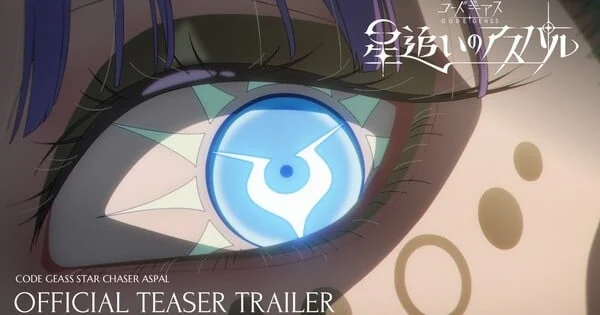
The official YouTube channel for the celebrated Code Geass franchise has unveiled a teaser trailer for its latest animated entry, Code Geass Star Chaser Aspal (Code Geass Hoshi Oi no Aspal). This announcement marks the most significant development in the series since the conclusion of the 2024 project Code Geass: Rozé of the Recapture. As the franchise continues its ambitious 10-year plan initiated in 2019, this new production signals a strategic expansion of the series’ universe, confirming a 2027 release window that aims to maintain the momentum established during the franchise’s 20th-anniversary celebrations.
Production and Creative Leadership
The development of Code Geass Star Chaser Aspal features a robust creative team comprised of industry veterans known for their work on high-profile science fiction and character-driven narratives. Directing the project is Kazuya Nomura, whose extensive filmography includes Ghost in the Shell: The New Movie, the second season of Sengoku Basara – Samurai Kings, and the two-season run of Moriarty the Patriot. His appointment suggests a focus on the tactical and political thriller elements that have historically defined the Code Geass aesthetic.
Supporting Nomura is series scriptwriter Mado Nozaki, recognized for the light novel Hello World and the intellectual science-fiction series KADO – The Right Answer. Character design duties have been assigned to Rolua, known for their work on the light novel series Yuusha Party kara Tsuihou Saretakedo, while the specialized design of the Agarmatha—a critical mechanical element—is credited to Yoshi. The visual identity of the project is further bolstered by Junbun Lin, who brings experience from Mobile Suit Gundam: The Witch from Mercury and the Mobile Suit Gundam G-Self film project, overseeing the background and special effects. The title logo design is the work of Ichinogi, providing a foundational aesthetic for the new entry.
Historical Context and The 10-Year Plan
The announcement of Star Chaser Aspal is the latest manifestation of a long-term strategic initiative announced by producer Kōjirō Taniguchi in 2019. Following the release of the film Code Geass: Lelouch of the Re;surrection, Taniguchi categorized the project as "Phase 1" of a decade-long roadmap intended to revitalize the brand for both legacy fans and new audiences.
Since the original television series debuted in 2006, the franchise has undergone several shifts in scope and format. The 2008 sequel solidified the series as a global staple of the mecha genre, but the subsequent years saw a diversification of the brand. From the five-part theatrical spinoff Code Geass: Akito the Exiled (2012–2016) to the compilation film trilogy (2017–2018), which re-imagined the original story for a new generation, the franchise has consistently leveraged theatrical distribution to test market viability. The 2024 release of Code Geass: Rozé of the Recapture, which utilized a hybrid model of theatrical exhibition followed by a 12-episode streaming run on Disney+, further demonstrated the franchise’s successful transition into modern digital distribution channels.
Diversification: Manga and Stage Productions
Beyond the core animated entries, the Code Geass intellectual property has expanded into multi-media crossover events. On July 10, 2026, the franchise launched an ambitious collaboration titled Shin Kidō Senki Gundam W x Code Geass – Hangyaku no Lelouch – Minuet Zero. Published on Kadokawa’s KadoComi platform, this manga crossover bridges two of the most influential mecha franchises in history, with Kōjirō Taniguchi of Sunrise credited for the scenario. This partnership underscores a broader industry trend of "franchise synergy," where established properties are combined to maximize cross-demographic engagement.

Simultaneously, the 20th-anniversary commemorative efforts include a significant theatrical component. The musical stage play Code Geass: Lelouch of the Rebellion – Seido ni Jyunzuru Kishi 2 (A Knight who Follows His Beliefs 2) is scheduled for an early 2027 run. Performances are slated for Osaka from January 23 to 25, followed by a Tokyo residency from January 29 to February 1. This, paired with a major 20th Anniversary Exhibition scheduled for late 2026 in both Tokyo and Osaka, illustrates the comprehensive nature of the brand’s current promotional cycle.
Analysis: Market Implications and Strategic Positioning
The decision to announce Star Chaser Aspal years in advance is a deliberate strategy to manage consumer expectations and maintain high levels of audience anticipation. By spacing out announcements—from the December 2024 general announcement of "several new works in production" to the specific 2027 target date—the producers have maintained a consistent media presence without overloading the release calendar.
From an industry perspective, the Code Geass franchise represents a rare example of a long-running original property that has successfully avoided stagnation. By rotating creative directors and exploring different temporal settings within the universe, the brand avoids the "sequel fatigue" often associated with decades-old anime series. The reliance on established talent like Kazuya Nomura and Mado Nozaki indicates a commitment to maintaining a high production standard, which is essential for competing in an increasingly saturated market of high-budget streaming anime.
Furthermore, the integration of theatrical, streaming, and print media demonstrates an omnichannel distribution approach. By utilizing Kadokawa’s internal platforms for manga and Disney+ for global streaming, the franchise is effectively minimizing its reliance on traditional linear television, which has seen declining viewership among younger demographics. The success of the 2024 Rozé of the Recapture series provided the necessary data to justify the continued investment in new, original content rather than relying solely on remakes or re-releases.
Future Outlook
As the 2027 premiere approaches, the focus for the Code Geass franchise will likely remain on maintaining the "10-year plan" trajectory. With the stage plays and exhibitions serving as bridge events to keep the fanbase engaged, the arrival of Star Chaser Aspal will serve as the next major anchor for the brand.
For followers of the series, the current era of the franchise is defined by its willingness to experiment with narrative tone while respecting the established lore of the Lelouch of the Rebellion era. The involvement of Sunrise and the Kadokawa group ensures that the franchise remains a pillar of their respective portfolios. As the production enters its final stages leading into 2027, observers expect further announcements regarding the vocal cast, musical score, and international distribution agreements, which will likely follow the same successful template established by previous entries in the series.
The longevity of Code Geass—now spanning over two decades—serves as a case study for intellectual property management in the anime industry. By balancing nostalgic stage performances with forward-looking, high-concept anime productions, the franchise ensures it remains culturally relevant in a shifting media landscape. With the 2027 target for Star Chaser Aspal, the franchise is positioned to continue its influence, bridging the gap between the classic mecha roots of the 2000s and the modern demands of global animation consumers.