The landscape of television awards administration is undergoing a profound structural shift, culminating in a high-stakes showdown at the upcoming Primetime Emmy Awards on September 14, 2026. While the Academy of Television Arts & Sciences routinely adjusts its governance, the decision to merge the variety talk series and scripted variety series categories has inadvertently engineered a blockbuster clash. Heavyweights Stephen Colbert, Jimmy Kimmel, and John Oliver will now compete directly against each other, alongside NBC’s institutional sketch comedy pillar, Saturday Night Live. This convergence of formats, occurring against a backdrop of intense political friction and sweeping industry restructuring, transforms what is normally an evening of Hollywood pageantry into a barometer of cultural and political tension.
Understanding the Mechanics of the 2026 Emmy Rule Revisions
To fully grasp the gravity of the upcoming September ceremony, one must examine the intricate mechanics of the Television Academy’s regulatory framework. The Primetime Emmy Awards distribute 23 primary awards covering comedy, drama, limited series, variety, and reality competition genres. Concurrently, roughly 100 additional accolades are conferred across craft and guest-acting categories during the preceding Creative Arts Emmy ceremonies.
However, the Academy’s perennial adjustments to category eligibility frequently generate unintended consequences. A primary example in the 2026 cycle is a newly implemented rule barring performers from receiving guest acting nominations for roles in which they were previously nominated as leads or supporting actors. This regulatory tightening immediately impacted industry veterans; most notably, Jon Hamm faced disqualification for his guest appearance on Apple’s The Morning Show. Because Hamm had secured a supporting actor nomination for the exact same role in 2024, the streamer’s submission was deemed ineligible, though Hamm retained eligibility in two separate categories.
Yet, it is the restructuring of the variety categories that has captured the industry’s most intense scrutiny. The history of the variety category is defined by a continuous cycle of division and unification. Established in 1951, the category underwent a brief bifurcation in the early 1970s to separate talk-format programs like The Tonight Show Starring Johnny Carson from musical and sketch revues such as Rowan & Martin’s Laugh-In. From the mid-1970s through 2014, however, the Academy maintained a single, unified category.
This era frequently produced mismatched competition, pitting late-night network staples against cable specials and sketch programs. By the mid-2000s, late-night talk shows anchored by figures like Jon Stewart, Conan O’Brien, and David Letterman commanded the category, with Stewart’s The Daily Show eventually establishing a record-setting streak of 10 consecutive victories. In 2015, the Academy instituted another division, splitting the genre into separate variety talk series and variety sketch series categories. This structure elevated programs like Inside Amy Schumer and Key & Peele before Saturday Night Live dominated the sketch field with a six-year winning streak.
A subsequent shift occurred in 2023 when HBO’s Last Week Tonight with John Oliver—having exhausted its dominance in the variety talk sector with seven consecutive wins—was transitioned to the scripted variety category. Now, for the 2026 cycle, the Academy has merged the categories once more, forcing Oliver’s critically acclaimed program back into direct competition with network late-night staples and Saturday Night Live.
A Chronology of Upheaval: The 2025–2026 Late-Night Crisis
The timing of this category consolidation coincides with an extraordinarily volatile period for the late-night television industry, marked by corporate restructuring, political pressure, and the high-profile conclusions of historic runs.
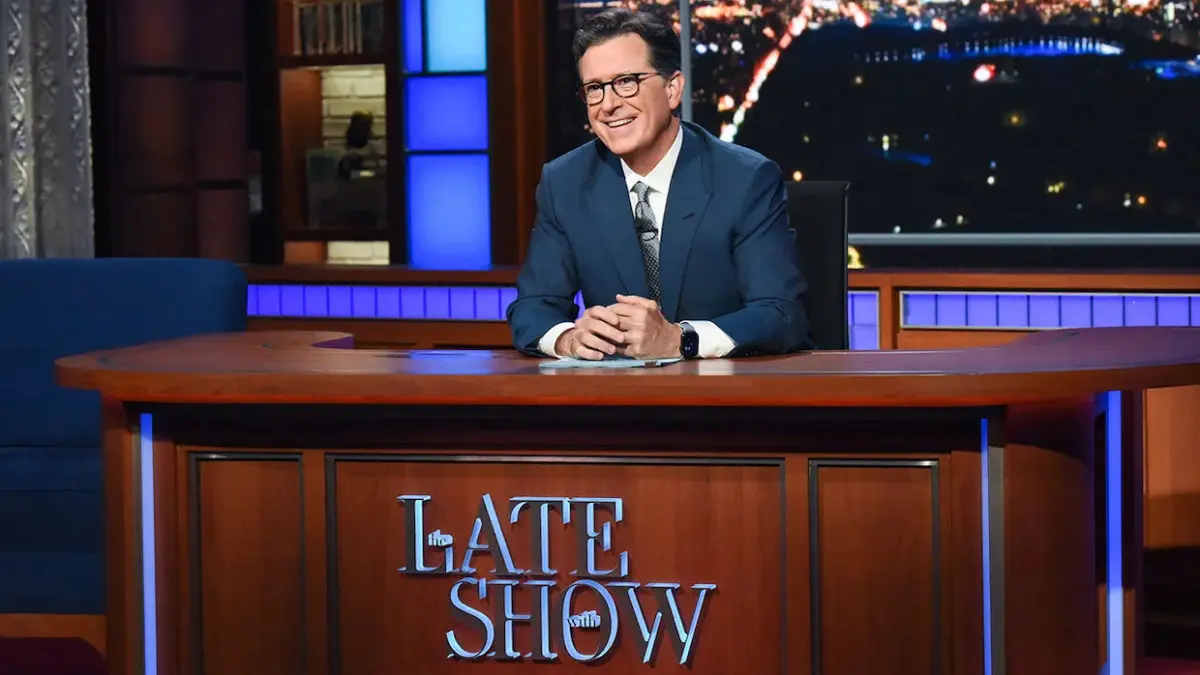
The turbulence was catalyzed in early 2025 by shifting corporate alignments and heightened regulatory pressures from the federal government. Stephen Colbert’s The Late Show on CBS—a foundational franchise for the network spanning 33 years—faced abrupt termination following parent company Paramount’s acquisition by Skydance Media, led by David Ellison. Despite corporate assertions that the program was operating at an annual deficit of $40 million, media analysts and industry critics widely speculated that the cancellation was influenced by Colbert’s sustained, sharp critiques of the Trump administration and the amicable rapport between the Ellison family and federal leadership. Colbert concluded the 11-season run on May 21, 2026, receiving an emotional send-off from a succession of high-profile guests. Ironically, the cancellation preceded a period of critical validation: just months prior, in September 2025, The Late Show secured its first-ever Emmy victory in the talk series category.
Shortly after the conclusion of Colbert’s tenure, Jimmy Kimmel faced a comparable crisis at ABC. On September 17, 2025, Jimmy Kimmel Live! was temporarily pulled from the broadcast schedule under intense pressure from the Federal Communications Commission, led by Chairman Brendan Carr, following remarks made by Kimmel regarding political commentator Charlie Kirk during an opening monologue. Major broadcast groups, including Nexstar Media Group and Sinclair Broadcast Group, signaled intentions to preempt the program across their regional affiliates, placing Kimmel’s long-term future on the network in jeopardy.
The suspension triggered an immediate and widespread public backlash, characterized by consumer boycott threats and massive digital mobilization. Demonstrating the resilience of the broadcast format, ABC reinstated Kimmel within a week. His return episode on September 23, 2025, drew a staggering 6.26 million linear viewers—establishing a series viewership record—while the accompanying monologue generated more than 26 million views across digital and social media platforms.
Comparative Analysis of the Nominees
As the Television Academy evaluates the consolidated variety category for the upcoming September 14 ceremony, voting blocks must weigh distinct operational histories, cultural impacts, and political subtexts for each contender.
The Late Show with CBS (Stephen Colbert)
- Status: Concluded its run in May 2026.
- Industry Standing: Winner of the 2025 talk series Emmy.
- Voter Calculus: Academy members may view this nomination as a final opportunity to honor Colbert’s enduring contributions to late-night television, while simultaneously serving as a referendum on the corporate and political pressures that precipitated the show’s cancellation.
Jimmy Kimmel Live! (ABC)
- Status: Active, following its brief suspension and subsequent record-breaking return in September 2025.
- Industry Standing: Twelve-time consecutive nominee in the variety category without a prior win.
- Voter Calculus: Positioned as a strong contender for second place, or potentially an upset winner, should the electorate prioritize shows that faced direct government and corporate censorship threats over the past year.
Last Week Tonight with John Oliver (HBO)
- Status: Returned to the unified category following its tenure in the scripted variety sector.
- Industry Standing: Holder of seven consecutive wins in the former talk category and three in scripted variety.
- Voter Calculus: Widely regarded as a technical powerhouse with consistent critical backing, representing the primary obstacle to a sentimental or politically driven vote for network late-night hosts.
Saturday Night Live (NBC)
- Status: Entering its 51st broadcast season following a milestone anniversary year in 2025.
- Industry Standing: Historical dominator of the sketch category.
- Voter Calculus: While maintaining high production energy and expanding its brand internationally—evidenced by the successful launch of SNL UK—the sketch institution historically occupies a distinct space from topical, desk-bound political commentary, though it remains a perennial favorite among traditionalists.
The Daily Show (Comedy Central)
- Status: Operating under a hybrid model featuring Jon Stewart on Monday nights alongside a rotating roster of correspondents and guest hosts for the remainder of the week.
- Industry Standing: Past winner under Trevor Noah and consistent nominee.
- Voter Calculus: Projected to secure the fifth nomination slot, serving as an institutional anchor that bridges traditional desk comedy with modern multi-host commentary formats.
Broader Industry Implications and Outlook
The outcome of the September 14 Primetime Emmy Awards carries implications that extend far beyond individual trophy counts. For the Television Academy, the voting results will signal whether award preference is dictated by traditional metrics of production quality and consistency—historically favoring polished entries like John Oliver’s work—or if the electorate will utilize the ballot to make a definitive statement regarding freedom of expression, corporate integrity, and the defense of late-night satire against external political interference.
Regardless of which program ultimately claims the statuette, the convergence of these specific nominees in a single category ensures that the 2026 Primetime Emmys will be analyzed not merely as a celebration of television excellence, but as a defining cultural snapshot of an industry navigating unprecedented sociopolitical pressures.