Reconstructing a Global Moment: June 25, 2009
The day Michael Jackson died, June 25, 2009, sent shockwaves across the globe, triggering an unprecedented outpouring of grief, disbelief, and collective mourning that transcended geographical and cultural boundaries. Born on August 29, 1958, Michael Joseph Jackson rose to prominence as the lead singer of the Jackson 5 in the late 1960s, before embarking on a solo career that would redefine popular music and solidify his status as one of the most iconic figures in entertainment history. Albums like "Off the Wall," "Thriller," and "Bad" broke sales records, revolutionized music videos, and earned him the undisputed title of the "King of Pop." His innovative artistry, electrifying stage presence, and philanthropic efforts made him a beloved, albeit often controversial, global icon.
By 2009, Jackson was preparing for a highly anticipated comeback concert series titled "This Is It" in London, a series of 50 shows that had sold out in record time, demonstrating his enduring appeal despite years of personal struggles and legal battles. On the morning of June 25, however, these plans were tragically cut short. Jackson collapsed at his rented mansion in Holmby Hills, Los Angeles, and was pronounced dead later that afternoon at UCLA Medical Center. The official cause of death was acute propofol and benzodiazepine intoxication, administered by his personal physician.
The immediate aftermath of his death was characterized by a global media frenzy. News outlets scrambled to confirm reports, and within minutes, the story dominated headlines worldwide. Social media platforms, though still in their relative infancy compared to today, experienced unprecedented traffic. Twitter crashed, Google searches for "Michael Jackson" surged, and millions flocked to online news sites and video-sharing platforms. This moment marked a critical juncture in how global events were disseminated and experienced, highlighting the nascent power of the internet to create a real-time, collective response. People shared memories, reacted emotionally, and sought solace in online communities, creating a digital tapestry of grief that Batto now meticulously unravels.
The Genesis of a Found-Footage Epic: Marcus Batto’s Vision
Marcus Batto, a 31-year-old artist, archivist, programmer, and self-described YouTube ethnographer, recognized the unique historical significance of this digital response. His film, "There’ll Likely Be Michael Jackson Vigils Throughout the Night," dives deep into this digital past, challenging the notion that the internet’s transient nature makes its history impossible to reconstruct. Batto’s work is a testament to the idea that even the most fleeting digital snapshots, often dismissed as algorithmically myopic or lacking comprehensive scope, can, when meticulously gathered and curated, offer profound insights into a shared cultural moment.
Batto’s artistic journey began with a childhood aspiration to become a filmmaker. He gravitated towards editing and, eventually, the creation of found-footage works, navigating the blurred lines between film, music videos, and art pieces. His formative years coincided with the early explosion of YouTube; he was just twelve when "Charlie Bit My Finger" became a viral sensation. This early exposure fostered a deep interest in the platform’s first decade, a period he perceives as holding a particular kind of digital innocence and raw experimentation.
His fascination with this era led to the multi-year project, Certain Moments To Remember (2020–), a series dedicated to "bearing witness to subculture, shared experience, and social phenomena." One notable entry is RANDOM WEBCAM DANCE @ DA IMAC STORE (2023), a compilation of various individuals spontaneously dancing in Apple Stores in 2011, leveraging the then-novel front-facing cameras on Mac products. The soundtrack, Johnny Duncan and Jane Fricke’s 1978 rendition of “Stranger,” creates a compelling doubled nostalgia, juxtaposing the techno-utopian promise of Apple products with the melancholic echo of lost media and fleeting digital trends. Other works in this series, such as Flashmob Compilation (2023) and Maid of the Mist VII (2023), further explore the tension between compilation, found footage, and video art, demonstrating Batto’s consistent commitment to uncovering and recontextualizing digital ephemera.
The Art of Digital Scavenging: Methodologies and Challenges
Batto’s methodology for "There’ll Likely Be Michael Jackson Vigils Throughout the Night" mirrors the intricate and often illicit process he explored in his short documentary Honeycomb (2024). Honeycomb, also composed entirely of found footage from vlogs, television broadcasts, and security cameras, documented the 2020–22 phenomenon of catalytic converter theft in the United States. The "honeycomb" refers to the part of the converter containing precious rare metals like platinum, rhodium, and palladium, which thieves would extract and melt down for their significant value, sometimes fetching up to $21,000 per ounce for pure rhodium.
This thematic parallel between Honeycomb and his latest feature is crucial. Both projects are driven by an obsession with untapped value hidden in unexpected places, whether it’s precious metals beneath a parked car or forgotten digital artifacts buried deep within YouTube’s vast archives. Batto, in a sense, becomes an "archivist-thief," armed not with a Sawzall but with a YouTube-to-mp4 converter, meticulously extracting and repurposing digital content. This process evokes a frantic energy, a race against time and digital obsolescence to salvage meaningful material before it’s lost forever to broken links, deleted accounts, or the ever-shifting sands of search engine algorithms. The analogy highlights the precariousness of digital history and the urgent need for dedicated individuals like Batto to preserve and interpret it.
The sheer volume of material Batto unearthed for "Michael Jackson Vigils" presented immense challenges. He amassed playlists containing hundreds, if not thousands, of videos related to June 25, 2009. "I have playlists that I’ve created that have maybe 800 videos," Batto revealed. Even after a work-in-progress screening, he found it difficult to stop discovering new footage, indicating the overwhelming abundance of content generated on that fateful day. This archival dedication resonates with the work of filmmakers like Ian Bell, whose found-footage documentary WTO/99 (2025), chronicling the anti-globalization protests in Seattle, faced similar struggles in boiling down vast material into a coherent narrative.
A Cacophony of Grief: Unpacking the Film’s Narrative
The primary affective quality of "There’ll Likely Be Michael Jackson Vigils Throughout the Night" is a profound sense of overwhelm. The film immediately immerses the viewer in a kaleidoscopic experience, opening with a distinctive visual device that recurs throughout: a rotating prism, each side composed of a five-by-four grid displaying twenty different videos simultaneously. This initial onslaught of synchronized, disparate footage—from the swinging Botafumeiro incense burner in a Spanish cathedral to ultrasound scans and scenes of refugees on a lifeboat—deliberately renders the process of cataloging each scene futile. The viewer is meant to feel the sheer, unfiltered chaos and multiplicity of global experience on that particular day, a digital snapshot of the world processing a singular event in myriad ways.
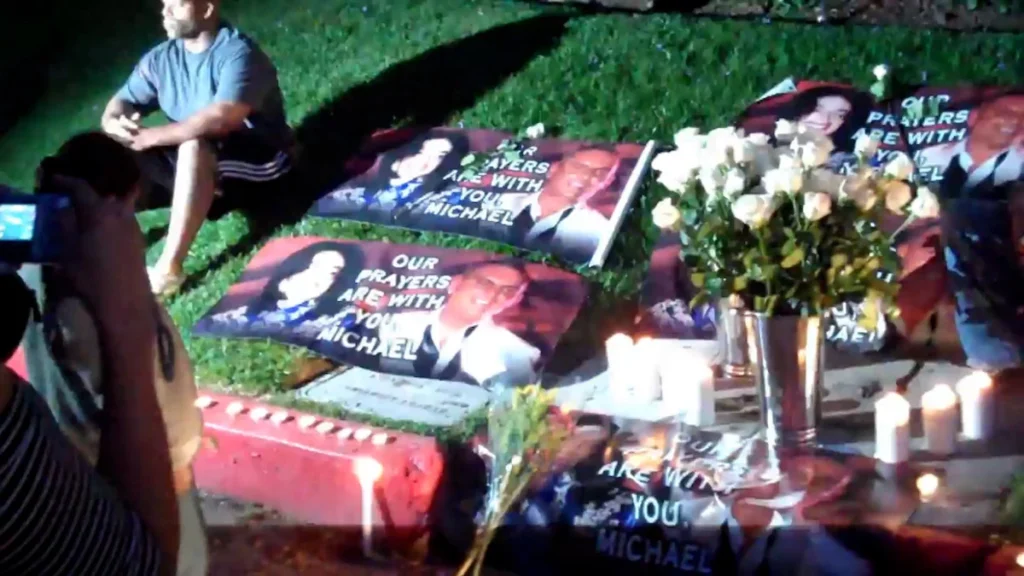
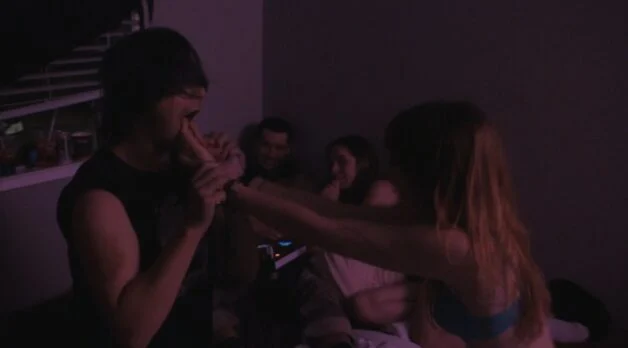
Batto’s choice of June 25, 2009, was not driven by personal devotion to Michael Jackson, but rather by its unique cultural resonance as a moment when a significant portion of the world’s diffuse energy was harnessed in one singular direction. "You always hear people saying, ‘Where were you when Michael Jackson died?’" Batto notes, adding, "In my lifetime, there hasn’t really been another death that was so effective, culturally." For many of the individuals featured in the film, the answer to that question was "on the computer." Batto himself recalls his own experience: "I was at a friend’s house, one of the first times that we had smoked weed. Someone said that Michael Jackson died, and we all huddled around his desktop computer." This collective, digital huddling around shared screens forms the core emotional landscape of the film.
The year 2009 also marked the burgeoning era of the front-facing camera and the nascent genre of YouTube vlogs. For many, the instinctual response to the news of Jackson’s death was to turn these new cameras on and record their immediate impressions, often for an audience of only a few dozen, if any. The film captures this raw, unfiltered honesty: an emo teenager performing sarcastic grief, individuals making threats against blogger Perez Hilton (who initially dismissed Jackson’s death as a publicity stunt), and others reacting to the concurrent death of actress Farrah Fawcett. One amateur film reviewer, framed by a poster for Halloween H20: 20 Years Later, solemnly declares, "One of Charlie’s Angels just became an angel herself." These disparate reactions, both sincere and performative, paint a vivid picture of a digital landscape still finding its footing.
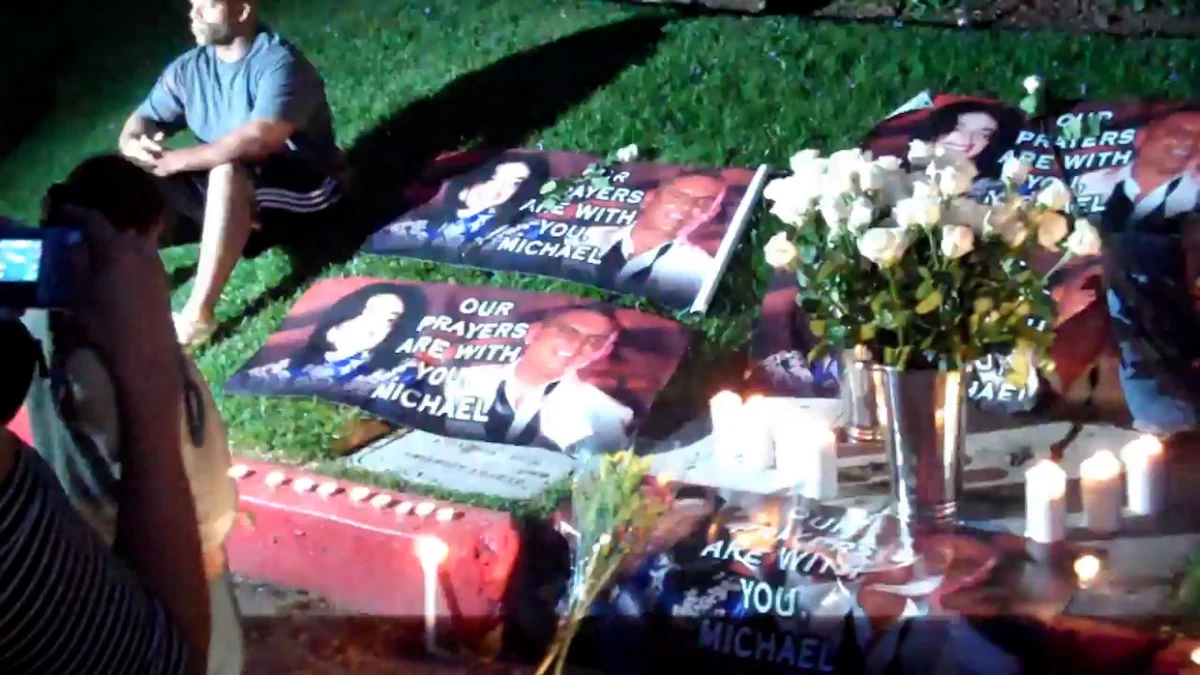
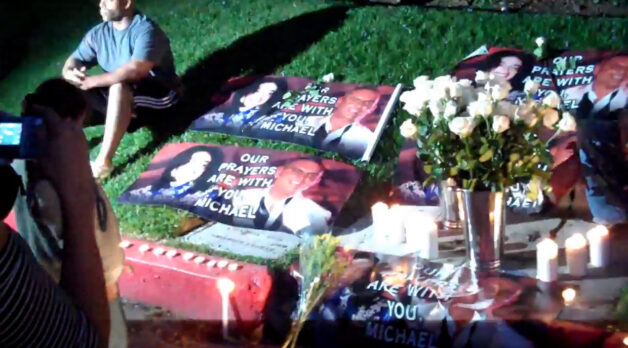
The film also documents the physical manifestations of grief, following mourners into the streets of Los Angeles. In a poignant and somewhat humorous moment, Batto captures crowds gathering around the Hollywood Walk of Fame star belonging to the British radio DJ Michael Jackson, mistakenly believing it to be the King of Pop’s. (The actual Michael Jackson’s star was temporarily obscured beneath a red carpet for the premiere of Sacha Baron Cohen’s Bruno). This misidentification serves as a fitting metaphor for a film that acts as a double memorial: not just for Michael Jackson, but for a specific moment in internet history when the digital cacophony could, paradoxically, still coalesce into something resembling a single, unified chorus of human experience.
Echoes of a Pre-Algorithmic Internet: Innocence and Experimentation
A central theme woven throughout Batto’s work, and particularly resonant in "Michael Jackson Vigils," is the sense of naiveté that characterized early online-IRL experiences. "With all these videos I found," Batto explains, "there’s this through-line of innocence. People didn’t care about how they looked on their webcam, or how they came off, in the same way they do today. They were just experimenting with this new technology." This unselfconscious experimentation, free from the pervasive self-censorship and curated personas that define much of today’s social media, provides a powerful contrast to contemporary digital interactions.
This "innocence" of early digital media draws a compelling parallel to the historical work of Mitchell and Kenyon, British filmmakers active in the late 19th and early 20th centuries. Known for their "Local Films for Local People," they captured everyday life, including the curious faces of British children encountering a movie camera for the first time. Watching Batto’s film, one is reminded of these historical documents, finding an "odd kinship" between the soot-marked faces of children exiting factories in 1897 and the webcam-captured mourners of 2009. Both groups, separated by a long century, exhibit a profound, unadulterated reaction to new technology, seemingly a world away from the hyper-curated, algorithmically-driven digital landscape of 2026, where ASMR sleep aids, AI-generated trailers, and "hype and aura edits" dominate.
The film’s premiere underscored this nostalgic sentiment, featuring a giveaway of refurbished third-generation iPod Touches, preloaded with the film and a curated playlist. Even the presence of a Michael Jackson impersonator, who reportedly fell asleep during the screening ("I asked him what he thought afterwards, and he said it was ‘okay,’" Batto recounts), added to the quirky, anachronistic charm of the event, further blurring the lines between past and present, homage and critique.
The Fading Chorus: A Commentary on Contemporary Digital Experience
When asked about the possibility of creating a similar film for a more recent celebrity death, Batto articulates a stark reality: "today’s internet doesn’t create discernible moments in the same way. It’s all so fleeting. You can’t really hold it anymore." This observation speaks volumes about the accelerating pace of audiovisual history and the profound shifts in digital culture. The early internet, with its less sophisticated algorithms and slower dissemination, allowed for moments of collective, focused attention that are increasingly rare in an era of hyper-personalized feeds, content overload, and ephemeral trends.
The relentless optimization of search engines, their increasing dominance by advertisements, and now the integration of artificial intelligence, have collectively contributed to a blurring of our digital past. What was once searchable and discoverable becomes increasingly obscured, lost to the relentless churn of new content and evolving digital architectures. This digital erosion makes Batto’s work even more critical, positioning him as a digital archaeologist meticulously excavating a rapidly disappearing past.
"There’ll Likely Be Michael Jackson Vigils Throughout the Night" therefore does more than just chronicle a specific day; it makes evident the acceleration of audiovisual history itself. Like the catalytic converter thieves he documented in Honeycomb, Batto operates at the "end of a certain product’s life-cycle," whether that product is a physical car part or a fading form of digital interaction. His work spans the gaps—between artist and archivist, between 2026 and 2009—and while it carries a mournful tone for a lost digital innocence, it also keenly highlights what might still be "stripped for parts," preserved, and recontextualized from the vast, ever-shifting debris of our digital lives. The film stands as a powerful reminder that while the internet promises infinite memory, true digital preservation requires conscious effort, artistic vision, and a deep understanding of its ephemeral nature.