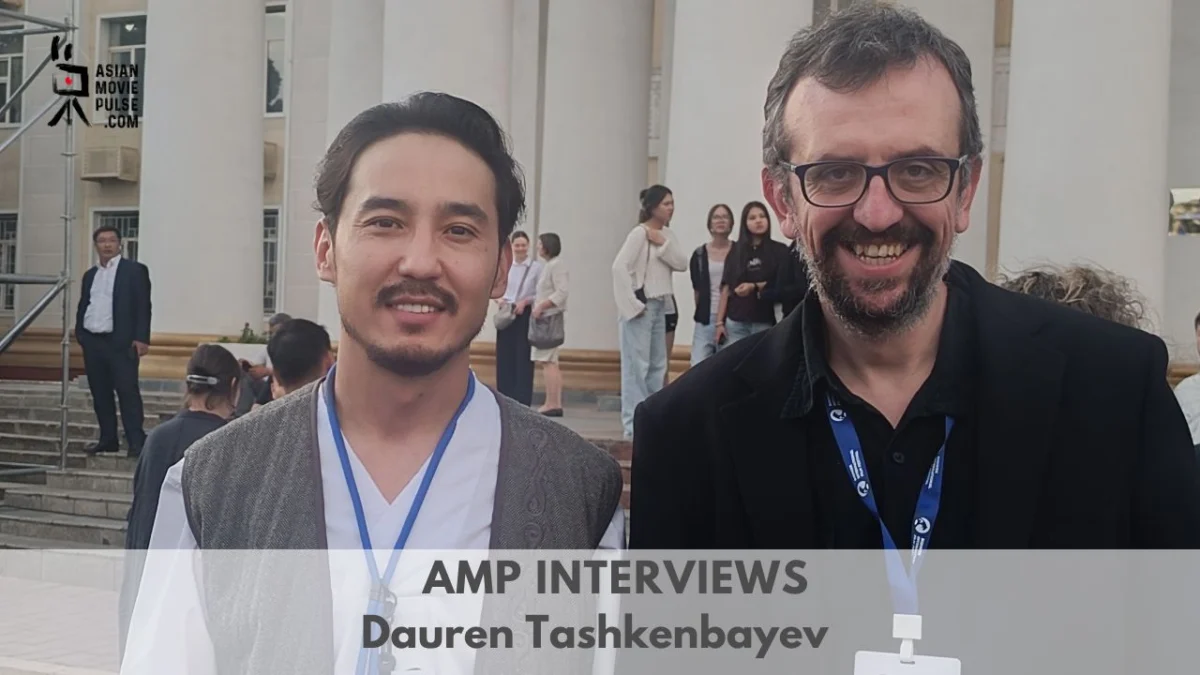
Kazakh actor Dauren Tashkenbaev recently provided an in-depth perspective on his feature debut in Nurzhamal Karamoldoeva’s critically acclaimed film, "Only Heaven Knows," during a special screening and discussion at the Bishkek Film Festival. The film, which casts Tashkenbaev as Eric, a truck driver entangled in the Kyrgyz migrant community in Chicago whose spiraling gambling debts plunge his family into crisis, has garnered significant attention for its poignant narrative and exploration of pressing social issues. Tashkenbaev engaged with Asian Movie Pulse, delving into the intricacies of filming in an international setting, the psychological depth of his character, the pervasive problem of gambling addiction in Central Asia, his collaborative experience with director Karamoldoeva and co-star Malika Kanatova, and his observations on the evolving landscape of Kyrgyz cinema. This comprehensive dialogue offered valuable insights into the film’s production, its thematic relevance, and the broader context of regional filmmaking.
The Genesis of "Only Heaven Knows" and Its Thematic Resonance
"Only Heaven Knows," directed by Nurzhamal Karamoldoeva, stands as a significant cinematic work from the Central Asian region, notable for its transnational production and universal themes. The film intricately weaves a narrative around Eric, a Kyrgyz immigrant navigating the demanding life of a truck driver in the sprawling urban landscape of Chicago. His aspirations for a better life for his family are tragically undermined by a burgeoning gambling addiction, which steadily erodes his financial stability and familial bonds. The story, therefore, transcends mere geographical boundaries, speaking to the global challenges faced by migrant communities striving for integration and economic betterment, often under immense pressure.
The film’s exploration of gambling addiction is particularly pertinent, aligning with a growing societal concern across Central Asia. Tashkenbaev himself highlighted this issue as a key motivator for his involvement in the project, recognizing cinema’s potential to shed light on destructive social phenomena. The narrative’s focus on the disintegration of family units due to addiction provides a stark reflection of real-world consequences, making the film a powerful tool for social commentary and awareness. The selection of "Only Heaven Knows" for screening at the Bishkek Film Festival underscores its cultural and artistic merit, placing it within a distinguished lineup of regional and international cinema. The festival serves as a vital platform for showcasing such narratives, fostering dialogue, and promoting cinematic excellence within Kyrgyzstan and beyond.
An International Production: Filming in the Heart of Chicago
Tashkenbaev recounted his experience of shooting "Only Heaven Knows" in Chicago as profoundly unique and enriching. The production brought together a diverse crew: a Kazakh actor (Tashkenbaev), a Kyrgyz director (Karamoldoeva), and a predominantly American technical team. This multicultural convergence on set created a dynamic environment, blending distinct cinematic traditions and work methodologies. Tashkenbaev emphasized that this blend of nationalities and professional backgrounds contributed significantly to the project’s distinctive identity.
While working in an international hub like Chicago presented logistical complexities, it also offered unparalleled opportunities for authenticity. The urban backdrop of Chicago, with its diverse immigrant communities and sprawling infrastructure, provided a realistic setting for Eric’s story. Filming on location allowed the crew to capture the genuine atmosphere and challenges inherent in the lives of truck drivers and migrant workers in a major American city. This immersive approach to filmmaking, despite the inherent difficulties of coordinating an international team across different time zones and cultural nuances, ultimately enriched the film’s visual narrative and thematic depth. The collaboration served as a testament to the universal language of cinema, demonstrating how diverse talents can unite to tell a compelling human story.
Dissecting Eric: A Portrait of Ambiguity and the Immigrant Struggle
Dauren Tashkenbaev’s portrayal of Eric is central to the film’s emotional core, presenting a character fraught with internal conflict and moral ambiguity. Tashkenbaev described Eric as a microcosm of many immigrants: driven by the noble intention of seeking a better life and providing for his family, yet ultimately making "irresponsible decisions" that lead to devastating consequences. This duality—good intentions versus detrimental actions—forms the essence of Eric’s complexity, compelling audiences to both sympathize with and judge his choices.
Tashkenbaev revealed a deeply personal connection to the character, drawing on his own experience as an immigrant at the time of filming. This personal resonance allowed him to inhabit Eric’s emotional landscape with profound authenticity, understanding the pressures, hopes, and vulnerabilities that define the immigrant journey. He articulated that this inherent ambiguity was precisely what drew him to the role, offering an intriguing challenge to explore a different facet of himself as an actor. Such roles, he noted, allow actors to delve into the nuanced human condition, moving beyond simplistic categorizations of "good" or "bad."
The character of Eric serves as a potent commentary on the psychological toll of migration. Immigrants often face immense pressure to succeed in their new environments, compounded by cultural assimilation challenges, financial strain, and the emotional burden of separation from their homeland. These pressures can, in some cases, lead to destructive coping mechanisms, such as gambling addiction, as individuals seek solace or a quick path to financial stability. Studies on migrant communities worldwide frequently highlight increased susceptibility to mental health issues, including addiction, due to displacement, social isolation, and economic precarity. Eric’s journey in "Only Heaven Knows" thus becomes a microcosm of a much larger, global phenomenon, inviting viewers to reflect on the societal structures and personal choices that shape individual destinies within migrant contexts.
Gambling Addiction: A Central Asian Crisis Reflected in Cinema
A significant portion of Tashkenbaev’s discussion revolved around the alarming rise of gambling addiction in Central Asia, a theme explicitly addressed in "Only Heaven Knows" and, as he observed, in several other Central Asian films screened at the Bishkek Festival. He noted that these films collectively seem to "place an accusation towards the current generation of local men," highlighting gambling and alcoholism as pervasive and destructive issues. This cinematic trend reflects a grave reality on the ground.
Reports from various social research organizations and government bodies across Central Asia consistently point to a significant increase in problem gambling over the past decade. Factors contributing to this surge include the proliferation of easily accessible online betting platforms, economic hardships that push individuals towards desperate hopes of quick wealth, and insufficient public awareness campaigns or regulatory frameworks to curb the addiction effectively. The societal impact is profound, leading to severe financial ruin, the breakdown of families, increased crime rates, and widespread mental health crises. Tashkenbaev underscored this devastating consequence, stating that gambling "often leads to the destruction of families."
He firmly believes in the transformative power of cinema as a tool for social change. By depicting the harsh realities of addiction and its ripple effects on individuals and families, films like "Only Heaven Knows" can initiate crucial conversations, challenge societal norms, and potentially influence public perception and policy. The visibility these issues gain through film festivals like Bishkek can amplify their message, reaching wider audiences and potentially inspiring those struggling with addiction to seek help, or prompting authorities to implement more robust preventive and rehabilitative measures. The collective cinematic voice from Central Asia, addressing these critical social ills, thus becomes a vital catalyst for introspection and action within the region.
A Symphony of Collaboration: Working with Karamoldoeva and Kanatova
Tashkenbaev spoke with great admiration for his collaborators, director Nurzhamal Karamoldoeva and co-star Malika Kanatova, emphasizing the seamless working relationship they fostered despite meeting on set. He characterized their cooperation as one where they "immediately found a common language," making the creative process remarkably smooth.
His praise for Nurzhamal Karamoldoeva was particularly effusive. He recognized the "enormous amount of work she is doing and what still lies ahead in post-production," highlighting the immense dedication required for filmmaking. Tashkenbaev lauded her ability to clearly communicate her artistic vision, especially given that some actors on set had limited prior film experience. He attributed the film’s success in part to her exceptional direction, noting that "she did it excellently." The news of Karamoldoeva receiving the "Best Director" award in Bishkek further solidified Tashkenbaev’s appreciation for her talent and confirmed the critical acclaim for her directorial prowess. He expressed hope for future collaborations, signaling a strong professional bond formed during the production.
Regarding Malika Kanatova, Tashkenbaev acknowledged the inherent difficulty of her role, stating she "had a very challenging role, which she executed brilliantly." He noted that they built a "trusting relationship from the very beginning," a crucial element for delivering authentic and powerful performances, particularly in emotionally charged narratives. The synergy between director, lead actor, and co-star is often the bedrock of a compelling film, and Tashkenbaev’s account underscores the positive and professional environment fostered during the making of "Only Heaven Knows."
Behind the Scenes: Challenges and Unforgettable Moments
Filming a cinematic production invariably comes with its unique set of challenges and memorable experiences. Tashkenbaev recounted his most difficult day on set as the very first day of shooting, which paradoxically involved filming his character’s final scene in the movie. This non-linear approach to production, while sometimes logistically necessary, can be emotionally taxing for actors, requiring them to immediately tap into the emotional culmination of their character’s journey without the preceding narrative development. He judiciously refrained from detailing the scene to avoid spoilers, but the difficulty implies a profound emotional or dramatic intensity that required immediate immersion.
Conversely, the most interesting and energizing scene for Tashkenbaev involved a police car sequence. He described it as a "very dynamic scene," featuring a closed street and numerous police vehicles. Despite being "extremely tired that night," the vibrant and high-energy atmosphere of the shoot provided him with a significant boost of adrenaline and enjoyment. Such scenes, often technically complex and requiring precise coordination, can be exhilarating for actors and crew alike, showcasing the logistical prowess and creative execution of the filmmaking team.
Regarding his character’s eventual exit from the storyline, Tashkenbaev admitted to a degree of disappointment. However, he quickly tempered this sentiment with professionalism and respect for the creative process, stating, "But this was the script I knew from the beginning, so I respect the creators’ vision." This acknowledgment highlights the collaborative nature of film production, where an actor’s individual desires often defer to the overarching narrative and the director’s artistic intent.
The Ascendance of Kyrgyz Cinema and the Role of the Bishkek Festival
Dauren Tashkenbaev offered an optimistic assessment of the current state of the Kyrgyz movie industry, positioning Kyrgyzstan as "one of the fastest-developing countries in Central Asia in terms of the film industry." This growth, he noted, is underpinned by the presence of "many incredibly talented professionals" within the country. This positive outlook aligns with broader trends indicating a burgeoning cinematic renaissance across Central Asia, with films from the region increasingly gaining international recognition at festivals and receiving critical acclaim for their unique storytelling and cultural insights.
The Bishkek International Film Festival, in Tashkenbaev’s view, plays a pivotal role in this development. He cited the high level of the festival’s organization as a clear indicator of significant government support for the film sector. Film festivals are crucial ecosystems for national cinemas, acting as platforms for showcasing local talent, fostering international collaborations, attracting investment, and facilitating critical dialogue. By providing a prominent stage for Kyrgyz and regional films, the Bishkek Festival not only elevates the industry’s profile but also nurtures a vibrant cinematic culture, encouraging new filmmakers and inspiring audiences.
Tashkenbaev expressed genuine happiness and well wishes for his "neighboring brother nation," desiring "continued growth and prosperity" for Kyrgyzstan’s film industry. This sentiment underscores the collaborative spirit and cultural interconnectedness within Central Asia, where the success of one nation’s artistic endeavors can inspire and benefit the entire region. The festival, therefore, is not merely an event but a symbol of cultural exchange and shared aspiration for cinematic excellence.
A New Chapter: Future Horizons for Dauren Tashkenbaev
Concluding his insightful discussion, Dauren Tashkenbaev briefly touched upon his immediate future, signaling a significant personal and professional transition. He revealed that he had recently returned to Kazakhstan from the United States, marking this repatriation as "a new chapter in my life." While he did not disclose specific upcoming projects, his statement, "We will see where this journey leads," conveyed an open-minded approach to his next professional endeavors. This period of transition suggests a potential for new artistic explorations within his home country or continued international collaborations, building upon the rich experience gained from "Only Heaven Knows." His return could also signify a deeper engagement with the evolving Kazakh film industry, further contributing to the region’s cinematic growth. The anticipation surrounding his next moves highlights his growing stature as an actor poised for further significant contributions to the Central Asian and global film landscape.