The cinematic world is abuzz following the world premiere of "Castle Under Siege," a gripping Japanese historical drama mystery film, at the prestigious Cannes Premiere section of the 2026 Cannes Film Festival. Scheduled for a global release on July 31, 2026, the film plunges audiences into the treacherous political landscape of 16th-century Japan, focusing on a pivotal moment of rebellion, betrayal, and an unfolding mystery within the walls of a besieged fortress. Directed by an acclaimed creative team and featuring a stellar ensemble cast, "Castle Under Siege" promises a visceral exploration of power, loyalty, and the human cost of ambition during one of Japan’s most tumultuous eras.
The narrative centers on Lord Murashige Araki, portrayed with intense gravitas by Masahiro Motoki, as he defiantly rises against the oppressive reign of the formidable warlord Nobunaga Oda, played by the commanding Bando Shingo. This act of rebellion swiftly leads to Murashige finding himself and his loyal retainers entrapped within the fortifications of his own castle, besieged by Oda’s overwhelming forces. As the siege tightens its grip, cutting off the castle from the outside world, an insidious threat emerges from within. A series of enigmatic and violent crimes begins to unravel the already fragile order of Murashige’s court, sowing seeds of paranoia and suspicion among his ranks. The fortress, already a crucible of fear due to the external threat, descends into an even deeper state of internal turmoil.
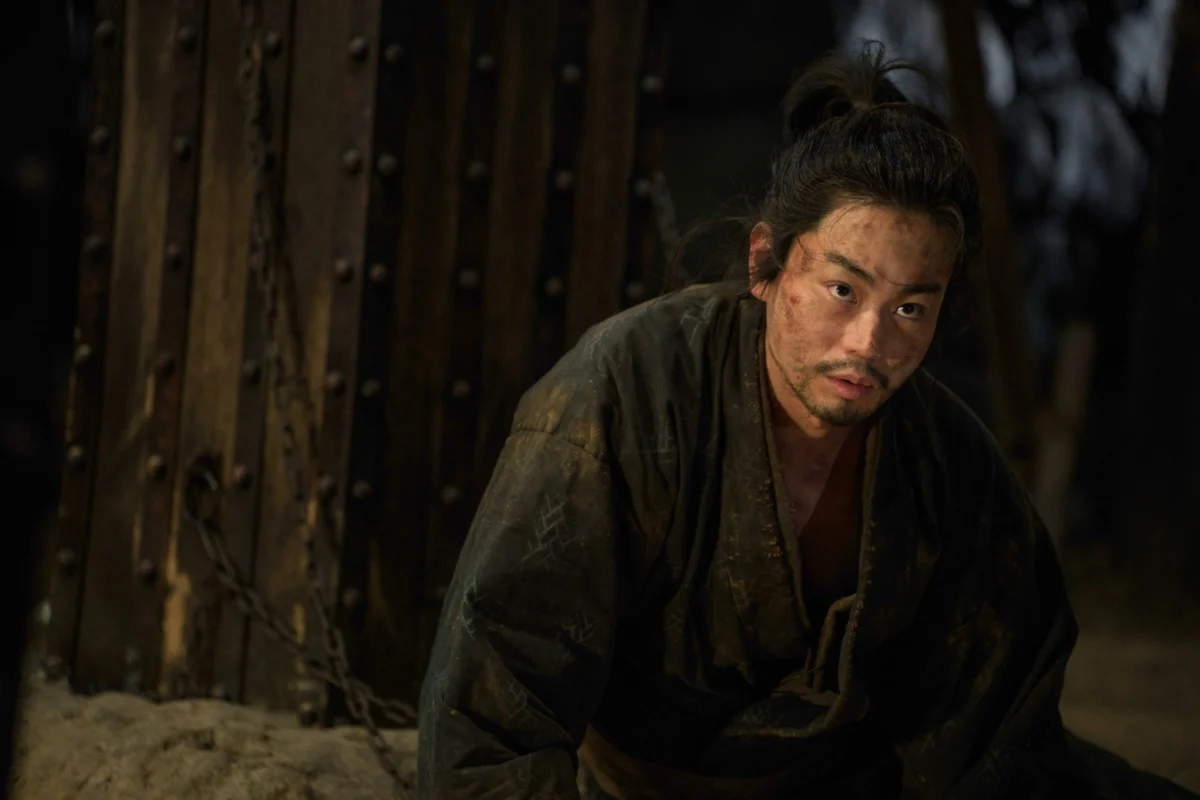
With Oda’s relentless army closing in and the chilling realization that a traitor lurks amongst his most trusted inner circle, Murashige is forced into a precarious and uneasy alliance. His only hope lies with Kanbei Kuroda, a brilliant but notoriously dangerous strategist, brought to life by Masaki Suda, who is ironically held captive in the castle’s dungeon. Murashige, supported by the unwavering resolve of his wife Chiyoho, played by Yuriko Yoshitaka, and his most steadfast generals, must race against time. He is compelled not only to defend his castle from the external onslaught but also to unmask the internal saboteur and uncover the truth behind the mysterious crimes before his stronghold inevitably falls and his rebellion is crushed, leading to certain doom for himself and everyone under his protection.
The Historical Tapestry: The Sengoku Period and Its Figures
"Castle Under Siege" is set against the sprawling and brutal backdrop of Japan’s Sengoku period (c. 1467-1603), an era characterized by incessant civil war, social upheaval, and political intrigue. This period, often referred to as the Age of Warring States, saw numerous regional daimyō (feudal lords) vying for control of the nation, a struggle that ultimately paved the way for the unification of Japan under a series of powerful figures. Oda Nobunaga was arguably the most significant of these unifiers, a brilliant military strategist and ruthless innovator whose ambition was matched only by his cruelty. His campaigns were marked by a willingness to break traditional customs and employ new military technologies, such as firearms, to achieve his goals. He was known for his motto, "Rule the empire by force," and his reputation as a "demon king" among his contemporaries underscores the tyrannical aspect of his rule, which the film vividly portrays.
Araki Murashige, the central protagonist, was a real historical figure, a prominent daimyō from Settsu Province (modern-day Hyōgo and Osaka prefectures) who served under Nobunaga. His rebellion against Nobunaga in 1578 is a well-documented event in Japanese history, specifically the Siege of Itami Castle (also known as Arioka Castle). This act of defiance was a significant challenge to Nobunaga’s authority and control over the central provinces. Murashige’s motivations for turning against his lord remain a subject of historical debate, ranging from personal grievances and perceived slights to a strategic miscalculation or even a desperate attempt to protect his domain from Nobunaga’s ever-expanding power. The film’s narrative leverages this historical ambiguity to weave its mystery elements, suggesting hidden agendas and deeper conspiracies at play within the castle walls.
Kanbei Kuroda, also known as Yoshitaka Kuroda, was another pivotal figure of the Sengoku period, celebrated as one of the most brilliant strategists and tacticians of his time. He initially served Oda Nobunaga but later became a key strategist for Toyotomi Hideyoshi, Nobunaga’s successor. Kuroda’s historical imprisonment by Murashige during the Siege of Itami Castle is a crucial detail that "Castle Under Siege" incorporates directly into its plot. Nobunaga, suspecting Kuroda’s loyalty due to his proximity to Murashige, ordered him imprisoned. Kuroda endured a year in Murashige’s dungeon, a period of immense hardship that he miraculously survived. His eventual release and subsequent return to service under Hideyoshi cemented his legend. The film’s depiction of an "uneasy alliance" between Murashige and Kuroda, while perhaps taking dramatic liberties with the historical details of their interaction during the siege, taps into the fascinating dynamic of these two historical figures and the high stakes involved in their decisions.
Chiyoho, Murashige’s wife, though less documented in detailed historical accounts than her male counterparts, represents the often-overlooked resilience and influence of women in the samurai class. Their roles, while primarily domestic, often involved managing castle affairs, maintaining morale, and even offering counsel to their husbands. The film’s inclusion of Chiyoho as a supportive and influential figure underscores the personal stakes and emotional depth within the larger political conflict.
The Creative Forces Behind the Lens and Stellar Ensemble Cast
While the director’s name has not yet been widely publicized, industry whispers suggest a visionary approach to "Castle Under Siege," blending meticulous historical accuracy in its set design and costuming with a modern sensibility in its narrative pacing and character development. Production sources indicate that the filmmakers undertook extensive research to authentically recreate the atmosphere of a besieged Sengoku-era castle, from the architecture of the stronghold to the intricate details of period weaponry and daily life. The film reportedly utilized a combination of expansive practical sets and cutting-edge visual effects to bring the scale of Oda’s army and the claustrophobic tension of the siege to life.
The cast assembled for "Castle Under Siege" is a testament to the film’s ambition and commitment to excellence. Masahiro Motoki, revered for his nuanced performances in films like "Departures" (which won the Academy Award for Best Foreign Language Film) and "The Longest Day in Chang’an," brings a profound depth to Lord Murashige Araki. Motoki’s ability to convey complex internal struggles, from resolute defiance to creeping paranoia, makes him an ideal choice for a character facing both external destruction and internal betrayal.
Bando Shingo, a distinguished figure in both traditional Kabuki theater and contemporary cinema, embodies the formidable Oda Nobunaga. Shingo’s commanding presence and experience in portraying powerful, often larger-than-life historical figures lend significant weight to Nobunaga’s tyrannical persona, making him a truly formidable antagonist. His performance is expected to capture both the strategic brilliance and the chilling ruthlessness that defined the "Demon King."
Masaki Suda, one of Japan’s most versatile and in-demand young actors, takes on the role of Kanbei Kuroda. Suda, known for his diverse roles across genres, from indie dramas to blockbusters, is expected to infuse Kuroda with the sharp intellect and dangerous cunning that characterized the historical strategist, while also conveying the resilience forged during his harsh imprisonment. His dynamic with Motoki’s Murashige is anticipated to be a central emotional and intellectual axis of the film.
Yuriko Yoshitaka, celebrated for her roles in "Norwegian Wood" and numerous popular television dramas, portrays Chiyoho. Yoshitaka’s ability to project both strength and vulnerability will be crucial in depicting a woman caught in the vortex of war and courtly intrigue, providing an essential human element amidst the political machinations and violence. The supporting cast, reportedly comprising a mix of seasoned veterans and promising newcomers, further solidifies the ensemble’s strength.
A Global Stage: Cannes Premiere and International Acclaim
The selection of "Castle Under Siege" for the Cannes Premiere section of the 2026 Cannes Film Festival is a significant endorsement of its artistic merit and international appeal. The Cannes Premiere section is a highly prestigious, non-competitive category that showcases a limited number of films by renowned directors, often serving as a launchpad for films with strong critical and commercial potential. This inclusion immediately elevates the film’s profile on the global stage, signaling to international distributors, critics, and audiences that "Castle Under Siege" is a work of considerable cinematic importance.
Japanese cinema has a long and celebrated history at Cannes, with numerous directors and films receiving top honors, including Akira Kurosawa, Kenji Mizoguchi, Hirokazu Kore-eda, and Ryusuke Hamaguchi. The premiere of "Castle Under Siege" continues this tradition, highlighting the enduring vitality and global relevance of Japanese storytelling. The festival debut is expected to generate significant critical buzz, with early reactions from attendees reportedly praising the film’s intricate plot, stunning visuals, and powerful performances. Such an international premiere often leads to favorable reviews from leading film publications, which in turn can bolster box office performance and award season prospects.
Anticipated Release and Box Office Projections
With its worldwide release scheduled for July 31, 2026, "Castle Under Siege" is strategically positioned to capitalize on the summer movie season. This timing suggests confidence from its distributors in its ability to attract a broad audience, both domestically in Japan and internationally. Historical dramas with mystery elements, particularly those from Asian cinema, have found success with global audiences, driven by a fascination with different cultures, intricate plots, and universal themes of power and human nature.
In Japan, the film is expected to perform strongly, tapping into a deep cultural appreciation for Sengoku-era narratives and the enduring popularity of its lead actors. The blending of historical drama with a compelling whodunit element offers a fresh take on a familiar genre, potentially attracting both traditional fans of samurai films and a younger demographic drawn to thrillers. Internationally, the Cannes premiere provides a powerful marketing springboard, positioning the film as a must-see cultural event. Early projections, informed by positive festival reception and the film’s high production values, suggest a robust box office performance, particularly in territories with a strong appetite for Asian cinema and historical epics.
Broader Cultural and Cinematic Impact
"Castle Under Siege" is poised to make a significant impact not only as an entertaining cinematic experience but also as a cultural touchstone. By revisiting the Sengoku period, the film offers a nuanced perspective on a pivotal era that shaped modern Japan. It delves into universal themes of ambition, loyalty, betrayal, justice, and the moral ambiguities of leadership in times of extreme duress. The narrative’s focus on the internal strife within Murashige’s castle, juxtaposed with the external military threat, serves as a powerful metaphor for the corrosive effects of distrust and paranoia within any organization or society.
Moreover, the film’s sophisticated blend of historical drama and mystery enriches both genres. It moves beyond a simple recounting of historical events to explore the human psyche under pressure, inviting audiences to piece together clues alongside the protagonist. This approach demonstrates the continued evolution of Japanese filmmaking, showcasing its ability to produce works that are both deeply rooted in national history and universally resonant. "Castle Under Siege" is anticipated to spark renewed interest in the Sengoku period, encouraging audiences to explore the rich history and complex figures that defined this fascinating era. Its success at Cannes and its upcoming global release firmly establish it as one of the most anticipated films of 2026, a testament to the enduring power of historical storytelling on the silver screen.