"Extracurricular Activity" emerges as a potent and incisive short film, co-directed by Dean Wei and Xu Yidan, offering a stark portrayal of youth irresponsibility and the complex dynamics of family and societal expectations in contemporary China. Distributed by Dogme23, this film, while brief, delivers a profound commentary on maturity, consequence, and the silent burdens often carried by women. Its release has drawn attention to the burgeoning talent within Chinese independent cinema and the critical role of institutions like the Beijing Film Academy in nurturing new artistic voices.
The narrative unfolds with a striking visual language, commencing in complete darkness before the camera navigates through the quiet architecture of a private residence. It eventually settles upon a clandestine encounter: a young couple engaged in sexual activity by a window. The cinematography immediately establishes a thematic undercurrent, mirroring their forms in the glass, juxtaposing their intimate act with the indifferent, sprawling branches of trees outside. This visual motif of reflection and external observation sets an immediate tone of vulnerability and the potential for exposure.
Chronology of a Crisis: From Secrecy to Confrontation
The initial intimacy quickly gives way to an unfolding domestic crisis. Once their encounter concludes, the fragile illusion of privacy shatters with the realization that the young woman has been brought surreptitiously into the young man’s home, where he resides with his mother. The man’s palpable fear of discovery immediately establishes a power dynamic skewed by immaturity and dependence. His anxieties are soon realized as his mother inevitably uncovers their secret.
What follows is a masterclass in unspoken tension. The initial confrontation between the mother and the young woman is a fraught exchange of glances and pregnant silences, first confined to the son’s bedroom and then escalating into the seemingly innocuous space of the household bathroom. The domestic setting, typically a sanctuary, transforms into an arena for a silent battle of wills, where the weight of judgment and expectation hangs heavy in the air.
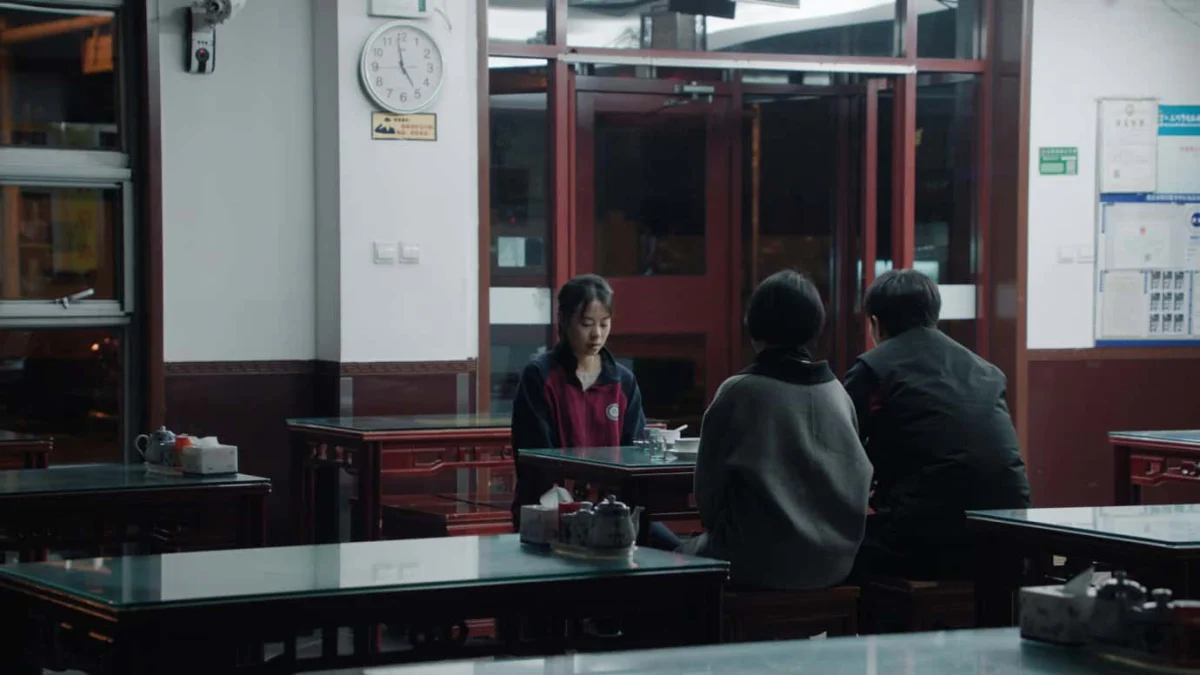
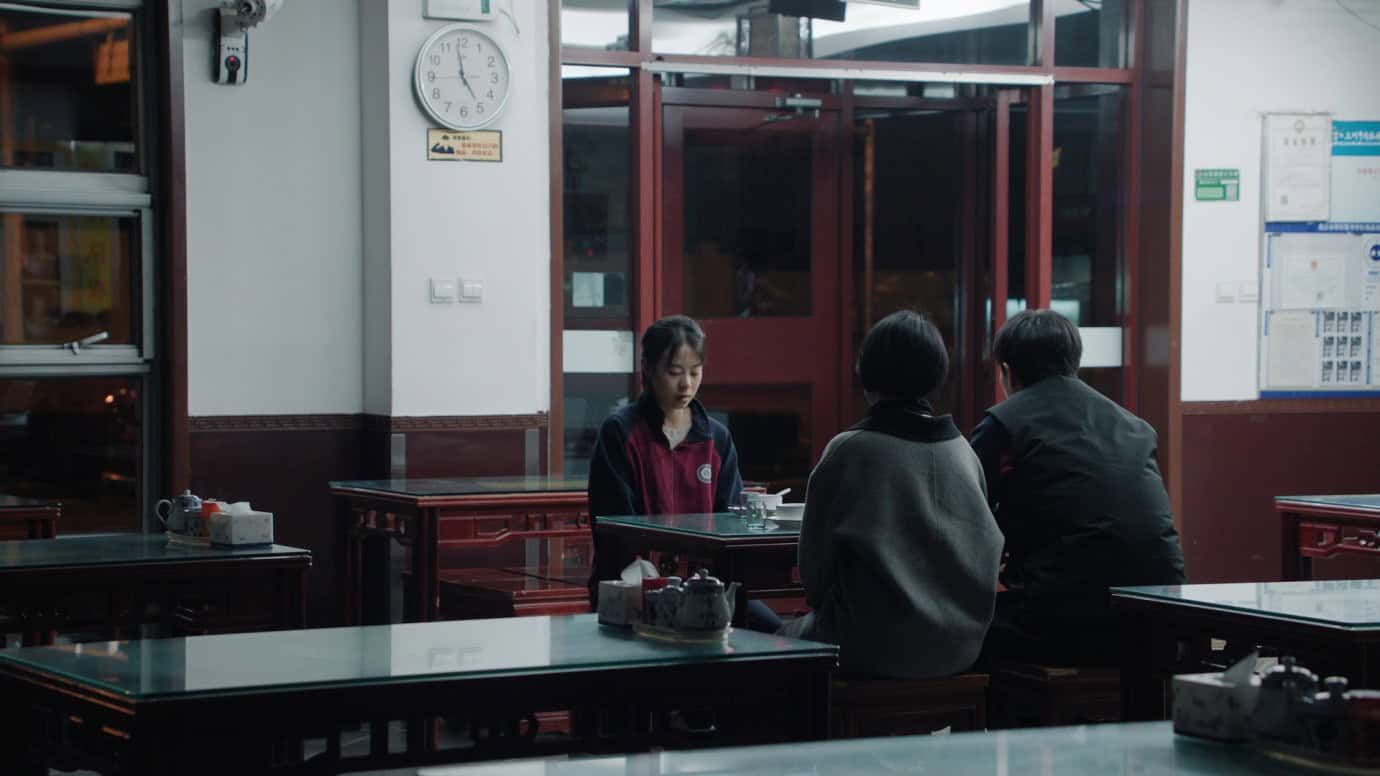
The narrative then shifts to an unexpected journey. The trio—mother, son, and the young woman—find themselves together in the mother’s car. This shared, confined space becomes a crucible for further, albeit still largely unarticulated, tension. Their first destination is a pharmacy, a visit starkly pragmatic in its purpose: to acquire contraception. This transactional act underscores the immediate, physical consequence of the earlier liaison. From there, they proceed to a diner, a public venue that paradoxically hosts a deeply private and intense discussion. Throughout this ordeal, the young woman’s phone persistently rings, her mother’s calls serving as an external pressure, a reminder of the ripple effects of the situation extending beyond this immediate family unit. The focus of the conversation, largely driven by the son’s mother, centers with intense scrutiny on the efficacy of the morning-after pill, highlighting her pragmatic, almost clinical, approach to managing the crisis.
Filmmakers and Their Vision: A New Generation of Storytellers
Dean Wei, a prominent figure in the film’s direction, brings a diverse background to "Extracurricular Activity." Born in Cologne, Germany, his international upbringing potentially informs a unique perspective that blends cultural insights, a characteristic often observed in globally educated Chinese filmmakers. His academic foundation was solidified at the esteemed Beijing Film Academy, where he graduated from the Cinematography Department. This institution, globally recognized as a cradle for cinematic talent, has been instrumental in shaping generations of Chinese filmmakers, including the celebrated "Fifth Generation" directors like Zhang Yimou and Chen Kaige. Wei’s training there undoubtedly provided him with a rigorous understanding of visual storytelling. Based in Beijing, a bustling hub for film production and artistic innovation, Wei is not only a director but also a composer and cinematographer, roles that speak to a comprehensive artistic vision and an ability to control multiple facets of a film’s aesthetic and narrative. This multi-hyphenate approach is increasingly common among contemporary filmmakers who seek a more holistic command over their creative output.
Co-director Xu Yidan is a more recent graduate of the Beijing Film Academy’s Cinematography Department, having completed her studies in 2022. Her rapid ascent to co-directing and acting in such a significant role immediately post-graduation underscores her prodigious talent and the academy’s commitment to fostering emerging voices. Her involvement both behind and in front of the camera, particularly in portraying the film’s central female character, lends an authenticity and depth to the performance that might be otherwise unattainable. This dual role is a testament to the comprehensive training provided by institutions like BFA, preparing students for varied and challenging roles in the film industry. The collaboration between Wei, an established talent, and Yidan, a rising star, exemplifies a dynamic mentorship and a merging of perspectives that enriches the film’s narrative and technical execution.
Thematic Resonance: Immaturity, Gender, and Societal Scrutiny
"Extracurricular Activity" is not merely a recounting of events but a sharply observed commentary on societal constructs, particularly those concerning youth, responsibility, and gender roles. The film’s tension, palpable from its opening frames, is masterfully communicated through the deliberate absence of extensive dialogue. This laconic approach forces the audience to interpret emotions and motivations through subtle gestures, facial expressions, and visual cues, creating a more immersive and thought-provoking experience. This stylistic choice is particularly effective in a cultural context where direct confrontation or overt emotional expression may be less common, allowing unspoken sentiments to carry significant weight.
The narrative places a spotlight on the young woman, portrayed with remarkable subtlety by Xu Yidan, who is compelled to shoulder the burden of the son’s lack of responsibility. Her laconic demeanor, far from indicating indifference, intensifies the tension, conveying a profound sense of discomfort, resignation, and simmering anger. This emotional weight is further amplified by the mother’s pointed suggestion regarding the girl’s parents—a remark that likely implies potential exposure, shame, or financial implications, adding another layer of emotional manipulation to an already fraught situation.
Concurrently, the film paints a painfully clear picture of the son’s immaturity. His striking lack of agency, his passive presence, and his inability to articulate a will or voice highlight a profound deficit in responsibility. This theme is most acutely felt in a particularly telling scene within the car, where the young woman’s hands communicate volumes about her perception of him. This visual moment, without a single word, conveys her disappointment, perhaps even disgust, and solidifies the film’s central critique: the stark contrast between the passive ‘boys’ and the women who are forced to navigate and bear the consequences of their actions. The mother, in this scenario, assumes a dominant, almost managerial role, taking charge of the crisis, while the young woman, Xu Yidan’s character, silently endures the immediate and potentially long-term fallout. This dynamic serves as a potent commentary on evolving, yet often stubbornly persistent, gender roles within modern Chinese society, where women frequently find themselves as the primary arbiters of domestic crises and the bearers of emotional and practical burdens.
Exceptional Performances Elevate the Narrative
The film’s thematic depth is significantly enhanced by the exceptional performances of its lead actresses. Tu Ling, in her portrayal of the mother, delivers a performance brimming with authority and a quiet, yet firm, exasperation with her son. She convincingly embodies a woman who is acutely aware of her son’s shortcomings, projecting both a pragmatic determination to resolve the immediate crisis and an underlying frustration with his perceived uselessness. Her nuanced acting allows the audience to see her not merely as an antagonist but as a complex figure grappling with the responsibilities of motherhood and the disappointment of an unfulfilled parental ideal.
Co-director Xu Yidan’s performance in the titular role is equally compelling. Despite minimal dialogue, she masterfully conveys a spectrum of emotions—discomfort, angst, anger, and quiet defiance—primarily through her subtle facial expressions and body language. This demanding portrayal requires a significant depth of acting skill, making her character’s silent suffering profoundly resonant. Her ability to communicate so much with so little dialogue is a testament to her talent and the effectiveness of the directorial choice to lean into non-verbal storytelling.
Technical Brilliance: Cinematography and Editing
Beyond its compelling narrative and performances, "Extracurricular Activity" thrives on its technical prowess, showcasing the high caliber of its crew. The cinematography by Fang Jiacheng is particularly impressive, distinguishing itself through thoughtful framing and visual metaphor. The use of "double frames" stands out as a key aesthetic and narrative device. The initial scene, where the lovers’ forms are mirrored in the window glass, juxtaposed with the natural world outside, speaks to themes of duality, reflection, and the permeable boundary between private and public selves. Another striking example involves the son in an aquarium, framed against the mother moving through the house, suggesting themes of confinement, observation, and perhaps the son’s emotional detachment or perceived transparency in his mother’s eyes. These are not mere stylistic flourishes but integral narrative tools that enrich the film’s thematic content.
Fang Jiacheng’s use of close-ups is judicious and effective. Rather than being overused, they are strategically employed to enhance intimacy, heighten tension, and draw the audience into the characters’ internal worlds without feeling gratuitous. The scenes set within the confined space of the car are particularly well-shot, utilizing the limited environment to amplify character interactions and dynamics, forcing a proximity that intensifies the emotional exchanges.
Dean Wei’s editing further contributes to the film’s success. The relatively fast pace works harmoniously with the narrative, maintaining tension and momentum without sacrificing emotional depth. The editing skillfully allows the directors to suggest and imply events and emotional states, trusting the audience to interpret rather than spoon-feeding information. This sophisticated approach fosters a more engaging and intellectually stimulating viewing experience, characteristic of intelligent filmmaking. The deliberate cuts and transitions enhance the film’s ability to communicate complex ideas and emotions efficiently within its short runtime.
Broader Impact and Implications for Chinese Cinema
"Extracurricular Activity" is more than just a well-executed short film; it represents a significant contribution to the evolving landscape of Chinese independent cinema. Short films often serve as vital platforms for emerging talent and experimental storytelling, allowing filmmakers to explore complex themes and refine their craft without the immense pressures of feature-length productions. This film, with its sharp social commentary and technical excellence, positions both Dean Wei and Xu Yidan as promising voices in the industry.
The film’s distribution by Dogme23, an independent platform, highlights the crucial role such entities play in bringing nuanced, thought-provoking works to a wider audience, bypassing traditional distribution channels that might favor more commercially oriented productions. Films like "Extracurricular Activity" contribute to a robust discourse within contemporary Chinese cinema, pushing boundaries and challenging societal norms. Its exploration of youth responsibility, gender dynamics, and family pressures resonates deeply within a society undergoing rapid transformation, prompting viewers to reflect on these issues. The film is poised to garner further attention on the festival circuit, potentially influencing future generations of filmmakers from institutions like the Beijing Film Academy, demonstrating the power of concise, intelligent storytelling to make a profound impact.
In conclusion, "Extracurricular Activity" stands as a testament to the collaborative prowess of its directors, cast, and crew. It is a meticulously crafted, intelligently commented short film that not only showcases exceptional technical skill but also delivers a powerful and timely social critique, cementing its place as a noteworthy piece of contemporary cinema.