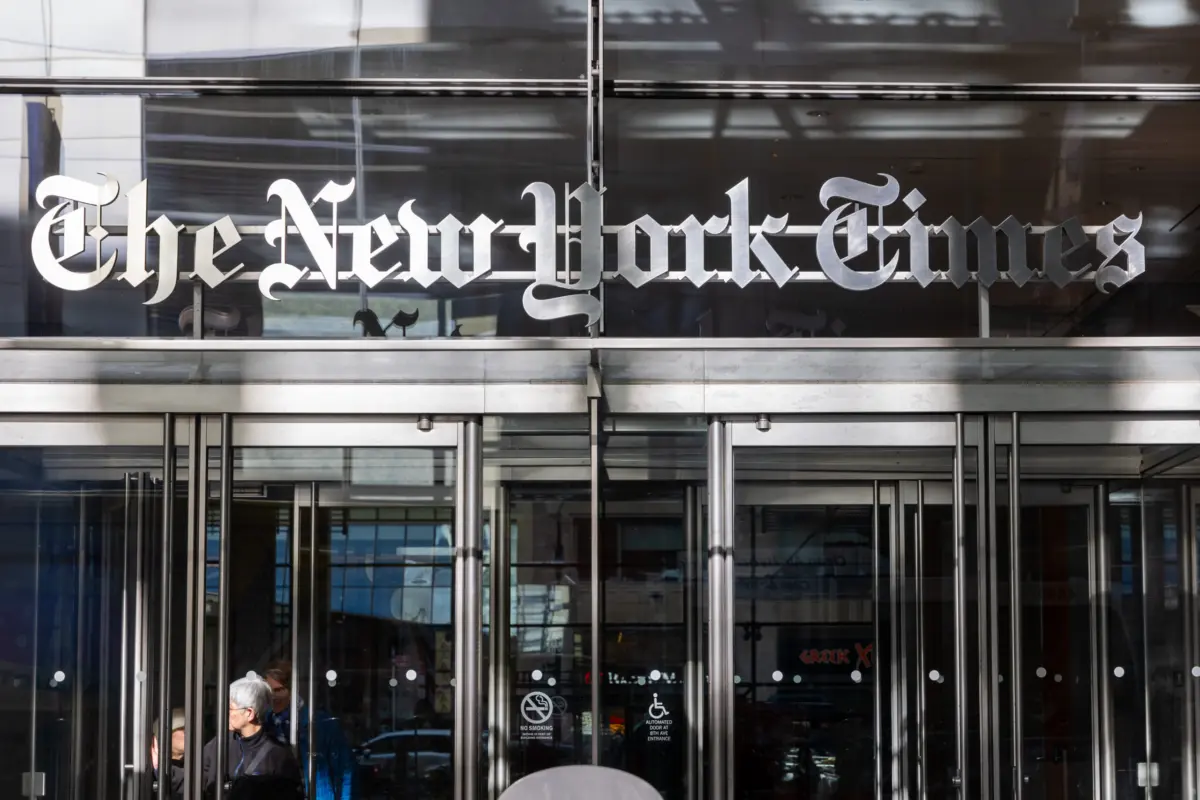
A federal district judge has issued a significant ruling that allows portions of a high-stakes defamation lawsuit filed by former President Donald Trump against The New York Times and four of its investigative journalists to move forward toward potential trial. U.S. District Judge Steven Merryday, a Republican appointee, determined that the former president provided sufficient plausible evidence to suggest that the publication may have acted with reckless disregard for the truth when reporting on complex financial and tax-related allegations.
The litigation centers on claims that the newspaper’s coverage, particularly regarding the book Lucky Loser: How Donald Trump Squandered His Father’s Fortune and Created the Illusion of Success, relied on incomplete information to characterize the former president’s financial history as criminal. While the court dismissed 27 of the statements cited by the plaintiff, it allowed seven specific allegations—concerning the acquisition of hundreds of millions of dollars from his father’s estate and subsequent tax practices—to advance.
The Core of the Legal Challenge
The lawsuit, spearheaded by attorney Alejandro Brito, seeks damages of at least $15 billion. The complaint argues that the reporters—Susanne Craig, Russ Buettner, Michael S. Schmidt, and Peter Baker—engaged in a pattern of biased reporting intended to undermine Trump’s 2024 presidential candidacy.
At the heart of the dispute is the "actual malice" standard, a rigorous legal threshold established by the landmark 1964 Supreme Court case New York Times Co. v. Sullivan. To prevail, a public figure must prove that a media organization published defamatory statements with the knowledge that they were false or with "reckless disregard" for whether they were true.
Judge Merryday’s ruling hinges on the complexity of tax law. He posited that determining whether a taxpayer has committed criminal tax fraud requires a "forensic audit" and "expert legal analysis." The judge noted that the complaint provides a plausible inference that the defendants knew, or should have known, that a definitive conclusion regarding illegal conduct could not be reached without such specialized, professional verification. By failing to secure an explicit, qualified legal opinion confirming criminal violations, the court suggested the defendants may have engaged in "purposeful avoidance of the truth."
Chronology and Investigative Background
The reporting in question stems from years of investigative work by the Times, most notably a 2018 exposé that analyzed more than 100,000 pages of financial records, including tax returns and confidential bank documents. That series, which later formed the basis for the book Lucky Loser, sought to challenge the narrative of Trump as a self-made billionaire, instead alleging that he benefited from approximately $400 million in transfers from his father, Fred Trump, much of which the newspaper argued involved questionable tax avoidance strategies.
For years, the Times has defended its reporting as the result of exhaustive journalistic inquiry. The publication maintains that its reporters consulted numerous tax specialists and financial experts over the course of their investigation. The defense has argued that the articles reflect a good-faith effort to inform the public about the financial dealings of a prominent political figure, rather than a malicious attempt to defame.
Analysis of the "Actual Malice" Standard
The legal battle underscores the evolving tension between investigative journalism and the protection of public figures against potentially defamatory claims. In the modern media landscape, "actual malice" is an exceptionally difficult bar to clear. However, Judge Merryday’s focus on the "intensely fact-dependent" nature of tax and money-laundering allegations creates a unique precedent in this case.
Legal analysts suggest that by narrowing the scope to seven specific claims, the court is focusing on whether the Times skipped essential due diligence. If the case proceeds to discovery, the internal communications of the editorial team and their correspondence with financial experts will become central to the litigation. The defense will likely lean heavily on the sheer volume of documents processed—100,000 pages—to demonstrate that they reached their conclusions based on a mountain of evidence rather than a desire to harm a political candidate.
Broader Implications for Media and Law
This case arrives at a time when the legal landscape for libel is under intense scrutiny. There have been ongoing discussions among some conservative jurists and politicians regarding the potential reevaluation of the Sullivan standard. Should this case reach a jury, it could become a focal point for broader debates about the limits of press freedom and the accountability of major news outlets when reporting on the financial histories of politicians.
The potential $15 billion in damages, while likely a strategic figure for the filing, underscores the high stakes for both parties. For The New York Times, the case represents an existential challenge to its investigative reporting methods. For the former president, it serves as a platform to challenge the narrative established by the mainstream press regarding his business acumen and legal compliance.
Expert Perspectives and Reactions
While the Times has not issued a detailed rebuttal of the judge’s specific reasoning in this ruling, their legal team has consistently maintained that the allegations in the lawsuit are meritless and represent an attempt to chill aggressive investigative reporting. Conversely, supporters of the former president view the judge’s decision as a vindication of the idea that media organizations must be held to a higher standard of accuracy, particularly when making accusations that border on criminal allegations.
Legal scholars note that the dismissal of 27 out of 34 claims is a significant partial victory for the defendants. However, the survival of the remaining seven claims ensures that the court will continue to examine the reporting process in great detail. The focus will now shift to whether the Times can prove that they acted with reasonable care given the complexity of the tax records they reviewed.
Next Steps in the Litigation
As the case moves forward, the court will likely order a discovery phase where both sides must turn over relevant communications and internal documentation. This phase is often the most revealing part of a defamation lawsuit, as it pulls back the curtain on how newsrooms curate information and reach editorial conclusions.
The case will also serve as a barometer for how federal courts interpret the threshold for "reckless disregard" in an era of hyper-partisan political discourse. By emphasizing the need for "qualified opinion" in technical areas like tax law, Judge Merryday has set a high bar for journalists covering the financial affairs of public figures. Whether this requirement will hold up under higher judicial review or during the trial itself remains to be seen.
In the final analysis, the lawsuit represents more than a personal grievance; it is a collision between the investigative reach of a legacy newspaper and the legal protections afforded to public figures. As the process unfolds, the findings will likely influence how media organizations approach the reporting of complex financial data in the future, potentially leading to more cautious editorial vetting processes regarding allegations of criminal conduct. The judiciary’s willingness to allow these specific claims to reach a jury trial marks a pivotal moment in the ongoing legal battle between the former president and one of the nation’s most prominent news institutions.