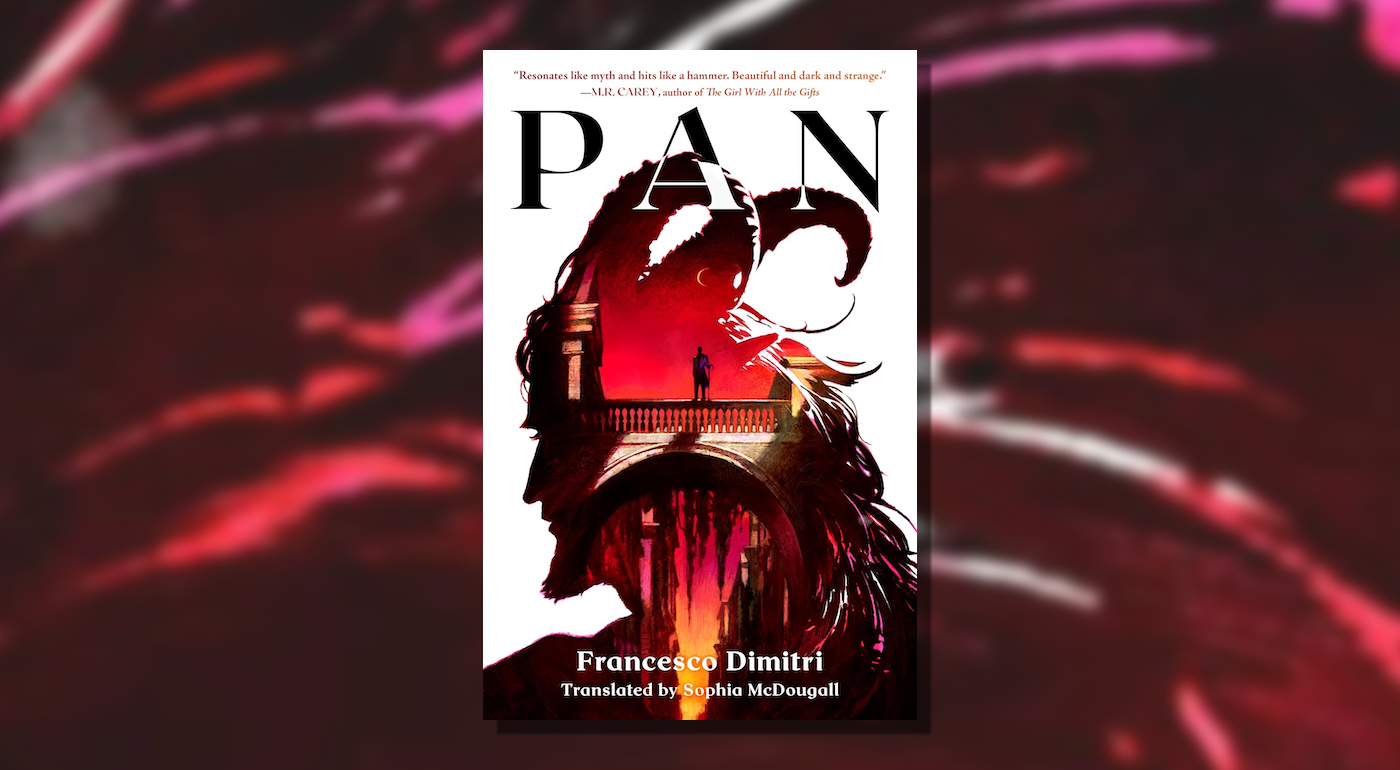
The contemporary literary landscape is set to welcome a provocative and darker reimagining of a timeless classic with the upcoming release of Francesco Dimitri’s novel Pan. Translated into English by Sophia McDougall and scheduled for publication by Tor Books on October 13, the novel transplants the core motifs of J.M. Barrie’s iconic Edwardian mythology into the sprawling, ancient, and modern metropolis of Rome. Rather than a whimsical tale of youthful escapism, Dimitri constructs a brutal urban fantasy where the boundary between myth and reality dissolves into bloodshed, pitting ancient elemental forces against the rigid architectures of modern civilization.
Main Facts and Narrative Premise
At its core, Pan investigates the psychological and metaphysical toll of lost innocence against the backdrop of contemporary Italian society. Across the neighborhoods of Rome, children drift into troubled slumbers, haunted by dreams of a non-existent island and shadowed by supernatural entities awakening within the urban sprawl. The narrative hinges on an ideological and existential war between two newly surfaced divine archetypes. One entity embodies anarchy, unbridled destruction, and extreme emotion, thriving on the chaotic vitality of the young. The opposing force represents absolute order and subjugation, seeking to impose bureaucratic and psychological control over the populace.
As these cosmic entities prepare to renew a primordial conflict, the city of Rome becomes a literal and figurative battleground. In the skies above historic piazzas and concrete housing blocks, children clash with pirates, while unseen deities vie for territorial dominance. Below, oblivious citizens navigate their daily routines, entirely unaware that the delicate membrane holding their reality together is fraying. The central warning of the novel reverberates through the streets: Pan is returning, and he is coming for everyone.
Chronology of the Epiphany Eve Unfolding
The events of the narrative converge sharply around a single, high-stakes 24-hour period beginning on the eve of the Epiphany, January 5, and culminating on the morning of January 6. This traditional Italian holiday, typically characterized by festive markets, children receiving sweets, and familial gatherings, serves as a stark contrast to the unfolding violence in the shadows of the city.
In the twilight hours of January 5, the city’s underbelly reveals its cruelty. In the peripheral district of San Basilio, two young men, known on the streets as PsyKlops and Wedge—actually the affluent sons of an architect and a business consultant—vent their suburban boredom through nocturnal graffiti tags. Their routine is violently interrupted by an organized collective of feral children, who reject their territorial intrusion. The confrontation escalates rapidly into lethal violence, resulting in the murder of Giulio and the severe mutilation of Luca.
Simultaneously, across the city in Piazza Navona, a street magician operating under the moniker "The Wondrous Wendy" performs sleight-of-hand routines for indifferent tourists and cynical locals. At twenty-five, Wendy embodies the premature exhaustion of a generation stripped of wonder, finding herself reduced to selling cheap illusions on a freezing winter night.

As dawn breaks on January 6, the bifurcated reality of Rome becomes absolute. While forensic investigators comb the blood-stained concrete of San Basilio, and families celebrate the national holiday, academics like Giovanni struggle against the crushing weight of institutional mediocrity in damp Esquiline basements. The juxtaposition of ancient folklore, modern urban decay, and domestic trauma establishes a relentless chronology where every character is forced to confront the erosion of their personal agency.
Background Context and Literary Lineage
Francesco Dimitri, an author celebrated for his ability to blend speculative fiction with philosophical depth, builds upon a rich tradition of dark fairy-tale retellings. However, unlike previous modernizations that lean into YA tropes or sanitized heroism, Dimitri’s approach draws heavily on the grittier realities of contemporary European urban life. By setting the narrative in Rome—a city where ancient imperial history coexists with modern socio-economic stagnation—the author creates a uniquely resonant environment for a myth rooted in eternal youth.
The translation by Sophia McDougall preserves the lyrical cadence of Dimitri’s prose while maintaining the visceral immediacy of the Italian setting. The novel’s exploration of neglected youth, domestic caregiver burnout, and the death of imagination reflects broader cultural anxieties regarding the pressures placed on younger generations in 21st-century Europe. The inclusion of peripheral figures—such as Michele, a teenager coping with his father’s advanced neurological decline—anchors the high-concept fantasy elements in painful, recognizable human experiences.
Supporting Data and Sociological Implications
While Pan is a work of fiction, its structural themes mirror documented sociological pressures within contemporary urban centers. The novel’s portrayal of marginalized youth operating outside formal societal frameworks touches upon real-world concerns regarding urban alienation, juvenile delinquency, and the psychological impact of economic disparity in peripheral European neighborhoods like Tor Bella Monaca and San Basilio.
Academic institutional critique also plays a subtle yet pervasive role in the narrative, exemplified by the character of Giovanni. As a doctoral researcher bogged down by trivial assignments and archaic academic hierarchies—such as analyzing generational yawning patterns for negligible professional gain—Giovanni represents the systemic dampening of intellectual passion. The novel uses these grounded struggles to amplify its supernatural themes: when real-world structures fail to provide meaning or security, individuals become susceptible to older, more destructive forms of belief and belonging.
Critical Reception and Broader Impact
Advance praise for Pan highlights its uncompromising tone and willingness to subvert reader expectations. Literary critics have noted that Dimitri avoids the nostalgic trap of romanticizing childhood. Instead, childhood in Pan is depicted as a state of raw, volatile power capable of generating its own mythologies and monsters.
The novel’s arrival in October positions it strategically within the autumn publishing season, appealing to readers of dark fantasy, literary horror, and sophisticated mythic fiction. By stripping the Peter Pan legend of its whimsical veneer and exposing the underlying themes of abandonment, isolation, and perpetual conflict, Dimitri has crafted a narrative that challenges the boundaries of traditional fantasy literature. As Tor Books prepares for the official release, anticipation continues to build for a novel that promises to redefine how contemporary audiences perceive the boy who refused to grow up—and the terrifying price of that refusal.