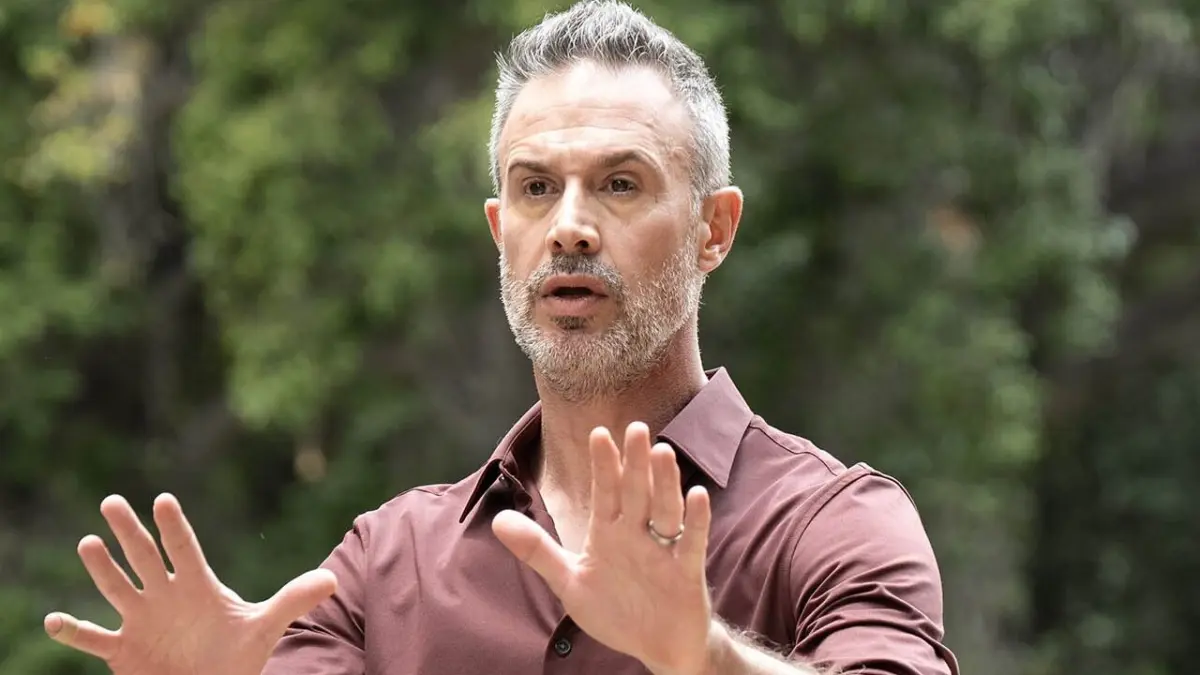
The landscape of psychological suspense is set to undergo a compelling transformation with the announcement of the upcoming feature film Killing Time, a high-stakes home invasion thriller starring 90s icon Freddie Prinze Jr. The production, which recently concluded principal photography, marks a notable shift for the veteran actor, moving away from his historical romantic comedy roots and into the intense, claustrophobic atmosphere of modern genre filmmaking. Alongside Prinze, the ensemble cast features Shelley Hennig, Sasha Pieterse, William Moseley, Michael Evans Behling, and Michael Sirow, signaling a diverse mix of talent poised to navigate the film’s complex narrative architecture.
A Narrative Reimagining of Psychological Warfare
At its core, Killing Time is being framed by its creative team as a modern-day reimagining of the high-tension psychological dynamics popularized by Edward Albee’s seminal work, Who’s Afraid of Virginia Woolf? The narrative trajectory follows a criminal duo currently on the run following a violent spree of bank robberies and homicides. In a desperate bid to evade law enforcement, the fugitives seek sanctuary within the walls of a seemingly idyllic home belonging to an affluent, respectable married couple.
The premise hinges on the reversal of traditional home invasion tropes. Rather than a straightforward cat-and-mouse game, the film posits a psychological collision where the intruders—who initially appear as the primary aggressors—find themselves trapped within a domestic environment that conceals dark, potentially more dangerous secrets. As the narrative unfolds, the film explores the blurred lines between predator and prey, forcing both the fugitives and their hosts to shed their social masks. This structural choice suggests a heavy reliance on dialogue-driven tension and character-based antagonism, moving the film into the sub-genre of “chamber thrillers,” where the setting itself acts as a third antagonist.
The Production Timeline and Industry Context
The development of Killing Time has moved with significant momentum over the past several months. The project, directed by Joshua Friedman, represents a culmination of months of pre-production planning and a rigorous shooting schedule that has now reached the post-production phase. According to industry reports, principal photography recently wrapped, signaling that the project is firmly on track for its projected 2027 release window in North America.
The film is set to be a key point of interest for international buyers, with The Exchange overseeing international sales at the upcoming American Film Market (AFM). The decision to leverage the AFM for international distribution indicates a strong level of confidence from the production team, as the market serves as the primary global hub for securing theatrical and streaming deals for independent features. Quiver Distribution has already secured the North American rights, confirming that the film will receive a wide domestic release.
Creative Vision and Directorial Intent
Director Joshua Friedman has been vocal about the collaborative spirit that defined the set. In a recent statement regarding the production, Friedman emphasized that the film’s success relied heavily on the versatility of his lead actors. “Freddie, Shelley, Sasha, and William brought everything this film needed—charm, menace, and the ability to turn on a dime,” Friedman noted. He further highlighted the central dynamic of the film, adding, “Watching them go at each other across a living room was the whole movie.”
The director also acknowledged the logistical and emotional labor required to bring the project to fruition, specifically mentioning the contributions of producer Linda Duncombe. Friedman stated, “As for Linda, she believed in this film from the start and fought beside me to get it made—and for that this film will always be sacred to me.” This level of internal advocacy is common in independent genre cinema, where the passion of the producers often dictates the viability of a script that requires high-level acting performances to anchor a single-location setting.

The Ensemble Cast and Career Transitions
The casting of Freddie Prinze Jr. is arguably the most significant headline regarding the project. Prinze, who became a cultural phenomenon in the late 1990s and early 2000s through hits such as I Know What You Did Last Summer, She’s All That, and Summer Catch, has spent the last decade focusing on diverse projects, including voice acting and culinary media. His return to a gritty, suspense-heavy role provides a bridge between his established fanbase and a new generation of thriller enthusiasts.
The supporting cast brings their own respective weight to the project. Shelley Hennig is well-regarded for her work in genre television and film, including Teen Wolf and Ouija, while Sasha Pieterse, known for her breakout performance in Pretty Little Liars, adds a layer of established psychological intrigue. The presence of William Moseley, Michael Evans Behling, and Michael Sirow rounds out a cast that appears balanced between established star power and rising talent. This synergy is crucial for a film that relies so heavily on the chemistry of its leads within a confined space.
Technical and Financial Infrastructure
Behind the camera, the production team represents a collaborative effort to maintain a tight, high-quality output on a moderate budget—the hallmark of successful home invasion thrillers. Producers include Larry Greenberg, Eric Brenner, Raja Collins, Linda Duncombe, German Michael Torres, and Joshua Friedman. The executive production team, comprised of Berry Meyerowitz, Jeff Sackman, and Eduard Osipov, brings extensive experience in the distribution and financing of independent genre films.
The financial model for Killing Time appears to follow the standard independent circuit: securing North American distribution early while utilizing major industry markets to cover international costs. By focusing on a contained environment, the production team likely managed to keep overhead costs lower than a location-heavy action film, allowing for a higher percentage of the budget to be allocated toward cast acquisition and high-end cinematography.
Implications for the Home Invasion Sub-Genre
The release of Killing Time in 2027 arrives at a time when audiences are showing a renewed interest in contained, character-driven thrillers. Following the success of similar projects that lean into the "home as a trap" motif, Killing Time faces the challenge of differentiating itself from an increasingly saturated market. The comparison to Who’s Afraid of Virginia Woolf? suggests a more literate, dialogue-heavy approach than the typical slasher fare, which may attract a more mature demographic.
If the film succeeds in its goal of subverting the predator-prey dynamic, it could serve as a model for future mid-budget thrillers that prioritize script quality and acting prowess over expensive set pieces or CGI-heavy sequences. The success of the film will largely depend on its ability to maintain tension without falling into the predictable beats of the home invasion genre. With the marketing campaign set to ramp up as the international sales process begins at the AFM, industry analysts will be watching closely to see if the combination of a well-known ensemble and a high-concept script can translate into strong box office performance and streaming longevity.
As the film moves into post-production, the focus will shift to the final edit, sound design, and the cultivation of a marketing narrative that highlights the suspenseful interplay between the cast members. For Freddie Prinze Jr., Killing Time represents a strategic pivot, offering him the opportunity to demonstrate his range in a genre that values intensity and screen presence above all else. For the broader industry, the film stands as a testament to the enduring appeal of the psychological thriller, a genre that continues to prove that, with the right script and a focused cast, the most terrifying threats are often the ones found sitting across the room.