Let’s start at the very beginning—famously, a very good place to start. Two decades after the apocalyptic devastation of the Second World War, a Hollywood production crew descended upon the Baroque Austrian city of Salzburg. They brought with them stars, show tunes, and a compelling, essentially true story of romance, family, and fierce opposition to Adolf Hitler. The resulting cinematic triumph, The Sound of Music, would go on to win five Academy Awards and cement itself as a permanent pillar of global pop culture. Yet, for the city that served as its backdrop, the film’s arrival was met not with celebration, but with deep-seated institutional anxiety and decades of silent estrangement.

Today, however, a profound cultural reconciliation is underway. Salzburg has officially opened a dedicated, €6.4 million museum explicitly designed to bridge the chasm between a worldwide cinematic touchstone and its long-ambivalent home city. Situated in the historic coach house and hunting lodge of the 17th-century Hellbrunn Palace, the new exhibition brings the von Trapp family history back to the streets where it unfolded, offering both international pilgrims and local residents an expansive, nuanced look at a masterpiece long overlooked in its own backyard.
The Cold Shoulder: Why Salzburg Resisted Hollywood
When Robert Wise’s masterpiece premiered in 1965, starring Julie Andrews as the free-spirited novice Maria and Christopher Plummer as the stern patriarch Captain Georg von Trapp, its theatrical run in Austria was remarkably brief. It played to half-empty cinemas for a couple of weeks, closed due to flagging ticket sales, and quickly evaporated from local consciousness. For years, the nearly three-hour musical was virtually absent from Austrian and German television screens, remaining a marginal cultural artifact known locally by its dubbed title, Meine Lieder – meine Träume (My Songs – My Dreams).
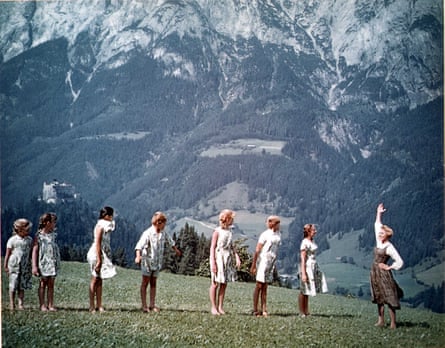
Co-curator Matthias Bergsmann explains that the local aversion cannot be reduced simply to collective embarrassment over the Nazi annexation of Austria, known as the Anschluss, though the timing certainly played a role.
“At the time, it was perhaps simply too early to tackle this subject in this way, seen as sentimental,” Bergsmann noted during a guided tour of the exhibition space. “Perhaps the wounds were still too deep, or the process of coming to terms with the past was only just beginning.”
Furthermore, municipal authorities in the 1960s were deeply unsettled by the film’s explicit historical realities. Scenes depicting Nazi soldiers marching across the central Residenzplatz beneath giant swastika banners struck a raw nerve in a municipality still economically and morally struggling to rebuild its identity. Additionally, purists and local historians chafed at Hollywood’s creative liberties—most notably the geographic impossibility of the family fleeing Austria on foot directly across the Alps into Switzerland, when they actually boarded a train bound for safety in South Tyrol.
A Monument Decades in the Making
The realization of the Salzburg museum is the culmination of an extraordinarily protracted bureaucratic and cultural journey. Discussions and preliminary planning for a dedicated exhibition space date back as far as the 1980s. However, securing a suitable municipal venue, aligning complex government financing, and navigating intricate international copyright hurdles required decades of negotiation.
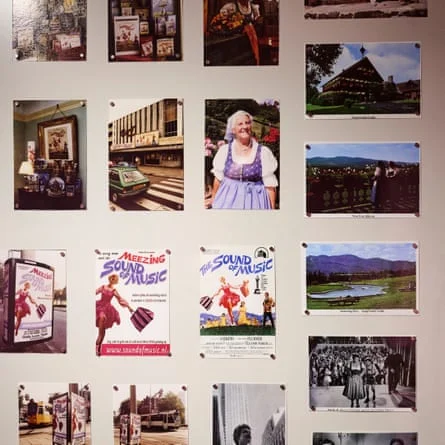
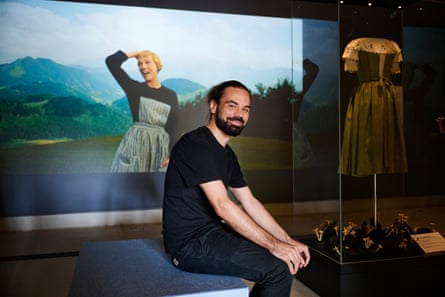
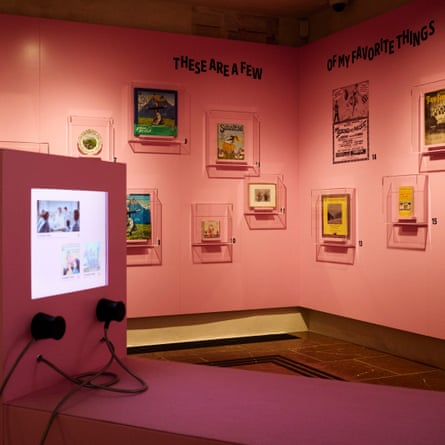
Ultimately, the project materialized through a substantial public investment: €4.6 million in public funds was allocated for the restoration and adaptation of the Hellbrunn Palace structures, while an additional €1.8 million was dedicated exclusively to curating the exhibition itself. The venue now houses an extensive collection of rare artifacts, including original cinematic costumes, international movie posters, private Super 8 footage recorded on set by the cast and crew, and authentic personal items belonging to the real von Trapp family.
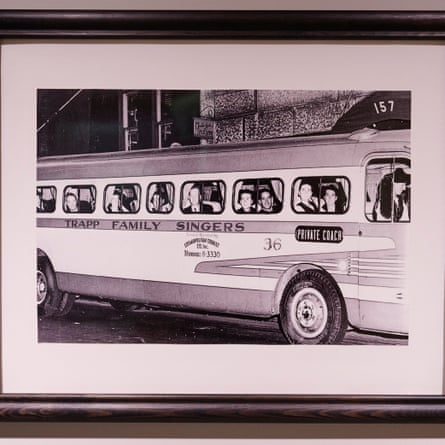
Upstairs, visitors encounter genuine historical relics: a winter dirndl worn by the real Maria von Trapp, Captain Georg von Trapp’s naval uniform complete with a ceremonial sabre, and personal journals chronicling the family’s harrowing escape from Nazi-occupied Europe and their subsequent reinvention as professional touring musicians in the United States.
Fact versus Fiction: The True Story of the von Trapp Family
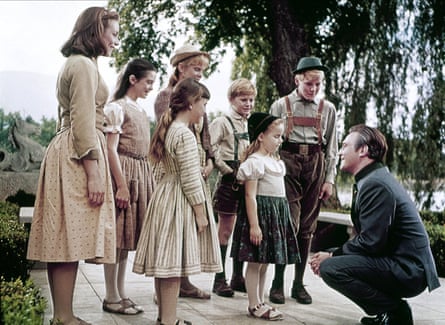
While the Broadway musical of 1959 and the subsequent 1965 film were ostensibly adapted from Maria von Trapp’s popular 1949 memoir, The Story of the Trapp Family Singers, Hollywood’s dramatization introduced significant divergences from reality.
In truth, Maria was sent to the von Trapp villa not as a governess to all seven children, but specifically to tutor young Maria, who was recovering from scarlet fever. Her relationship with Captain Georg von Trapp evolved gradually through mutual respect and shared musical interests rather than a sudden theatrical conversion from stern commander to affectionate father. Moreover, the family did not abandon Austria in the dead of night via a theatrical climb over Alpine crags pursued by stormtroopers; rather, they legally departed on a routine passenger train to Italy in 1938, capitalizing on the captain’s dual Italian citizenship before permanently relocating across the Atlantic.
Elisabeth von Trapp, a granddaughter of Georg and his first wife Agathe, who splits her time between Vermont and Salzburg, acknowledges the family’s initial frustration with Hollywood’s alterations.
“When they saw the film, they were going, ‘that’s not how I experienced it,’” she remarked, pointing specifically to the cinematic misrepresentation of her grandfather as an emotionally distant authoritarian. Yet, she expresses deep gratitude that the new museum has finally dedicated substantial space to telling the unvarnished historical truth of her family’s lineage.
Tourism, Economics, and Cultural Impact
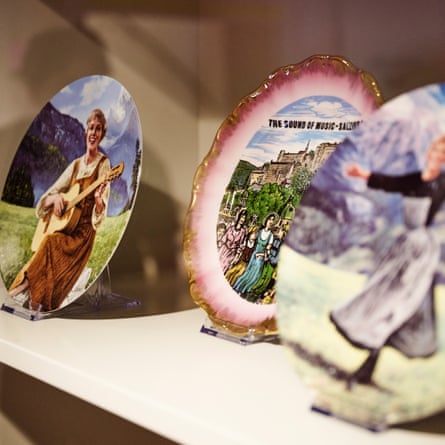
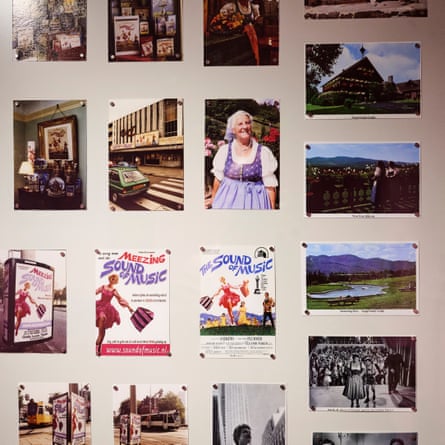
Despite decades of local skepticism, Salzburg has long wrestled with an inescapable economic reality: The Sound of Music is a titanic global tourism driver. Annually, an estimated 300,000 international visitors arrive in the city explicitly to retrace the footsteps of Maria and the children, placing the film’s cultural gravity on near-equal footing with Salzburg’s most famous native son, Wolfgang Amadeus Mozart.
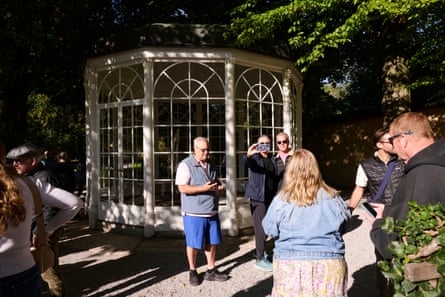
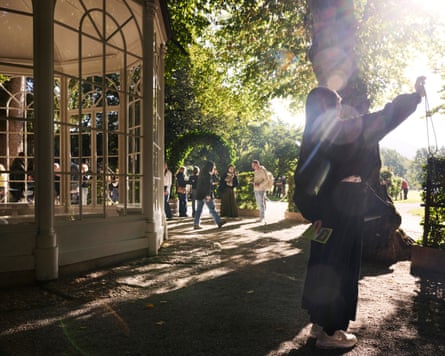
The economic footprint of this fandom is ubiquitous. Guided tours crowd the Mirabell Gardens, where the “Do-Re-Mi” sequence was filmed, and thousands flock to the iconic glass gazebo. In fact, intense tourist traffic to the original pavilion required municipal authorities to restrict physical access after enthusiastic fans frequently danced inside, causing structural damage. To accommodate this demand safely, the new museum features a full-scale reconstruction of the gazebo, equipped with looped screenings of the famous musical numbers and interactive sing-along installations.
For long-term residents, the museum offers a belated opportunity to understand the phenomenon that has defined their city’s international image for generations. Longtime Salzburg locals Helmut and Margarete Zoufall, aged 81 and 73 respectively, recall watching the film crew operate around Nonnberg Abbey as young adults.
“It was always said that the film was made too soon after the war. People were starving and didn’t want to be reminded of that period,” Helmut Zoufall said. “But time has passed.”
A Timely Message for a Fractured Political Age
Beyond the kitsch, the Tyrolean landscapes, and the unforgettable Rodgers and Hammerstein melodies, curators emphasize that the core message of The Sound of Music possesses urgent contemporary relevance. In an era marked by the global resurgence of right-wing extremism and political polarization, the narrative serves as a stark historical reminder of the dangers of fascism and the moral imperative of civil resistance.
“Beneath all the kitsch, this is also a film about resistance,” co-curator Matthias Bergsmann emphasized. “It was about saying no to national socialism. And about a family who said: if we stick together we will abide, and music will save us. For all its beautiful images and songs, the film has depth.”
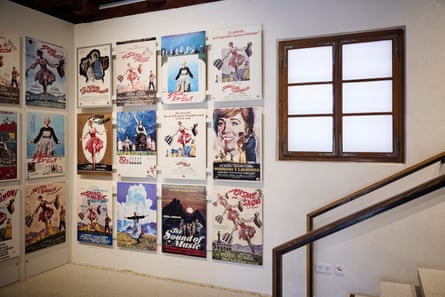
Recent digital renaissances have further expanded the film’s reach. Social media platforms, particularly across Southeast Asia, have introduced the musical to entirely new generations of viewers via viral clips on YouTube and streaming services. Notably, the dramatic sequence in which Captain von Trapp publicly tears down the Nazi flag has transformed into a widely utilized internet GIF for modern political activists organizing against far-right movements worldwide.
For Elisabeth von Trapp, the opening of the museum represents more than a cultural homecoming; it is a vital moral statement for the present day. When the family briefly returned to Austria in 1950 to perform three major post-war concerts, their message was one of reconstruction and historical vigilance.
“I just hope this museum will help say, ‘look, this family was from your own back yard,’” she said. “They had a clarion call saying it’s time to rebuild and that whatever happened during those years shall not happen again.”