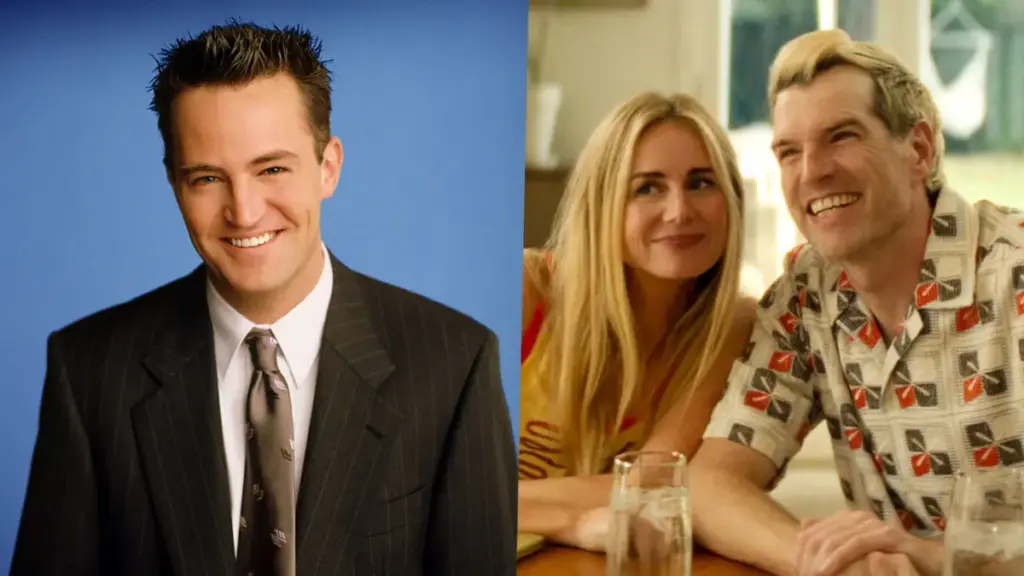
The cinematic landscape of holiday entertainment continues to expand as beloved literary works find new life on streaming platforms. Among the most anticipated seasonal releases is A Dog’s Perfect Christmas, a feature film adaptation of the bestselling novel written by acclaimed author W. Bruce Cameron. Directed by Cathryn Michon—who also co-wrote the screenplay alongside her husband—the project brings a complex blend of grief, familial tension, and canine companionship to audiences worldwide.

Main Facts and Production Overview
A Dog’s Perfect Christmas explores the intricate dynamics of a fractured family navigating a season defined by profound challenges. The narrative centers on Sander, portrayed by veteran actor Dennis Quaid, who remains mired in deep grief two years after the death of his wife, Barbara. Simultaneously, his granddaughter Ello (Brooke Lena Johnson) faces academic difficulties, while the marriage of relatives Hunter (Milo Ventimiglia) and Juliana (Kathleen Rose Perkins) reaches a critical breaking point. The emotional volatility of the household escalates dramatically when Juliana contracts a severe illness, forcing the remaining family members to confront their personal demons while rallying to preserve their collective stability.
Central to the narrative resolution are two distinct canines: Winstead, an aging Basset Hound who serves as Sander’s steadfast companion, and Ruby, an abandoned Corgi puppy rescued by Ello. Together, these animals act as catalysts for emotional healing, bridging generational divides and guiding the human characters back toward mutual support and reconciliation. The ensemble cast also features prominent performances from Mary Steenburgen, Jennifer Tilly, Marissa Jaret Winokur, and Thomas Haden Church, who provides the distinctive voice of Winstead.

Chronology and Literary Background
The genesis of A Dog’s Perfect Christmas lies in the extensive collaboration between W. Bruce Cameron and Cathryn Michon, a partnership that has previously yielded successful animal-centric cinematic adaptations, including A Dog’s Purpose and A Dog’s Journey. Transitioning Cameron’s written word to the screen required meticulous narrative distillation—a process screenwriters term "killing your darlings"—to fit the feature-film format.
Production logistics presented unique hurdles, particularly concerning the deployment of animal actors. Unlike conventional film shoots utilizing highly trainable breeds, the creative team elected to cast Basset Hounds, a breed notoriously driven by scent and easily distracted. According to Michon, working with the breed required intensive coordination with head animal trainer Bonnie Judd. Furthermore, minor physical limitations on set ultimately influenced creative choices within the script. For instance, an initial concept involving Cameron’s original book A Dog’s Purpose had to be modified because the Basset Hounds could not comfortably grip the thicker volume in their mouths. This practical constraint led to the incorporation of Michon’s own book, I’m Still Here: A Dog’s Purpose Forever, which features a cover illustration of the couple’s late dog, Tucker.

Supporting Data and Creative Adjustments
To maximize the visual and emotional resonance of the story, Michon introduced several creative motifs absent from the original source text. Most notably, the film utilizes the imagery of a red Northern Cardinal—a widely recognized cultural symbol associated with the presence of departed loved ones—to represent Barbara watching over her grieving family. This visual metaphor allowed the filmmakers to establish a parallel narrative thread regarding spiritual continuity, mirroring the internal perspective of Winstead the dog.
The production also capitalized on spontaneous environmental occurrences to enhance dramatic tension. During the filming of a sequence depicting the Corgi’s abandonment, a distant train whistle prompted an unexpected reaction from the on-set Basset Hound. The dog’s heightened alertness was captured and creatively reframed in the editing suite to depict urgency and distress, resulting in an authentic moment that elevated the emotional stakes of the scene without the aid of computer-generated imagery.

Official Responses and Cast Dynamics
Reflecting on the collaborative environment, Michon has praised the dedication of the ensemble cast, highlighting Dennis Quaid’s nuanced portrayal of acute depression and isolation. Quaid’s prior experience working with Michon and Cameron established a shorthand communication style that facilitated deeper emotional exploration on set. Similarly, newcomer Brooke Lena Johnson brought diverse performance disciplines—including formal acting, vocal training, and competitive ice skating—to her role as Ello, establishing a central dynamic that anchors the film’s multi-generational narrative.
Thomas Haden Church’s casting as the voice of Winstead brought a distinct vocal cadence to the canine protagonist. Michon specifically selected Church for his ability to convey warmth, humor, and subtle Southern vocal inflections that complement the rural aesthetic of the Basset Hound breed.

Broader Impact and Industry Implications
The release of A Dog’s Perfect Christmas underscores the enduring commercial and cultural viability of family-oriented holiday programming within the streaming ecosystem. By addressing universal themes of bereavement, resilience, and recovery, the film transcends the traditional parameters of seasonal light entertainment. Furthermore, the production’s explicit integration of animal rescue advocacy—featuring characters acquired through specialized adoption networks—reinforces a broader industry trend toward promoting ethical pet ownership and animal welfare awareness among mass audiences. Through its careful balance of solemn dramatic elements and uplifting resolution, the film positions itself as a notable addition to the contemporary holiday cinematic canon.