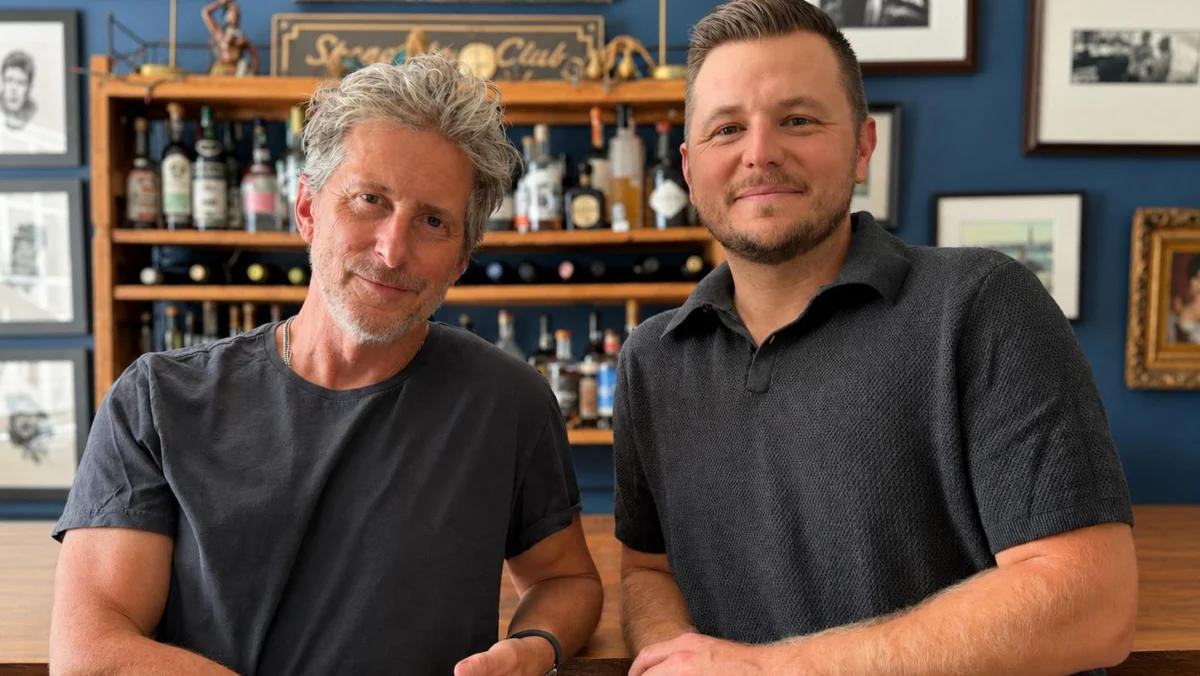
The evolution of modern film production requires a delicate balance of creative stewardship and logistical pragmatism, a mandate that producers Aaron Ryder and Andrew Swett have made the cornerstone of their newly rebranded production banner, Embrace. Previously known as Ryder Picture Company, the firm has undergone a structural and strategic transition, signaling a move away from founder-centric operations toward a collaborative model designed to thrive amidst the volatility of the current entertainment marketplace. This rebranding coincides with a prolific period for the duo, who have curated an eclectic slate of director-driven projects that span across major studio tentpoles and independent features.
A Foundation Built on Rapport and Strategy
The genesis of the partnership between Ryder and Swett is rooted in a long-standing professional mentorship that blossomed into a high-level creative alliance. Ryder, a veteran producer whose pedigree includes pivotal work on Christopher Nolan’s Memento and The Prestige, as well as an Academy Award nomination for Denis Villeneuve’s Arrival, established his original company in 2021. Swett, having cut his teeth as an assistant during the Arrival era and later serving as an executive at Lord Miller and Mythos Studios, rejoined Ryder as a partner, bringing a wealth of experience from the production of major intellectual property like Spider-Man: Into the Spider-Verse.
The duo’s approach to project management is defined by a rigorous "non-starter" analysis. Early in the development phase, they work with filmmakers to establish strict boundaries regarding creative control, budgetary constraints, and production methodologies. This process was clearly on display during the development of Adam Wingard’s upcoming thriller, Onslaught. Following the commercial scale of his Godzilla projects, Wingard sought a return to the "scrappy," suspense-driven roots exemplified by John Carpenter’s early filmography. By facilitating a deal with A24 that granted Wingard final cut—a rarity in contemporary studio filmmaking—Ryder and Swett demonstrated their ability to leverage their relationships to protect a director’s creative vision.
The Strategic Rebranding: Embracing the Chaos
The decision to transition from Ryder Picture Company to Embrace was the result of an eighteen-month deliberative process. Seeking a name that reflected a philosophy of resilience in a shifting industry, the partners aimed for a moniker that signaled a departure from a singular "founder-led" brand. The name "Embrace" was finalized during a dinner meeting, capturing the team’s internal mantra: that producers must learn to navigate, rather than fear, the inherent instability of the modern production landscape.
The company, which maintains a staff of roughly six, operates with a platform-agnostic philosophy. Whether dealing with a streamer, a legacy studio, or an independent financier, the goal remains consistent: identifying the specific version of a project that maximizes both creative integrity and commercial viability. This agility is necessary in an era where the traditional theatrical-to-home-video pipeline has been replaced by a fragmented distribution ecosystem.
Current Slate and Project Diversity
Embrace’s current production slate is characterized by high-profile collaborations that highlight their versatility. Their output currently includes:
- Onslaught (A24): Directed by Adam Wingard, this project marks a return to the director’s roots in low-budget, high-tension horror-thrillers.
- Shiver (Warner Bros.): A high-budget, time-loop thriller directed by Tim Miller and starring Keanu Reeves. The production required complex logistical coordination, including 45 days of filming in a water tank in the Dominican Republic.
- I Love Boosters (Neon): A project helmed by Boots Riley, highlighting the company’s commitment to bold, auteur-driven narratives.
- The Death of Robin Hood (A24): Directed by Michael Sarnoski, further cementing their relationship with the high-concept independent studio.
- Office Romance (Netflix): A romantic comedy featuring Jennifer Lopez and Brett Goldstein, directed by Ol Parker, showcasing the firm’s ability to move between genres.
- Mother’s Helper: An erotic thriller directed by Bridget Moloney and starring Shailene Woodley.
The "Superpower" of Relationship Management
Industry observers, including longtime collaborator Tim Miller, point to Ryder’s ability to act as a bridge between high-level talent and the institutional demands of Hollywood. Miller, who has worked closely with the duo on Shiver, notes that their value lies in their ability to handle the "Hollywood politics" of a production. This allows the director to focus exclusively on the creative output rather than being bogged down by bureaucratic obstacles.
Ryder’s reputation for reliability has become a tangible asset. In development scenarios where casting is paramount, his ability to secure top-tier talent—such as his successful outreach to Rebecca Ferguson for previous projects—is a direct result of decades of professional goodwill. For filmmakers who entered the industry later in their careers, such as Miller, this depth of experience provides a necessary sounding board, offering a historical perspective on how various directors handled production challenges.
Analyzing the Market Position
The current industry environment is defined by an over-correction following the streaming boom. As studios pull back on expenditures and tighten development slates, production companies that can operate with low overhead while maintaining high-level talent connections gain a competitive advantage. Ryder and Swett’s approach of offering "menu-based" development—outlining the differences between a studio-scaled, streaming-scaled, and pre-sales-scaled version of the same script—positions them as strategic consultants as much as traditional producers.
This methodology serves as a hedge against the unpredictability of the box office. By demonstrating to financiers that a story can be adapted to various price points, they reduce the risk profile of their projects. This pragmatic flexibility is essential for a boutique firm, as it ensures that their projects remain viable even if the market shifts away from high-budget spectacles toward more mid-budget, character-driven narratives.
Future Implications and Operational Philosophy
As Embrace continues to expand its footprint, the primary challenge will be maintaining the personalized, high-touch management style that defines their current success. The transition from a founder-led entity to an established production house involves delegating creative decision-making while ensuring that the "Embrace" philosophy—which prioritizes the director’s vision while maintaining fiscal responsibility—is upheld across all projects.
The firm’s focus on post-production management and navigating the complexities of large-scale shoots, such as those required by Shiver, indicates that they are positioning themselves to handle increasingly complex, technically demanding films. By diversifying their slate across A24, Netflix, Neon, and Warner Bros., Ryder and Swett have effectively insulated their company from the volatility of any single distribution model.
In the final analysis, the story of Embrace is one of adaptation. By recognizing that the traditional producer role—one of gatekeeping and static project management—is becoming obsolete, Ryder and Swett have evolved into a more fluid, consultative force. Their emphasis on "embracing" the chaos of the industry suggests a strategic posture that seeks to capitalize on the gaps left by larger, more rigid studio infrastructures. As the industry continues to reorganize, the success of their upcoming slate will serve as a bellwether for the efficacy of the boutique, director-first production model in a post-peak-TV landscape.