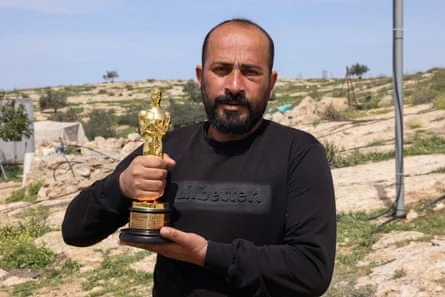
International film industry heavyhouses, artistic organizations, and prominent cultural figures worldwide have united in fierce solidarity with Yuval Abraham and Rachel Szor, the Oscar-winning Israeli documentary filmmakers currently facing state-backed intimidation. The backlash follows threats from Israel’s culture minister to revoke their citizenship over their latest investigative documentary, NAZA, which exposes the military’s reliance on artificial intelligence systems in ordering deadly airstrikes across Gaza.
The controversy highlights a volatile intersection of art, journalism, and state power, drawing profound international concern regarding freedom of expression, the safety of documentary filmmakers, and the ethical implications of automated warfare.
Anatomy of the Documentary NAZA
Produced by the Guardian, the 80-minute documentary NAZA derives its title from a grim military acronym utilized euphemistically by Israeli intelligence to denote the estimated civilian casualty threshold deemed acceptable during targeted bombardments in the Gaza Strip. The film features on-the-record testimonies from 24 former and active Israeli military and intelligence personnel. These whistleblowers detail the inner workings of algorithmic targeting tools used to dictate massive air campaigns, processes that have contributed significantly to staggering Palestinian civilian casualties.
The cinematic project builds directly upon extensive investigative reporting published collaboratively between 2023 and 2025 by the Israeli-Palestinian outlet +972 Magazine, the Hebrew-language publication Local Call, and the Guardian. Every factual assertion within the film has undergone rigorous scrutiny, drawing on multiple verified sources to substantiate claims regarding automated warfare and civilian devastation.
Festival Acclaim and the Immediate Political Backlash
The friction surrounding NAZA intensified dramatically following its explosive premiere at the Venice International Film Festival. The documentary secured a historic 25-minute standing ovation—the longest in the festival’s recorded history—before ultimately being awarded the prestigious Special Jury Prize.

However, the international acclaim was swiftly met with severe hostility from Israeli state authorities. On Sunday, Israel’s Minister of Culture and Sport, Miki Zohar, launched a scathing public attack via social media, accusing the filmmakers of producing treasonous material designed to appease international critics.
"I will act immediately to revoke the Israeli citizenship of these despicable creators for treason against the state," Zohar posted on X, sparking immediate alarm among human rights defenders and free speech advocates globally.
Chronology of Escalating Tensions
The threats against Abraham and Szor represent a continuation of a hostile climate that has dogged the filmmakers following previous international successes.
- March 2024: Abraham and Szor premiere their critically acclaimed documentary No Other Land at the Berlin International Film Festival, taking home a major prize. The film chronicled violent Israeli settler displacement in the occupied West Bank alongside Palestinian co-directors Basel Adra and Hamdan Ballal.
- February to March 2025: The creative team wins the Academy Award for Best Documentary Feature for No Other Land. Shortly after accepting the Oscar, co-director Hamdan Ballal and the family home of Yuval Abraham are subjected to violent physical attacks by right-wing mobs in the West Bank.
- February 2026: The Berlin Film Festival plunges into a high-stakes political crisis after multiple award-winning directors use the closing ceremony to condemn military operations in Gaza. German authorities briefly contemplate dismissing festival director Tricia Tuttle over accusations of harboring hate speech, prompting a massive global defense of her leadership by international filmmakers.
- September 2026: NAZA premieres at the Venice Film Festival, securing a record-breaking standing ovation and the Special Jury Prize, immediately followed by Culture Minister Miki Zohar’s threats to strip the directors of their Israeli citizenship.
Global Institutional and Artistic Solidarity
In the wake of Minister Zohar’s remarks, cultural leaders across the international film circuit mobilized to condemn state-sponsored censorship and intimidation. Julie Huntsinger, artistic director of the Telluride Film Festival, issued a scathing rebuke of the Israeli government’s stance.
"Documentary filmmakers are among the best long-form journalists working and critical to our understanding of the world," Huntsinger stated. "To even threaten their citizenship standing is unacceptable. This should be condemned by any thinking human."
Leaders of the Locarno Film Festival echoed these sentiments, releasing a joint statement affirming that "artistic and journalistic freedom are the very foundation of what cinema can be: a space for dialogue which engages critically with the world we live in."
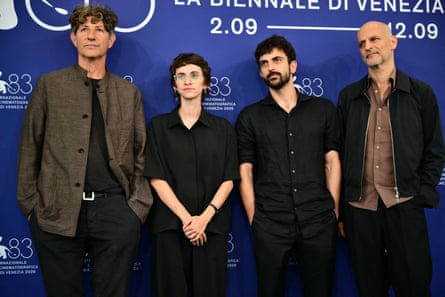
Tricia Tuttle, director of the Berlin International Film Festival, emphasized the vital democratic role of provocative art. "Artists must be free to critically examine the world," Tuttle noted. "Films can provoke discussion, disagreement, and criticism, but in a democratic society, the response to art must be dialogue and scrutiny, not intimidation or punishment by the state."
Similar condemnations were voiced by British theatrical icon Sir Richard Eyre and novelist Hanif Kureishi, who praised the filmmakers for maintaining steadfast courage in the face of institutional oppression.
Domestic Support Within Israel
Despite the aggressive rhetoric emanating from government offices, a substantial contingent of Israeli artists and cultural workers has rallied behind Abraham and Szor. More than 1,500 Israeli filmmakers, actors, and writers have signed a formal petition refuting government claims that the creators sought to maliciously damage the nation’s international standing.
Initiated by prominent figures including Liran Atzmor, Nadav Lapid, Orna Ben Dor, Hagai Levi, and Shlomi Elkabetz, the petition warns that the vitriolic rhetoric directed at the duo borders on inciting physical violence.
"In recent days, we have witnessed an unprecedented campaign of vilification and incitement against the film’s creators," the petition reads, urging the global community to stand shoulder-to-shoulder with artists championing freedom of expression.
Precedents and Broader Implications for Journalistic Freedom
The controversy surrounding NAZA unfolds against a backdrop of historic loss of life and institutional friction regarding reporting on the conflict. According to comprehensive humanitarian metrics, ongoing military operations in Gaza since October 2023 have resulted in the deaths of more than 73,000 Palestinians—predominantly civilians—alongside over 174,000 injuries. The initial escalation was triggered by Hamas-led attacks on Israel on October 7, 2023, which resulted in the deaths of approximately 1,200 people, mostly civilians, and the abduction of 251 hostages.
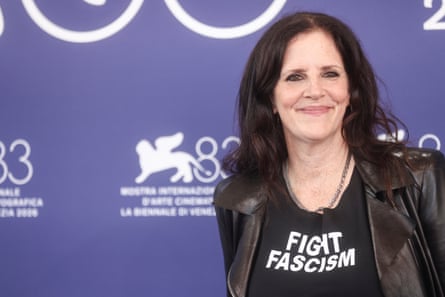
Reflecting on the wider implications of the censorship campaign, Oscar-winning documentarian Laura Poitras drew parallels between the backlash faced by the NAZA team and her own historic struggles with state authorities regarding her work on government surveillance.
"The facts about the mass killing of civilians in NAZA have been reported by the Guardian in dozens of rigorously fact-checked articles," Poitras asserted. "The threats by Israeli government officials are a threat to journalists worldwide… It is important to emphasise that Israel has killed over 200 Palestinian journalists in Gaza and has normalised the murder of journalists."
Photographer and activist Nan Goldin similarly praised the directors’ unwavering resolve, emphasizing the critical value of bearing witness to modern warfare through independent cinematic investigation.
As NAZA prepares for its North American premiere at the New York Film Festival later this month—following screenings at the San Sebastián and Bologna film festivals—the international cinematic community remains steadfast, positioning the safety of Abraham and Szor as a crucial litmus test for the preservation of global free speech and documentary integrity.