A Legacy of Destruction and Resilience
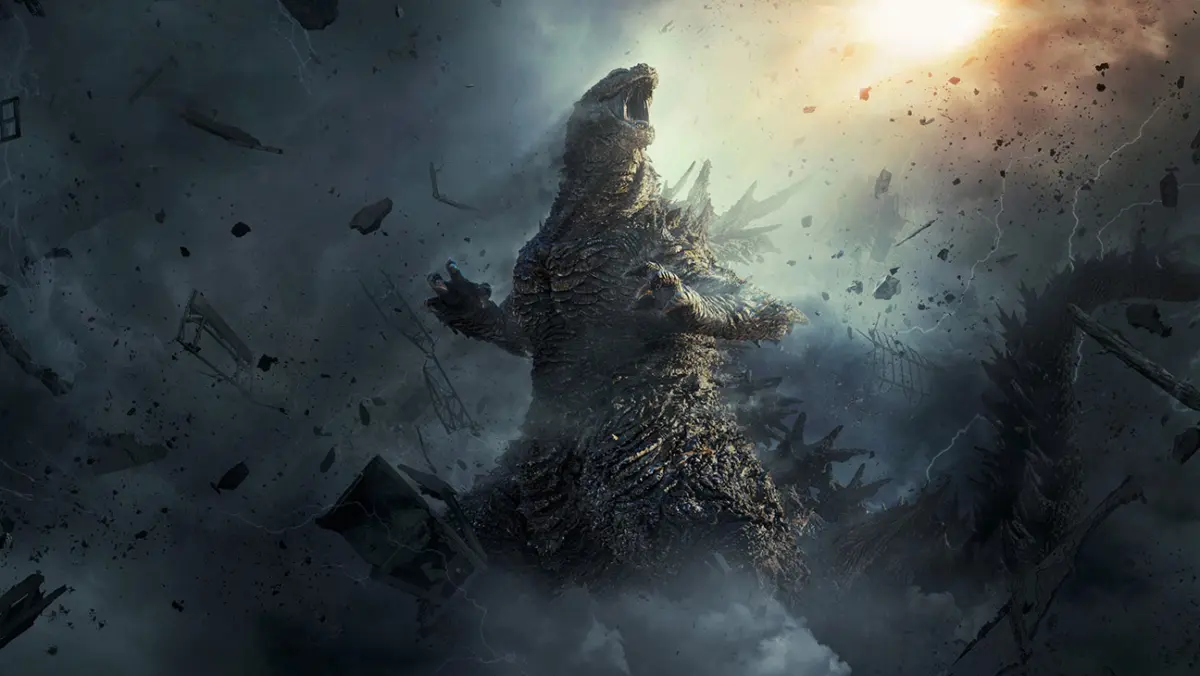
The narrative of Godzilla Minus Zero picks up two years after the cataclysmic events of Godzilla Minus One. Toho’s official synopsis paints a grim picture of a nation struggling to reclaim a semblance of normalcy in the wake of total devastation. As the promotional material notes, "War reduced Japan to zero, and Godzilla plunged it into minus." This thematic focus on the fragility of peace and the psychological toll of catastrophe serves as the bedrock for the film’s human-centric drama.
Ryunosuke Kamiki and Minami Hamabe return to reprise their roles, anchoring the film with performances that bridge the gap between intimate character study and grand-scale spectacle. The inclusion of new cast members, such as Min Tanaka and Masami Nagasawa, suggests a widening scope for the narrative, potentially introducing new factions or perspectives as the threat of the kaiju evolves.
Production Milestones and the IMAX Frontier
One of the most significant technical achievements of Godzilla Minus Zero is its status as the first Japanese production ever filmed specifically for IMAX. This decision represents a strategic shift in Toho’s production philosophy, aligning with the global appetite for "event cinema." By leveraging the immersive aspect ratio of IMAX, Yamazaki intends to emphasize the sheer physical scale of Godzilla and the encroaching terror of its presence.
The production timeline reflects the high-stakes nature of the project. Following its world premiere at the New York Film Festival on September 26, the film entered a tightly managed press cycle. The international release strategy is equally deliberate: after the Centerpiece gala screening at the Tokyo International Film Festival on November 1, the film will launch in Japan on November 3, followed by a North American rollout on November 6. This rapid succession of high-profile screenings is designed to capitalize on the critical momentum generated by early reviews.
Critical Reception and Industry Impact
The critical reception has been overwhelmingly positive, with the film currently holding a 92 percent approval rating on Rotten Tomatoes from its first 50 reviews. Critics have been particularly effusive in their praise for the film’s ability to balance quiet, character-driven moments with high-octane action sequences.
David Rooney, writing for The Hollywood Reporter, described the film as a "radioactive blast," noting that Yamazaki successfully manages to escalate the tension and spectacle beyond the high bar set by the previous film. The consensus among early viewers suggests that Godzilla Minus Zero avoids the common pitfalls of direct sequels by deepening the themes of trauma and societal rebuilding rather than simply repeating the formula of its predecessor.
Social media reactions have echoed this sentiment. Industry professionals and fans alike have compared the film to major cinematic touchstones, with some going as far as to label it the "Godfather Part II" of the Godzilla franchise. The consensus indicates that while the film offers the destruction expected of the genre, it distinguishes itself through its emotional resonance. As one viewer noted, the film manages to make the audience care about the human cost of the monster’s path, ensuring that when the action does arrive, the stakes feel tangible and earned.
Contextualizing the Box Office Performance
The success of Godzilla Minus Zero is being measured against the extraordinary performance of Godzilla Minus One, which grossed over $100 million globally on a modest $15 million budget. This fiscal efficiency proved to the international film industry that Japanese-produced kaiju films could compete with, and often outperform, their Western counterparts in terms of both quality and return on investment.
Industry analysts suggest that Godzilla Minus Zero is positioned to perform even better. By moving into the premium large-format space—specifically the IMAX 1.43 and 1.90 configurations—Toho is signaling a premium pricing strategy that aligns with the film’s elevated production values. The inclusion of the kaiju King Ghidorah, as noted by early attendees, adds a layer of fan-service that is likely to drive repeat viewings and merchandise sales, further diversifying the revenue streams for this project.
Thematic Analysis: Beyond the Monster
At its core, the Godzilla series has always functioned as a mirror for contemporary anxieties. While the 1954 original was a direct allegory for nuclear proliferation, the Minus series has pivoted toward the trauma of the post-war era. The shift from "zero" to "minus" represents a descent into a state of existence where the baseline is no longer stability, but survival.
Takashi Yamazaki’s direction reflects a sophisticated understanding of this history. By focusing on the "agonizing struggles to achieve recovery," the film taps into a universal human experience. The recurring motif of the seaplane liftoff—mentioned in early reviews as a high-tension set piece—highlights the filmmaker’s interest in the intersection of human ingenuity and unstoppable natural forces. This is not merely a monster movie; it is a film about the indomitable spirit of a population forced to rebuild under the constant threat of annihilation.
Implications for the Future of Toho
The global success of this franchise has effectively rebranded Godzilla for a modern audience. Toho’s ability to sustain this level of quality over two consecutive, high-budget features is a testament to the studio’s commitment to its most famous intellectual property. The integration of modern visual effects with the practical, tactile sensibility of traditional kaiju filmmaking has created a unique aesthetic that distinguishes these films from the digital-heavy blockbusters produced in Hollywood.
Should Godzilla Minus Zero meet the high financial expectations set by its predecessor, it is likely that Toho will continue to invest in this particular continuity. The expansion of the "Monsterverse" under the Yamazaki banner could potentially lead to a larger cinematic universe, provided the studio maintains the current balance of human-centric storytelling and monster spectacle.
Conclusion: The New Standard for Kaiju
As the release dates approach, the industry is closely watching Godzilla Minus Zero as a barometer for the viability of international tentpole films in the North American market. The strong critical support and the enthusiastic social media discourse suggest that the film is well-positioned to achieve the same cultural penetration as its predecessor.
For Toho, the challenge will be to maintain this momentum as the film transitions from the festival circuit to general release. However, given the track record of Takashi Yamazaki and the proven appeal of the Minus series, there is little reason to doubt the film’s potential. Godzilla Minus Zero stands as a defining moment for the kaiju genre, proving that with the right creative vision, a legendary monster can be as relevant and terrifying today as it was seven decades ago. As audiences prepare for the November release, the message is clear: the king is not just back; he has set a new standard for what a monster movie can achieve.