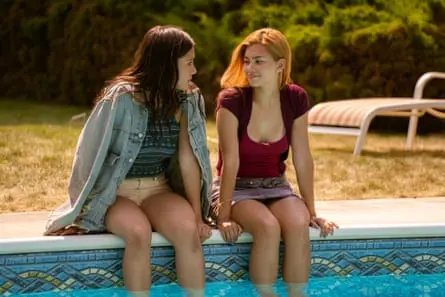
Singer, songwriter, and director Hayley Kiyoko has officially expanded her creative footprint with the release of the feature-length film adaptation of Girls Like Girls. Drawing directly from her own formative experiences growing up in Los Angeles, the 35-year-old artist has transformed a decade-old music video and a subsequent young adult novel into a cinematic exploration of queer youth, identity, and healing. The transition from pop music icon—affectionately dubbed "lesbian Jesus" by her fanbase—to feature filmmaker marks a significant milestone in an entertainment career that began in early childhood.
The Genesis of a Modern Queer Anthem
The journey of Girls Like Girls began nearly a decade prior to its cinematic release. In June 2015, Kiyoko released the synth-pop track alongside a self-directed music video that depicted a narrative of romantic tension and discovery between two teenage girls, one of whom was navigating an unfulfilling relationship with a male partner. Released just days before the landmark United States federal legalization of same-sex marriage, the song quickly resonated with an audience searching for authentic representation in mainstream media.
At the time of its release, however, Kiyoko’s public embrace of her identity did not come without internal friction. She has frequently noted that her gay identity was the subject she felt the most apprehensive about addressing publicly or creatively. The confident lyrical refrain—"Girls like girls like boys do, nothing new"—was initially an exercise in manifestation, written out of a personal desire to project an assurance she was still learning to internalize.
The immediate public response proved transformative for the artist. Seeing global audiences connect with the narrative and validating her own experiences allowed her to fully accept her sexuality. Consequently, she became determined to expand the brief music video format into a comprehensive feature film, a process that ultimately took over ten years to realize.

A Decade-Long Creative Evolution
Translating the core narrative of Girls Like Girls to the big screen required patience and strategic pivoting. Faced with traditional Hollywood hesitation regarding LGBTQ+ coming-of-age narratives, Kiyoko shifted formats in 2023 by publishing a young adult romance novel based on the property. The commercial success and cultural footprint of the book served as the catalyst needed to finally greenlight the film production.
The resulting movie serves as a deliberate homage to Kiyoko’s teenage years. Spending hours on AOL Instant Messenger waiting for unrequited crushes to respond, Kiyoko experienced the specific brand of adolescent heartache that forms the emotional core of the film’s protagonist, 17-year-old Coley.
Casting decisions for the film reflect a deliberate commitment to authentic representation. Canadian actor Maya da Costa, who possesses Vietnamese heritage, stars as Coley, while Thai actor Myra Molloy portrays her love interest, Sonya. For Kiyoko—who is of Japanese descent on her mother’s side and grew up in a multi-industry Los Angeles household—prioritizing mixed-race Asian representation was a non-negotiable aspect of the project. Having grown up unable to see her specific intersectional identity reflected on cinema screens, she sought to validate the lived experiences of young people who might otherwise feel invisible in mainstream entertainment.
Navigating Industry Roots and Personal Growth
Kiyoko’s path to feature filmmaking is underpinned by a lifelong immersion in the entertainment industry. Born Hayley Kiyoko Alcroft, her proximity to the arts was established early through her parents: her father is actor and comedian Jamie Alcroft, and her mother is figure skater and Emmy Award-winning choreographer Sarah Kawahara.
Performing since the age of five, Kiyoko appeared in commercial spots before securing roles in television programming for the Disney Channel and Nickelodeon. Musically inclined from a young age, she learned the drums at six and authored her first composition at eight. Her early career also included a stint in the all-girl pop group The Stunners, which served as an opening act for Justin Bieber in 2010 before disbanding the following year without issuing a full-length studio album.

The culmination of her artistic evolution arrives on the heels of major personal milestones. Earlier in the summer, Kiyoko announced her engagement to Becca Tilley, a former contestant on the reality television program The Bachelor. The couple met in 2018 under serendipitous circumstances and have remained together since. While wedding preparations remain temporarily deferred due to the global press tour for Girls Like Girls, the juxtaposition of personal fulfillment and professional achievement has provided a powerful sense of closure regarding her tumultuous teenage years.
Releasing Art Amid a Changing Political Landscape
The arrival of Girls Like Girls in cinemas occurs during a period of heightened socio-political contention surrounding LGBTQ+ rights, particularly in the United States. While the 2015 single debuted during an era of legal victories and widespread optimism for the community, the contemporary climate presents starkly different challenges. Advocacy groups, including the American Civil Liberties Union (ACLU), have tracked hundreds of legislative proposals aimed at restricting LGBTQ+ rights across various states.
Kiyoko has spoken candidly about the disheartening nature of these political developments, noting the ongoing struggle to secure funding and safety for public Pride celebrations and community spaces. Reflecting on her past work—such as the 2016 music video for "One Bad Night," which addressed violence against transgender women—she acknowledges a shift in her creative philosophy. While she maintains that spotlighting the systemic struggles of marginalized groups remains vital, she increasingly emphasizes the radical power of depicting queer joy, stability, and thriving communities.
This philosophy directly informs the narrative structure of the Girls Like Girls film. While the characters encounter standard adolescent conflicts—including temporary resistance from Sonya regarding the nature of their relationship—the film intentionally avoids trauma porn. Notably, Coley receives unconditional and immediate acceptance from her father, a deliberate departure from Kiyoko’s own real-world coming-out experience, where her parents initially characterized her orientation as a passing phase. By incorporating supportive familial dynamics, the film aims to provide the aspirational representation Kiyoko felt was absent during her own youth.
Broader Implications and Future Endeavors
The commercial and cultural launch of Girls Like Girls signals a potential turning point in Kiyoko’s professional trajectory. As brick-and-mortar lesbian social spaces experience decline and reduced accessibility globally—a void temporarily mitigated by her upcoming headlining slot at the 35th anniversary of the Dinah Shore weekend festival—cultural artifacts centered on queer women take on heightened significance.
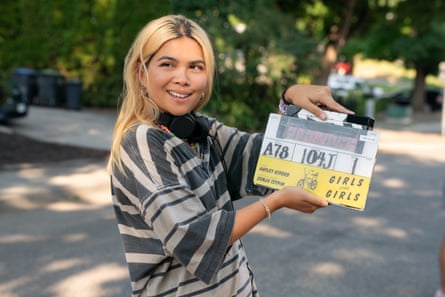
Industry analysts note that character-driven, intersectional indie-romance projects backed by major studios like Focus Features indicate a continued, if cautious, market appetite for authentic LGBTQ+ storytelling, even amid legislative headwinds. By proving the viability of niche demographic stories on a broader theatrical scale, Kiyoko’s directorial debut may pave the way for similar productions within the indie landscape.
As for her own future in the arts, Kiyoko has expressed a definitive pivot toward filmmaking. While she acknowledges that music will remain an integral tool for her creative expression, her immediate ambitions lie behind the camera. Having successfully weaponized the trauma of her adolescence to launch a new professional chapter, she regards directing not merely as a career expansion, but as a permanent creative home.