The 79th edition of the Cannes Film Festival, held from May 14 to May 25, 2026, concluded with an air of understated reflection, a marked departure from the glittering spectacle often associated with the world’s most prestigious cinema event. While the famed Croisette still buzzed with industry professionals and cinephiles, the usual flood of A-list studio talent and the grand premieres of major Hollywood productions were conspicuously absent. This year’s lineup, though critically diverse, was broadly characterized by many attendees as more "meh" than "magnifique," lacking the undeniable blockbusters or immediate awards frontrunners that typically dominate headlines. However, beneath this veneer of relative calm, Cannes 2026 served as an inadvertent but profound barometer of the cinematic landscape, revealing significant seismic shifts across three critical fronts: the precarious yet resilient independent film sector, the re-evaluation of major studios’ engagement with the festival circuit, and the industry’s complex and often contentious integration of artificial intelligence. What transpired along the French Riviera was not merely a series of film screenings but a powerful signal of the future trajectory of global cinema, hinting at a more fragmented, technologically advanced, and ideologically diverse future.
The Evolving Indie Ecosystem: Navigating Scarcity and Opportunity
Independent cinema has historically found its lifeblood at Cannes, relying on the festival for crucial visibility, critical validation, and, most importantly, international sales and distribution deals. For decades, the Palais des Festivals served as the ultimate marketplace where emerging voices could secure financing, attract talent, and launch their careers onto the global stage. However, the 2026 edition underscored a profound transformation in this ecosystem, one that has been brewing over the past half-decade. The challenges for indie filmmakers have intensified considerably, driven by a confluence of factors including escalating production costs, an increasingly saturated global streaming market, and shifting audience consumption habits.

Financing remains a formidable hurdle. While micro-budget films continue to emerge, mid-range independent productions—those requiring budgets between $5 million and $25 million—are finding it progressively difficult to secure capital. Traditional equity investors have grown more cautious, and the once-robust appetite of streaming platforms for diverse indie content has become more selective, often favoring established names or genre-specific projects with clear global appeal. This trend has pushed many independent producers towards more complex international co-production models, often involving three or more countries, to pool resources and leverage regional tax incentives. At Cannes 2026, numerous industry panels discussed the rise of "distributed financing," where funding comes from a patchwork of sources including national film funds, private equity, philanthropic grants, and even blockchain-backed decentralized autonomous organizations (DAOs), indicating a move away from single-source funding models.
Despite these challenges, the indie spirit at Cannes remained vibrant, albeit with a different flavor. The competition slate, dominated by European, Asian, and Latin American productions, showcased a renewed focus on unique artistic visions and socially resonant narratives. Films like the much-discussed "The Black Ball," a stark psychological thriller from a first-time director, garnered significant critical acclaim, demonstrating that compelling storytelling can still cut through the noise. Sales agents, while acknowledging slower deal flows compared to peak years, reported strong interest in films with distinctive directorial voices and clear festival appeal, rather than purely commercial prospects. "The market isn’t dead, it’s just smarter," commented veteran sales agent Isabelle Dubois. "Buyers are looking for films that resonate culturally, or that offer a truly unique cinematic experience, something that differentiates them from the algorithm-driven content churn." This sentiment suggests a pivot from seeking broad commercial hits to identifying niche masterpieces that can build a dedicated audience over time, perhaps through a combination of limited theatrical runs and targeted VOD releases. The festival’s renewed emphasis on its "Directors’ Fortnight" and "Critics’ Week" sections also provided crucial platforms for these diverse, often experimental, voices, underscoring Cannes’ enduring role as a curatorial powerhouse rather than merely a transaction hub.
The Studio Retreat: Re-evaluating the Festival’s Role
Perhaps the most palpable shift at Cannes 2026 was the conspicuous absence of major Hollywood studios in their traditional capacity. Historically, studios utilized Cannes as a pivotal launchpad for their prestige pictures, a place to generate early awards buzz, secure international distributors for territories where they lacked direct presence, and bask in the global media spotlight. However, the 79th edition saw a further acceleration of a trend that has been gaining momentum for several years: the strategic withdrawal of studios from elaborate festival campaigns.

The reasons for this retreat are multi-faceted and rooted in a changing media landscape. Firstly, the financial outlay for a significant Cannes presence – including talent travel, accommodations, extensive marketing collateral, and lavish parties – runs into the millions, an expense studios are increasingly scrutinizing. With their own sophisticated global marketing and distribution pipelines, often bolstered by direct-to-consumer streaming platforms, the cost-benefit analysis of a festival premiere no longer always tips in favor of the Croisette. Studios now possess the infrastructure to launch films globally, often simultaneously in theaters and on their streaming services, without needing the festival circuit to create initial awareness or secure key territories.
Secondly, the awards season calendar has become more flexible, with numerous other festivals and bespoke industry events offering alternative platforms for Oscar-caliber films. Studios are increasingly opting for tailored, highly controlled launches that minimize the risk of negative critical reception potentially impacting box office performance or subscriber numbers. "Why spend millions on a global premiere in Cannes if a lukewarm review from a respected critic could derail our narrative before the film even hits theaters?" a studio executive, speaking anonymously, was quoted. "We have our own data, our own algorithms telling us how to reach our audiences directly. The traditional festival circuit is becoming less about necessity and more about choice."
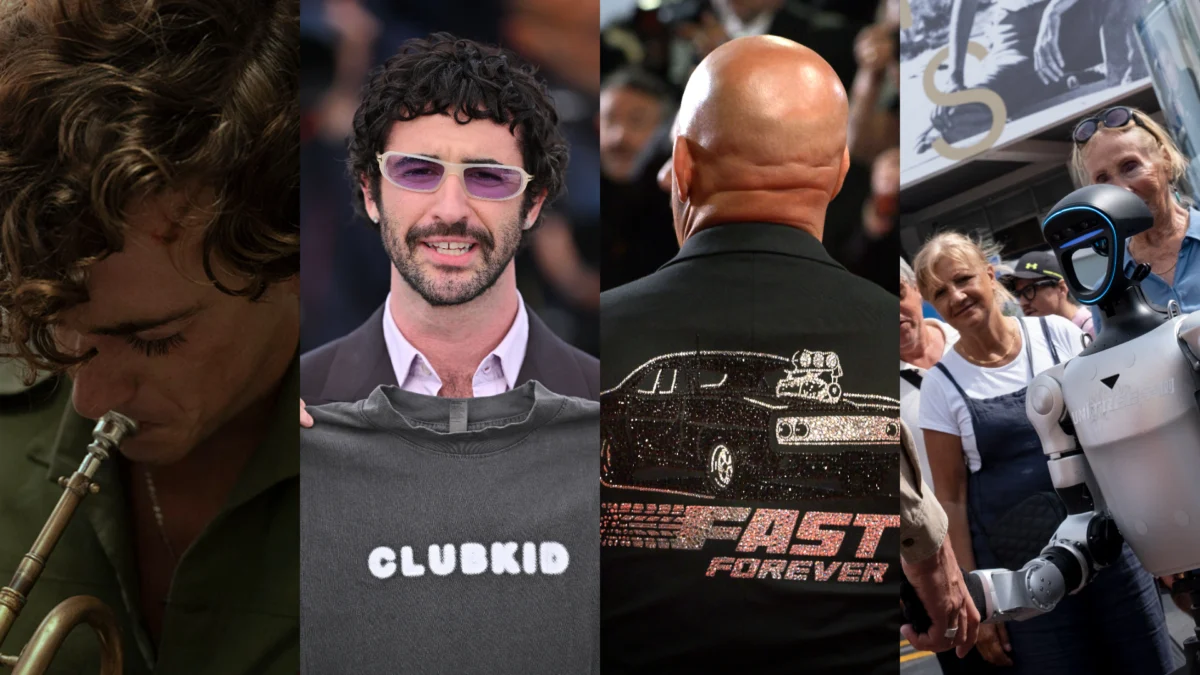
While there was a screening of "The Fast and The Furious" featuring Vin Diesel, it was framed less as a studio tentpole launch and more as a retrospective or a special tribute event, indicative of a strategic, lower-key engagement rather than a full-blown promotional blitz. This shift frees up space for independent cinema but also fundamentally alters the festival’s dynamic, potentially reducing its overall glamour and the sheer volume of global press attention it commands. It forces Cannes, and other major festivals, to redefine their value proposition for these powerful industry players, perhaps evolving into more specialized forums for specific genres, talent development, or strategic industry dialogues rather than universal showcases. The implications for awards season are also significant, as the traditional "Cannes boost" for early contenders may diminish, leading to a more diffuse and less predictable awards race.

The Accelerating Impact of AI: Uneasy Embrace and Ethical Dilemmas
Perhaps the most futuristic and contentious theme woven throughout Cannes 2026 was the accelerating and often uneasy integration of artificial intelligence into the filmmaking process. From the presence of a humanoid robot at industry events – possibly an exhibition from a tech company or a statement on AI’s growing ubiquity – to numerous panels debating its ethical implications, AI was not just a topic; it was a palpable presence.
AI’s influence was evident across various stages of film production. In pre-production, AI-powered script analysis platforms are now common, assisting screenwriters with plot refinement, character development, and even generating alternative dialogue options based on vast datasets of successful narratives. During production, virtual production technologies, heavily reliant on AI for real-time rendering and environment generation, were showcased as increasingly cost-effective alternatives to traditional location shoots. Post-production saw even greater AI integration, with automated tools for editing, color grading, sound design, and particularly, localization. Deep-learning algorithms are now capable of generating highly realistic voice dubs in multiple languages, complete with emotional nuance, and creating hyper-accurate subtitles, streamlining the global distribution process significantly. The ability to de-age actors, create photorealistic digital doubles, and automate complex visual effects sequences has become standard practice for many large-scale productions.
However, this rapid technological advancement was met with considerable apprehension, reflecting the "uneasy embrace" mentioned in the article’s core observation. A major point of contention at Cannes 2026 revolved around job displacement. Guilds representing writers, actors, and various crew members voiced significant concerns about the potential for AI to automate roles traditionally performed by humans, leading to widespread unemployment. "We are not against progress, but progress must serve humanity, not replace it entirely," stated a representative from a European screenwriters’ guild during a heated debate. "The creative process is inherently human, and we must safeguard the livelihoods of those who bring stories to life."

Ethical considerations also dominated discussions. The ownership of AI-generated content, especially when trained on existing copyrighted material, presented a complex legal and philosophical challenge. Debates over "digital persona rights" for actors, particularly concerning the use of their likenesses or voices by AI without explicit, perpetual consent, were front and center. Filmmakers grappled with questions of artistic authenticity, questioning whether a film heavily reliant on AI for its creative output could truly be considered an original work of art. The potential for AI-generated "deepfakes" in marketing, or even within narratives, raised alarms about the erosion of trust and the blurring lines between reality and simulation.
Despite the anxieties, there was an undeniable undercurrent of excitement for AI’s potential to unlock new forms of storytelling and democratize filmmaking. Independent filmmakers, in particular, saw opportunities to achieve high production values on limited budgets, using AI tools to streamline labor-intensive processes. The festival itself hosted workshops demonstrating AI-assisted filmmaking techniques, signaling a grudging acceptance that this technology is not merely a passing fad but a foundational shift. The challenge, as many observed, was to harness AI’s power responsibly, ensuring it augments human creativity rather than diminishing it, and that ethical frameworks keep pace with technological innovation.
Broader Implications and the Future Trajectory of Cinema
Cannes 2026, therefore, was far more than a subdued edition; it was a crucial diagnostic for the global film industry. Its quiet surface belied a profound re-evaluation of fundamental industry structures and practices. The festival’s role itself is undergoing a transformation, moving from a primary marketplace for high-stakes deals to a vital forum for critical discussion, artistic discovery, and industry adaptation. It appears to be solidifying its position as a nexus for fostering international co-productions and providing a launchpad for diverse, challenging artistic works that might struggle to find a platform elsewhere.

The fragmentation of the audience, the decentralization of financing, and the pervasive influence of technology are reshaping cinema into a more complex, multi-faceted art form and business. The studios, now global entertainment conglomerates with vast streaming empires, are charting their own course, leveraging data and direct-to-consumer models to reach audiences. Independent cinema, while facing unprecedented economic pressures, is demonstrating remarkable resilience and ingenuity, exploring new funding models and embracing distinctive artistic visions. Meanwhile, artificial intelligence stands poised to revolutionize every facet of filmmaking, presenting both exhilarating opportunities for innovation and daunting ethical and economic challenges.
The 79th Cannes Film Festival offered a glimpse into a future where the traditional hierarchies and pathways of cinema are being fundamentally rewired. It underscored the enduring power of storytelling, the relentless drive for artistic expression, and the industry’s continuous struggle to adapt to technological change while safeguarding its human essence. The signals emanating from the Croisette in 2026 were clear: the cinema landscape is in flux, and while the path ahead may be less glamorous, it promises to be profoundly transformative.