Netflix has officially released the first global trailer for I Am Frankelda, a landmark stop-motion animated feature that marks a significant turning point for Latin American cinema. Scheduled for a worldwide streaming debut on June 12, 2026, the film arrives as Mexico’s first-ever stop-motion feature-length production, following a prestigious journey through the international festival circuit and a successful domestic theatrical run. Directed by the visionary duo Roy and Arturo Ambriz, better known as the Ambriz Brothers, and produced by their studio Cinema Fantasma, the project carries the weight of high expectations, bolstered by the creative endorsement and backing of Academy Award-winning filmmaker Guillermo del Toro.
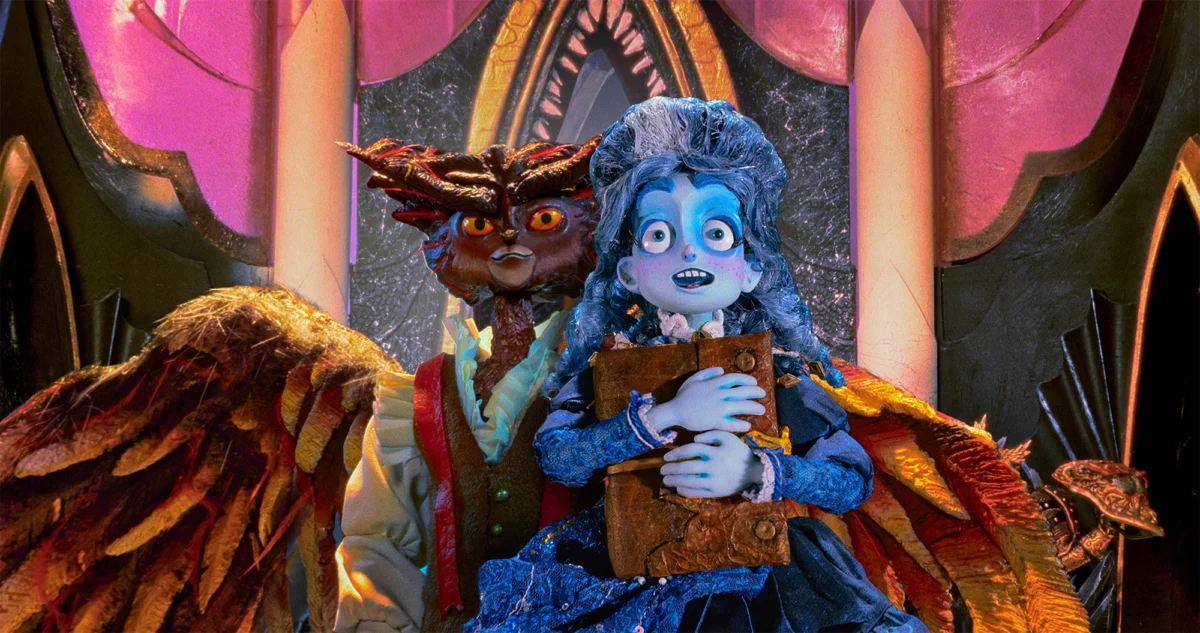
The film is set against the atmospheric backdrop of 19th-century Mexico, a period characterized by rigid social structures and limited opportunities for female intellectuals. The narrative centers on Francisca Imelda, a gifted young writer whose macabre and imaginative tales are met with derision and dismissal by a society that refuses to acknowledge the validity of female voices in literature. To preserve her creative spirit, she adopts the persona of Frankelda. The story takes a fantastical turn when she is transported into a subconscious realm born from her own imagination—a world inhabited by the very monsters and nightmares she has penned. Within this realm, Frankelda must navigate a treacherous landscape of her own making, seeking to restore the equilibrium between fiction and reality before both worlds face total annihilation.
The Evolution of Cinema Fantasma and the Ambriz Brothers
The journey of I Am Frankelda began long before its feature-length realization. The Ambriz Brothers, Roy and Arturo, have spent over a decade establishing Cinema Fantasma as a premiere hub for stop-motion animation in Mexico City. Their dedication to the craft—a painstaking process that involves the physical manipulation of puppets and sets—has earned them a reputation for producing works that blend traditional Mexican folklore with universal themes of dark fantasy and existential dread.

The film serves as an expansion of the universe established in their acclaimed HBO Max (now Max) series, Frankelda’s Book of Spooks (Soy Frankelda y sus sustos). That series, which utilized an anthology format to tell various gothic tales, laid the groundwork for the more complex, serialized narrative found in the feature film. The transition from a short-form series to a grand-scale musical feature demonstrates the growing maturity of the Mexican animation industry and the increasing appetite for sophisticated, adult-oriented animated content on global streaming platforms.
In a joint statement regarding the film’s development, the Ambriz Brothers emphasized the personal nature of the project: "As brothers, we grew up inventing worlds together, drawing, playing, imagining. Over time we understood that fictional characters were not only companions but guides. Sometimes they felt closer than people around us. They provided us courage, wisdom, solace. We believe fiction is not an escape from reality but a way of understanding it." This philosophy permeates the film, positioning the act of storytelling not just as entertainment, but as a survival mechanism for the protagonist.
Production Timeline and Global Distribution Strategy
The road to the June 2026 Netflix release has been a multi-year endeavor. I Am Frankelda first garnered international attention at the Annecy International Animation Film Festival in June 2025, where it premiered to critical acclaim. Annecy, widely considered the most prestigious venue for animated cinema, served as the perfect springboard for the film, highlighting its technical prowess and unique cultural perspective.
Following its festival debut, the film saw a theatrical release in its home country of Mexico in October 2025. This domestic run was crucial for establishing the film’s cultural footprint and proving the viability of high-budget stop-motion in the Mexican market. The subsequent acquisition by Netflix for global distribution ensures that the film will reach an audience of millions across more than 190 countries.

Netflix’s distribution strategy for I Am Frankelda includes an English-language dub, a move designed to maximize accessibility for a broad demographic. While the film was originally produced in Spanish (under the title Soy Frankelda), the trailer released by Netflix features the English voice cast, reflecting the streamer’s standard practice of offering localized audio options for its international tentpole releases. For purists, the original Spanish audio featuring the voices of Mireya Mendoza, Arturo Mercado Jr., and Luis Leonardo Suarez will also be available, preserving the linguistic nuances of the 19th-century Mexican setting.
Narrative Themes and Character Dynamics
At the heart of I Am Frankelda is the intricate relationship between the creator and the created. This is personified through the bond between Frankelda and Herneval, a tormented prince trapped between the realms of dreams and nightmares. Herneval acts as a "voice and echo" to Frankelda’s creative output, representing the mystery of where ideas originate. Their relationship is described as both a strength and a curse, exploring the psychological toll of being consumed by one’s own imagination.
The film also introduces a formidable antagonist in the form of Procustes, a sinister writer who, along with his conspirators, seeks to seize control of the subconscious realm. This conflict serves as a metaphor for the struggle over intellectual and creative autonomy. Frankelda’s journey is not merely about defeating a monster; it is about reclaiming her power as a storyteller in a world that seeks to silence her.
The inclusion of musical elements further distinguishes the film from traditional dark fantasies. The original score, composed by Kevin Smithers, is designed to enhance the emotional stakes of Frankelda’s journey, using music as a narrative tool to bridge the gap between the mundane reality of 19th-century Mexico and the surreal intensity of the subconscious world.

Technical Excellence and the "Del Toro" Influence
The technical execution of I Am Frankelda is a testament to the labor-intensive nature of stop-motion. Led by animation director Beto Petiches and cinematographers Irene Melis and Fernanda G. Manzur, the production team utilized a vibrant yet moody color palette to differentiate the two worlds. The physical craftsmanship of the puppets and the intricate detail of the period-accurate sets provide a tactile quality that digital animation often struggles to replicate.
The shadow of Guillermo del Toro looms large over the production, not as a director, but as a mentor and champion of the medium. Del Toro has long been a vocal advocate for the "Taller del Chucho" (The Dog’s Workshop) in Guadalajara and the broader Mexican animation scene. His success with his own stop-motion Pinocchio opened doors for projects like I Am Frankelda, proving to studios that there is a significant global market for high-concept, visually distinct stop-motion films. The Ambriz Brothers have frequently cited Del Toro as a primary influence, particularly in his ability to blend horror elements with deeply humanistic themes.
Broader Implications for the Animation Industry
The release of I Am Frankelda is more than just a single film debut; it is a milestone for the Latin American animation industry. Historically, major animated features have been dominated by studios in the United States, Japan, and parts of Europe. By producing a high-quality stop-motion musical, Mexico is asserting itself as a major player in the global animation landscape.
Data from the global animation market suggests a rising trend in "cross-over" animation—content that appeals to both children and adults through sophisticated themes and artistic innovation. I Am Frankelda fits perfectly into this niche. Its success on Netflix could pave the way for more diverse storytelling from underrepresented regions, encouraging streamers to invest in culturally specific narratives that possess universal emotional appeal.

Furthermore, the film reinforces the resilience of stop-motion animation. Despite the dominance of CGI, the success of recent stop-motion films suggests that audiences value the "hand-crafted" aesthetic. The Ambriz Brothers’ work proves that this medium is uniquely suited for gothic and surrealist storytelling, where the physical presence of the characters adds a layer of uncanny realism to the fantasy.
Conclusion
As the June 12, 2026, release date approaches, the anticipation for I Am Frankelda continues to build among animation enthusiasts and cinephiles alike. The film represents a fusion of historical drama, dark fantasy, and musical theater, all tied together by the meticulous art of stop-motion. For Frankelda, the journey into the subconscious is a fight for her voice; for the Ambriz Brothers and Cinema Fantasma, the film’s release is the culmination of a lifelong dream to bring Mexican monsters and melodies to the world stage.
With its rich world-building, complex characters, and the backing of industry giants, I Am Frankelda is poised to be a standout title in Netflix’s summer lineup, offering a hauntingly beautiful exploration of the power of the written word and the enduring nature of the human imagination. Whether viewed as a feminist allegory, a gothic adventure, or a technical masterpiece, the film stands as a bold declaration that Mexico’s cinematic future is as vibrant as the nightmares Frankelda conjures.