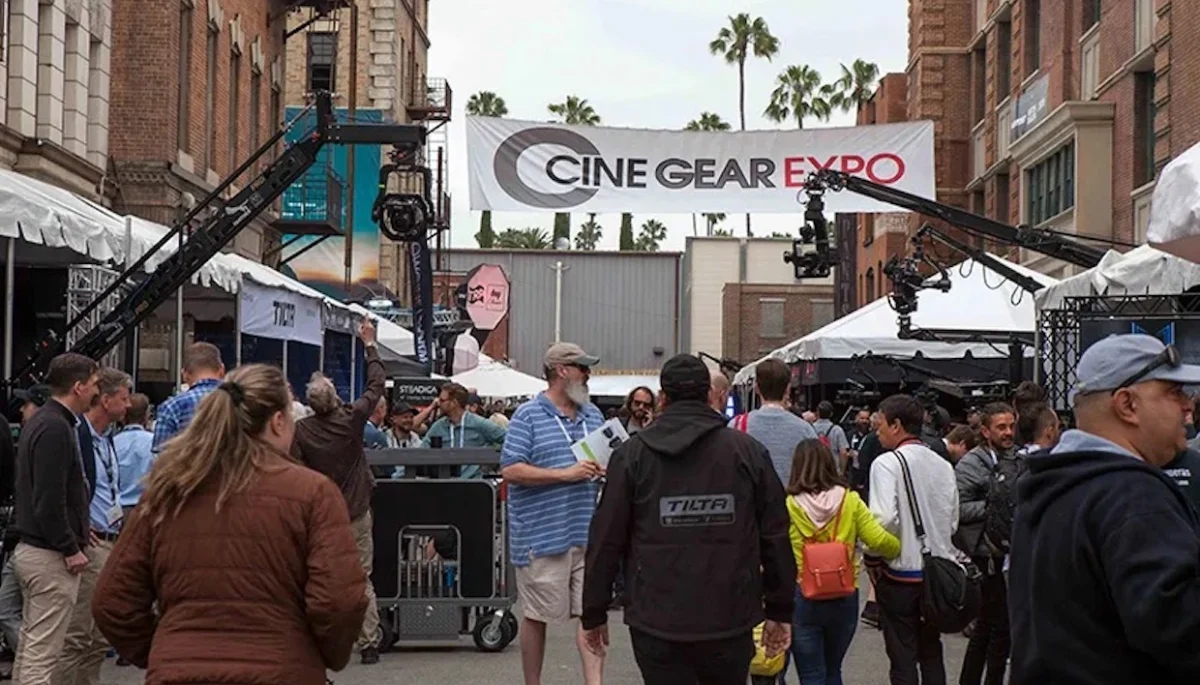
The global entertainment technology sector has long wrestled with a fundamental identity crisis, often accelerated by broadcast-heavy gatherings like the National Association of Broadcasters (NAB) Show, where cinema hardware occasionally risks being overshadowed by broader video, streaming, and enterprise automation trends. Yet, the Cine Gear Expo presents a distinctly resilient counter-narrative. Set against the iconic backdrop of the Universal Studios Lot in Los Angeles, this annual two-day convergence serves as a vital nexus for cinematographers, gaffers, lighting technicians, and optical engineers. Rather than focusing solely on corporate broadcast workflows, Cine Gear narrows its lens onto the tactile, highly specialized artistry of motion picture acquisition.
As the industry navigates a complex economic recovery following years of labor disruptions, rising operational costs, and the rapid adoption of virtual production environments, Cine Gear 2026 offered a reassuring snapshot of a community deeply invested in both its analog heritage and its digital future. The event successfully bridged generations of filmmakers, drawing everything from union-card-carrying veteran grips to film school undergraduates eager to dissect the mechanics of modern visual storytelling.
Event Overview and Logistical Evolution
Historically hosted on the Warner Bros. studio lot—evoking the wandering, meditative cinematography of auteur-driven projects like Terrence Malick’s Knight of Cups—the 2026 iteration at Universal Studios presented a unique set of logistical challenges and spatial dynamics. Spanning multiple zones across the sprawling backlot, the convention layout required attendees to navigate long distances between outdoor vendor tents and high-profile seminar stages. Queuing in direct sunlight for packed panels featuring legendary American Society of Cinematographers (ASC) members underscored the festival-like atmosphere of the expo, drawing clear comparisons to major cultural film festivals rather than sterile convention centers.
Despite the physical demands of traversing the lot, the turnout on both Friday and Saturday reflected robust domestic and international participation. Friday’s crowd skewed younger, dominated by freelance creatives and emerging talent influenced by independent cinematic breakthroughs, while Saturday brought out seasoned working professionals, studio technicians, and rental house executives. Free promotional merchandise, including ubiquitous brightly colored tote bags, added a touch of traditional trade-show fanfare, but the core of the event remained strictly professional: rigorous gear evaluations, technical demonstrations, and invaluable peer-to-peer networking.
The American Society of Cinematographers Panel: Wisdom from the Vanguard
The intellectual core of Cine Gear 2026 was anchored by the annual ASC Cinematographers Panel, a massive gathering featuring 15 distinguished Society members. The roster included industry titans such as Jeff Cronenweth (The Girl with the Dragon Tattoo), Rachel Morrison (Black Panther), Karl Walter Lindenlaub (Independence Day), and Natasha Braier (I Love Boosters). The session opened with a commemorative montage surveying more than a century of ASC-certified artistry, including rare glimpses of John Toll’s Oscar-nominated work on Terrence Malick’s The Thin Red Line.
While the sheer number of panelists limited deep-dive technical explorations into specific camera setups, the accumulated sound bites provided profound philosophical insights into the psychological underpinnings of cinematography. Steven Fierberg (Secretary) emphasized the importance of physical intuition on set, stating, “When you’re standing on the set, where does your body want to go with that camera? Often you don’t know why.” Meanwhile, Natasha Braier connected her visual style to her upbringing in Argentina under a military dictatorship, noting how growing up amidst pervasive subtext trained her to visualize psychological tension and translate unconscious human behavior into spatial composition.
Lighting and Control Systems: The LED Revolution Accelerates
Away from the seminar stages, the exhibition floors housed inside Stage 17 and surrounding backlot structures revealed rapid, continuous advancements in lighting technology. Drew Moe and Jeffrey Taylor, Local 728 gaffers and co-founders of the boutique rental house Canary Yellow alongside Ryan Oppedisano, spent the expo evaluating hardware upgrades for their expanding inventory.
Moe noted that the technological timeline governing motion picture lighting has accelerated dramatically over the past decade. While Hollywood relied on tungsten, HMI, and fluorescent fixtures for the better part of a century with relatively slow upgrade cycles, the modern LED landscape evolves annually. Manufacturers are continually refining chipsets and color engines to match the demanding spectral requirements of modern digital sensors. Moe highlighted the ongoing innovations from companies like Aputure, specifically praising their proprietary Blair CG color engine for delivering unprecedented color fidelity and skin-tone accuracy.
Control systems have similarly kept pace with hardware sophistication. Ian Peterson demonstrated Version 3 (V3) of the Blackout Lighting Console to the Canary Yellow team. V3 introduces advanced visual control components to lighting workflows that have historically relied strictly on numerical DMX values. By enabling fluid, intuitive iPad-based management of complex lighting networks, the V3 update aims to streamline on-set operations, potentially disrupting the high-end lighting control market upon its commercial release later in the year.
Analog Resurgence: The Cinelux Sixteen and Hybrid Film-Digital Capture
One of the most talked-about hardware developments on the backlot was a prototype display at the CSLA rental house booth: the Cinelux Sixteen, developed by Cinelux Cinema Tools. Engineered by chief engineer Caz Voorhees and a small, dedicated team over a two-and-a-half-year period, the Cinelux Sixteen represents the first new film camera architecture developed from scratch in years.
Designed as a hybrid system, the camera is engineered to shoot film and digital simultaneously, recording analog footage while writing proxies and LUT-applied digital files to an SD card at 3.2K resolution via an integrated Sony sensor. Voorhees explained that while integrating the digital capture pipeline was relatively straightforward due to existing sensor-to-computer data frameworks, engineering the physical film magazine presented monumental mechanical hurdles. Operating within a strict tolerance of one to two inches with zero friction to prevent film jamming required meticulous design.
In a nod to modern open-source manufacturing and user empowerment, the engineering team plans to publish the magazine specifications online. This will allow users to 3D-print replacement magazines in emergency field situations. Aiming for a finalized commercial release by mid-2027 after two more prototype iterations, the Cinelux Sixteen could fundamentally alter production economics by assuaging producer anxieties regarding film budgets and expediting the delivery of editorial dailies.
Optical Innovations: Rehousing Vintage Glass and Expanding Anamorphic Horizons
The optics pavilion at Cine Gear 2026 underscored the industry’s ongoing obsession with character-driven glass. Zero Optik, a prominent optical modification and rehousing firm, showcased its comprehensive lineup of vintage and modern lenses. Operations manager Alex Baxter discussed how digital cinematography resurrected classic photographic lenses—such as 1930s and 40s Bausch & Lomb Ultra Baltars, famously utilized by Ed Lachman on El Conde and Maria—that were previously abandoned in attics because their mechanical designs were incompatible with traditional film cameras equipped with mirror shutters.
Zero Optik’s portfolio extends beyond historical restoration; the company routinely transforms modern photographic glass from Leica, Olympus, and Nikon into cinema-ready primes with robust mechanics and standardized gear positions. Notably, the firm was commissioned by the ASC to restore a rare set of Todd-AO 65mm prime lenses discovered in the Society’s archives. Originally used on mid-century Hollywood epics like Oklahoma! and The Sound of Music, these restored lenses were optimized for consistency in collaboration with cinematographer Greig Fraser (Dune: Part Two, Project Hail Mary) and are available for exclusive rental through Keslow Camera.
Meanwhile, Atlas Lens Co., founded by Dan Kanes following his pioneering work in wireless video transmission with Paralinx, showcased its expanding footprint in the anamorphic sector. Established after channeling venture capital into his passion for anamorphic optics, Atlas debuted its first prototype at the 2007 NAB Show and has since supplied lenses for major studio releases including Babylon, Project Hail Mary, and the upcoming Dune: Part Three.
Atlas currently maintains three distinct anamorphic lines: Orion, Mercury, and the newly shipping Kaizen series. Kanes noted that while the flagship Orion lenses deliver a vintage 1970s and 80s aesthetic, they diverge from traditional anamorphic behavior by minimizing field curvature. This engineering choice allows cinematographers to capture wide two-shots or four-shots across the frame without experiencing severe focus falloff on the edges. The Kaizen series, specifically engineered to cover large-format sensors like the Fujifilm GFX Eterna 55, ARRI Alexa 265, and Blackmagic Design URSA Cine 17K while maintaining compatibility with Super 35 and full-frame formats, represents the next evolutionary step in high-resolution anamorphic acquisition.
Conclusion: Community and Camaraderie in Modern Filmmaking
The expo concluded with a masterclass seminar led by veteran cinematographer M. David Mullen under the banner of RED Digital Cinema. Mullen dissected a complex tracking shot from the third season of The Marvelous Mrs. Maisel, meticulously breaking down multi-camera choreography and placement for an engaged audience of aspiring and established filmmakers.
Following the seminar, attendees migrated to the historic ASC Clubhouse in Hollywood for the organization’s annual networking barbecue. Amidst plates of traditional southern-style barbecue, the underlying ethos of Cine Gear became abundantly clear. While the exhibition floors buzzed with discussions surrounding LED chipsets, hybrid film-digital sensors, and complex optical rehousing, the enduring draw of the event remains deeply human. For an industry frequently tested by technological disruption and economic shifts, Cine Gear 2026 reinforced the vital camaraderie, shared passion, and institutional knowledge that sustain the global motion picture community year after year.