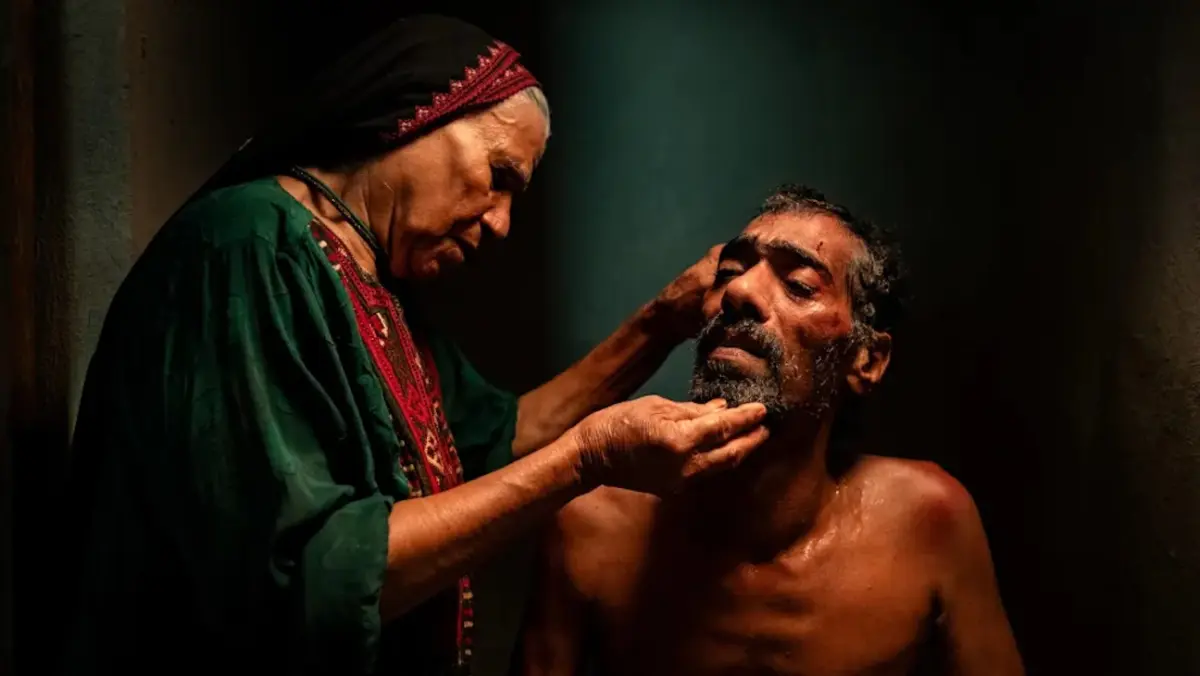
The Busan International Film Festival (BIFF) concluded its 31st edition on a note of high-stakes prestige as Iranian auteur Majid Majidi claimed the festival’s top prize for his latest drama, Midday Meal. The decision, handed down by a seven-member jury presided over by legendary Chinese filmmaker Zhang Yimou, was reached unanimously, cementing the film’s status as a critical darling of the 2024 circuit. Beyond the immediate accolade, the victory provides a strategic, alternative pathway for the film to enter the race for the Academy Award for Best International Feature, bypassing the traditional national submission committee process.
A Narrative Rooted in Marginalized Realities
Midday Meal, which captivated audiences throughout the festival, is a quintessential Majidi work. Set against the stark, otherworldly topography of Iran’s “Martian Mountains” in the southeast, the film follows Davoud Soulan, played by nonprofessional actor Mohammad Rahimi. The plot centers on Soulan’s struggle as a contract teacher in a remote village. When a wealthy benefactor passes away, the school loses the funding for the free lunches that sustain its impoverished pupils. The resulting desperation leads Soulan into the illicit world of cross-border fuel smuggling.
Majidi, known for his ability to find profound moral gravity in the lives of the marginalized—as demonstrated in his seminal works The Color of Paradise (1999) and Baran (2001)—opted for a cast of non-actors discovered through street casting. This commitment to realism underscores the film’s parable-like quality, reflecting the director’s long-standing preoccupation with the intersection of human dignity and systemic economic pressure.
The Jury’s Deliberation and Festival Context
The jury panel, which assessed 13 competition titles, brought together a diverse range of cinematic perspectives. Joining Zhang Yimou were Chinese director Bi Gan, Korean actress Moon Choi, Japanese filmmaker Kei Ishikawa, Korean director July Jung, Vietnamese producer Tran Thi Bich Ngoc, and Kazakh actress Samal Yeslyamova.
The selection of Midday Meal followed a week of intensifying buzz on the ground in Busan. The festival’s main competition, a relatively recent structural addition introduced only last year, was designed to elevate the event’s standing to match the stature of European festivals such as Cannes, Venice, and Berlin. By aligning its award structure with these elite circuits, BIFF has secured a position on the Academy of Motion Picture Arts and Sciences’ list of qualifying festivals. Consequently, the Best Film winner at Busan now carries the potential for an expedited route to Oscar consideration.
Humanitarian Resonance and Political Discourse
Accepting the award at the Busan Cinema Center, Majidi used his platform to address the geopolitical crisis unfolding in his homeland. His remarks provided a somber counterpoint to the celebratory atmosphere of the ceremony. Majidi dedicated the honor to the Iranian people, characterizing them as "brave heroes" who continue to resist systemic oppression.
In a poignant segment of his speech, the director highlighted the civilian impact of the ongoing conflict. He recounted the harrowing destruction of a school in Minab, where 120 students were killed in an early strike. "Even now, some of the bodies have not been found," Majidi noted, questioning the rationale behind the violence and asserting the Iranian people’s desire for independence. His call for a world defined by "peace, love and brotherhood" echoed the themes of endurance and moral integrity present in his filmography.
Earlier in the festival, during a press conference, Majidi revealed the internal conflict he faced regarding his attendance. He admitted to nearly declining the invitation due to the psychological exhaustion caused by the dire situation in Iran. However, he ultimately concluded that the international stage offered a vital conduit to convey a message of resilience to a global audience.
The Oscars Implications: A Two-Track Strategy for Iran
The win has immediate implications for the upcoming 99th Academy Awards. While Iran’s official submission committee has already selected Babak Khajehpasha’s Land of Angels—a film focusing on the plight of children in Gaza—Majidi’s victory at a qualifying festival provides a unique opportunity. Under Academy rules, films that receive top honors at designated A-list festivals are granted an exemption from the standard national selection process, allowing them to be submitted for consideration independently.
This development positions Majidi, who previously made history with his 1997 film Children of Heaven (the first Iranian film to receive an Oscar nomination in the Best Foreign Language category), as a major contender for the international feature race, regardless of his country’s official choice.
A Robust Festival Season in South Korea
The 31st edition of BIFF, which spanned from October 6 to October 15, reported significant growth in engagement. Organizers recorded total attendance figures exceeding 200,000, marking the highest turnout for the event since 2015. Including auxiliary events, the total reach surpassed 277,000 attendees.
This resurgence was attributed to a strategic overhaul of the festival’s scheduling and an expanded screening program. Furthermore, the Asian Contents & Film Market, which ran concurrently from October 10 to October 13, served as a massive commercial hub, hosting 30,484 participants and 339 companies from 32 different nations.
The star power at this year’s festival was notable, featuring the first South Korean visit by director Alfonso Cuarón. Other high-profile guests included Charlotte Gainsbourg, Maggie Gyllenhaal, Fan Bingbing, and Hirokazu Koreeda. The festival’s commitment to honoring industry titans was evident, with Michelle Yeoh receiving the Asian Filmmaker of the Year award and veteran Hong Kong director Ann Hui accepting the Camellia Award.
Comprehensive List of Winners
The breadth of the festival’s competition highlighted a diverse array of regional talent:
- Best Film: Midday Meal (Majid Majidi, Iran)
- Special Jury Prize: Ibuku (Eddie Cahyono, Indonesia) – A poignant exploration of a mother-daughter relationship strained by generational debt.
- Best Director: Lee Yun Chan (To Be Ordinary, Taiwan) – A return to the spotlight for the filmmaker, focusing on family dynamics post-accident.
- Best Actor (Tie): Zhou Xun (The First Taste of Loneliness, China) for her portrayal of multi-generational grief; and Kashun Himeno (Satoko Always, Japan) for her breakout performance.
- Artistic Contribution: Li Danfeng (Sound, The First Taste of Loneliness).
- New Currents Award: Birds in the Dark (Shashank Walia, India) – A stark, black-and-white examination of caste and labor in rural Punjab.
- New Currents Special Mention: Beach Fictions (Lim Hayeon, South Korea).
Industry Analysis: The Future of Asian Cinema
The results of the 31st Busan International Film Festival reflect a broader trend in Asian cinema: a move toward intimate, character-driven narratives that grapple with socio-economic displacement. The success of directors like Majidi, Lee Yun Chan, and Shashank Walia demonstrates that regional stories, when told with stylistic assurance, maintain high international appeal.
The festival’s decision to align its awards with the Oscar-qualifying circuit has effectively transformed the Busan competition into an essential pitstop for global distributors. As the industry looks toward the upcoming awards season, the momentum generated by these films suggests a shift in the traditional hegemony of Western-centric festival circuits. By providing a platform for both established legends like Majidi and emerging voices, the festival has fortified its role as the primary gatekeeper for Asian cinematic excellence in the global market.
As the dust settles on the Busan Cinema Center, the focus now turns to the Academy Awards. Whether Midday Meal secures a nomination remains to be seen, but its victory in South Korea has ensured that the film will be part of the international discourse for months to come, further cementing Majidi’s legacy as a storyteller of the human condition.