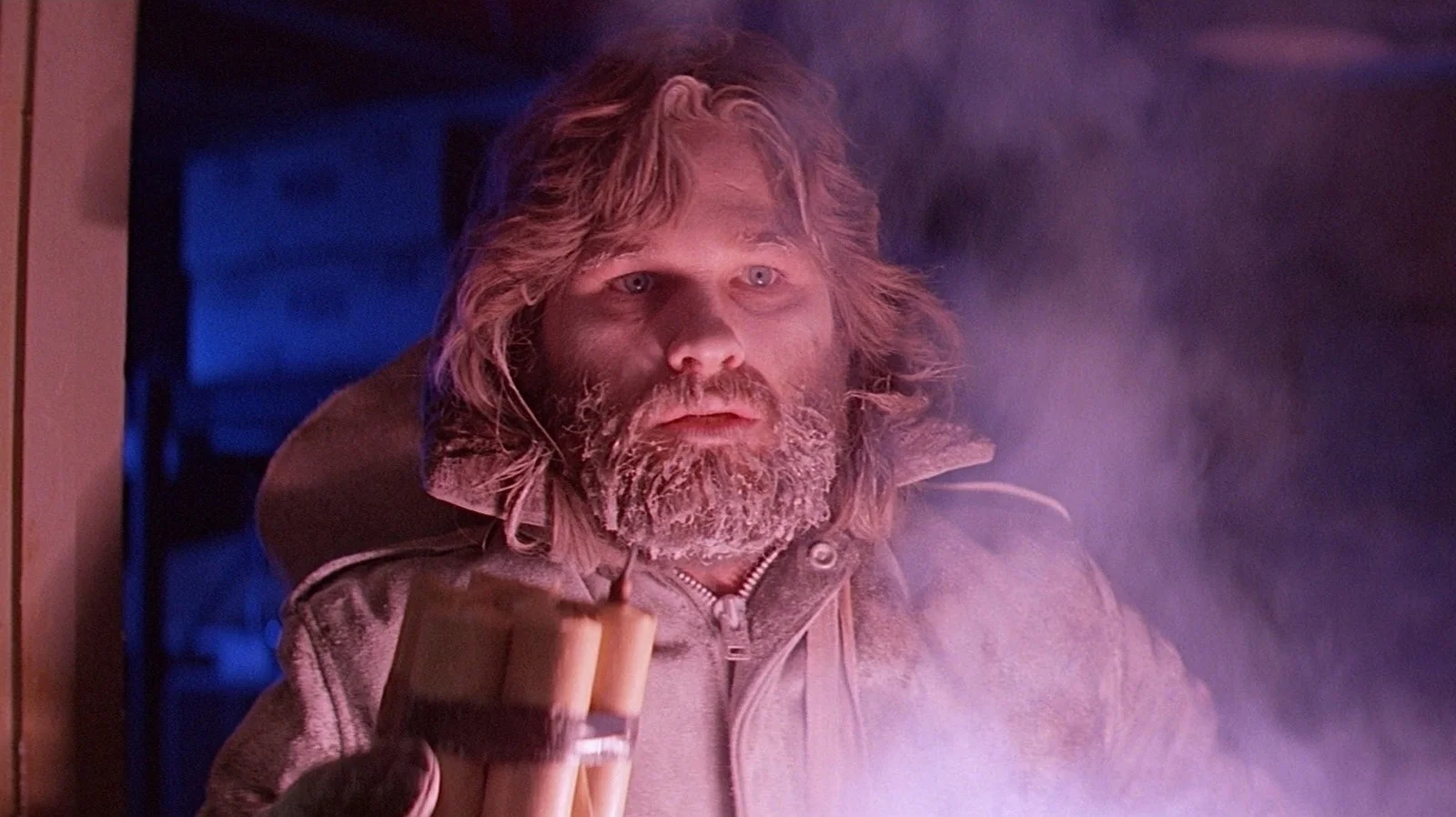
For over four decades, the final frame of John Carpenter’s 1982 masterpiece, The Thing, has served as a focal point for intense academic and fan-based scrutiny. The film, a landmark in practical effects and psychological horror, concludes with two survivors—MacReady (Kurt Russell) and Childs (Keith David)—sitting amidst the smoldering ruins of their Antarctic research station. As the cold closes in, they share a bottle of J&B scotch, waiting to see who, if anyone, succumbs to the extraterrestrial entity first. Despite 44 years of forensic analysis by film enthusiasts, the director maintains that the definitive interpretation of this scene has never been publicly articulated.
In a recent interview with Reece Feldman for the Academy of Motion Picture Arts and Sciences, Carpenter addressed the enduring mystery surrounding the film’s ambiguity. When prompted on the myriad of theories that have emerged since the 1980s, the director was blunt: "Every idea people have is not the right one. I know the right one." He further emphasized that the answer is not a hidden meta-narrative but a tangible element embedded directly into the film’s visual fabric. "There is a big clue. No one has guessed it," Carpenter asserted, effectively dismissing decades of fan speculation.
A Chronology of Obsession: The Evolution of The Thing Theories
The mystery of The Thing is deeply rooted in its production history and its initial reception. Upon its release on June 25, 1982, the film was a critical and commercial failure, overshadowed by the lighter, more optimistic tone of Steven Spielberg’s E.T. the Extra-Terrestrial, which debuted just two weeks earlier. The grim, cynical, and nihilistic ending of The Thing was viewed by many critics at the time as an unresolved narrative dead-end.
Over the ensuing decades, the film underwent a critical reappraisal, transitioning from a box-office bomb to a cornerstone of the horror genre. As the film gained a cult following on home video, the "Who is the Thing?" debate became a ritual for new generations of viewers. The chronology of these theories generally follows these trends:
- The 1980s-90s: Visual Cues. Early debate focused on "the eyes." Fans analyzed the reflection of the light in the characters’ pupils, suggesting that those infected by the creature displayed a distinct "gleam" or lack thereof.
- The 2000s: The Breath Test. As high-definition home media allowed for frame-by-frame analysis, fans began scrutinizing the ambient temperature. It was noted that at various points in the film, the creature does not produce visible breath. Viewers scoured the final scene to see if Childs’ breath was visible in the sub-zero environment.
- The 2010s: The Gasoline Gambit. A popular theory posits that MacReady, in a moment of tactical brilliance, gives Childs gasoline instead of scotch. If Childs is the creature, the theory suggests he would react differently to the liquid.
- The 2020s: The Systematic Rejection. In recent years, Carpenter has become more vocal in debunking these fan-favorite theories, specifically rejecting the "light in the eyes" hypothesis during a 2023 interview, labeling it an exercise in over-analysis.
Analyzing the Narrative Ambiguity
The frustration surrounding the ending is compounded by the film’s inherent design. The Thing is a story about the collapse of trust. By the final act, the characters have lost the ability to distinguish friend from foe through physical traits, as the creature can perfectly mimic any biological organism.
From a production standpoint, the lack of a definitive answer was intentional. Screenwriter Bill Lancaster, working from John W. Campbell Jr.’s novella Who Goes There?, crafted a screenplay that emphasized the paranoia of the Antarctic setting. Stuart Cohen, a producer on the film, has historically maintained that the script was written with the intent that both men remained human. However, the production team often operated in silos regarding the ultimate fate of the characters. Carpenter’s insistence that there is a "big clue" suggests that the script may have contained a narrative pivot that was executed visually rather than through dialogue.

Statistical and Technical Context
The Thing is widely regarded as the zenith of pre-digital special effects. Rob Bottin, who led the creature design team, created a series of practical effects that remain difficult to replicate even with modern CGI. The technical precision required to film the final sequence involved strict control over lighting and temperature. Because the set was refrigerated to keep the actors’ breath visible, the environment was effectively a real-world simulation of the film’s Antarctic setting.
Data from film studies departments suggest that the ending of The Thing is one of the most discussed "unresolved" sequences in cinema history, alongside the spinning top in Christopher Nolan’s Inception or the final shot of The Sopranos. Unlike those examples, however, The Thing’s ambiguity is tied to a biological "whodunit" mechanism. The film’s narrative stakes are absolute: if one character is infected, the potential for a global pandemic is nearly 100%, as the creature’s singular goal is to reach civilization.
The Director’s Stance: Heroism or Nihilism?
Beyond the "who is the monster" debate, Carpenter has previously offered a philosophical perspective on the ending. In a 2014 interview with Creative Screenwriting, he framed the final scene as an act of defiance rather than a struggle for survival. "I thought that was the ultimate heroic act," Carpenter stated, noting that the characters were essentially accepting their own deaths to ensure the creature would not escape the station.
This perspective shifts the focus from the creature’s identity to the human response to an existential threat. If the characters are both human, the ending is a tragedy of two men waiting to freeze to death. If one is the creature, it becomes a final, tense stalemate. By refusing to confirm which interpretation is correct, Carpenter maintains the film’s status as a Rorschach test for the audience’s own temperament—whether they view the human spirit as capable of noble sacrifice or inherently susceptible to corruption.
Implications for Modern Cinema
The fact that audiences are still dissecting a 44-year-old scene highlights the rarity of effective ambiguity in modern storytelling. In an era where audiences are often conditioned to expect sequels, spin-offs, and post-credits scenes that provide definitive answers, The Thing stands as a relic of a different era of filmmaking.
The director’s recent comments serve as a reminder that the value of the film lies not in the "solution" to the puzzle, but in the sustained state of uncertainty it creates. Whether or not the "big clue" is ever officially decoded by the public, the discourse surrounding the ending has ensured that the film remains a permanent fixture in the cinematic canon. As Carpenter continues to tease the existence of a definitive answer, he ensures that the conversation will continue for another generation, keeping the paranoia of Outpost 31 as relevant today as it was in 1982.
For now, the mystery remains: the bottle is passed, the cold intensifies, and the audience is left exactly where MacReady and Childs are—staring into the dark, waiting for a revelation that may never come.