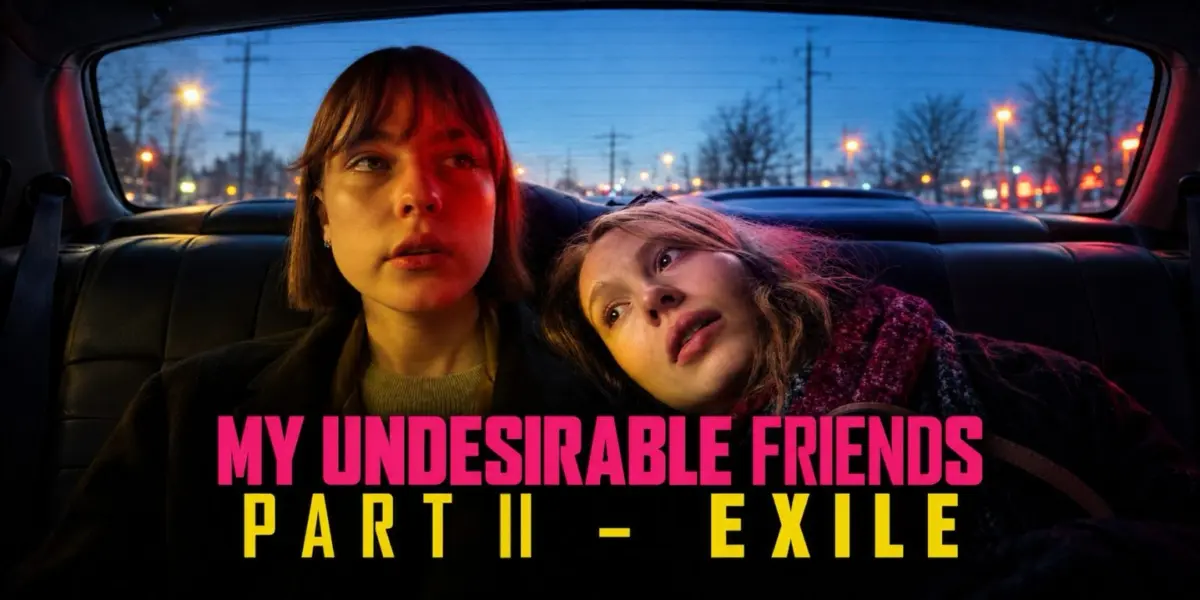
American documentary filmmaker Julia Loktev has returned with one of the most ambitious and politically charged cinematic projects of the decade: My Undesirable Friends: Part II — Exile. Serving as the monumental continuation of her critically acclaimed 2024 documentary, My Undesirable Friends: Part I — Last Air in Moscow, this new 355-minute epic chronicles the harrowing journeys of independent Russian journalists forced to flee their homeland. Following an intensive international rollout that featured a prominent out-of-competition world premiere at the 83rd Venice International Film Festival, the film is now set for a theatrical release in the United States, opening at the Film Forum in New York City on October 9th, courtesy of distributor MUBI.
In conjunction with the domestic theatrical release, Loktev sat down for an extensive interview with the Next Best Picture Podcast to discuss the grueling multi-year production process, the ethical and logistical challenges of documenting individuals in sudden exile, and the broader implications of rising authoritarianism on global journalism.
Main Facts of the Production and Release
My Undesirable Friends: Part II — Exile picks up directly where its predecessor left off, tracking the lives, professional struggles, and personal upheavals of several prominent independent Russian journalists. These media workers found themselves targeted by the Vladimir Putin administration amid an unprecedented, state-sanctioned crackdown on independent reporting, freedom of speech, and dissent following the escalation of the war in Ukraine.
At 355 minutes long, the documentary demands a substantial time commitment from its audience, mirroring the exhausting, seemingly endless displacement experienced by its subjects. Despite its epic runtime, the film has drawn widespread praise from international critics for its intimate framing, journalistic rigor, and emotional resonance. The Venice International Film Festival screening served as a high-profile platform for the project, drawing international attention to the plight of exiled Russian media personnel who continue to broadcast back to their home country from foreign soil, often at great personal risk.
The theatrical debut at New York’s Film Forum represents a significant milestone for the distribution of documentary epics in North America. MUBI, known for championing auteur-driven, international, and independent cinema, has taken on the mantle of bringing Loktev’s sprawling work to American audiences, ensuring that these marginalized stories of resistance and survival reach a broader geopolitical stage.
Chronology of the Russian Media Crackdown and Film Development
To fully understand the weight of Loktev’s cinematic undertaking, one must examine the timeline of events that catalyzed the production. The systematic dismantling of independent media in the Russian Federation has been a gradual process spanning over two decades, but it accelerated dramatically in the wake of the February 2022 invasion of Ukraine.
In March 2022, the Russian government enacted sweeping censorship laws criminalizing any reporting that deviated from the Kremlin’s official narrative regarding the military conflict, introducing prison sentences of up to 15 years for what authorities deemed "fake news" about the armed forces. This legislative move effectively outlawed remaining independent news outlets, such as Echo of Moscow and TV Rain (Dozhd), while prompting mass migrations of journalists, activists, and intellectuals across land borders into neighboring safe havens such as Georgia, Armenia, the Baltic states, and deeper into Western Europe.
Part I of Loktev’s project, Last Air in Moscow, captured the tense final days of independent broadcasting inside the Russian capital, documenting the immediate panic, defiance, and eventual closure of newsrooms. As the dragnet tightened, those same journalists were forced to make the agonizing decision to leave behind their families, colleagues, and cultural roots. Part II — Exile documents the subsequent chapters of this diaspora. It follows the subjects as they attempt to rebuild their operations in foreign countries, battling bureaucratic hurdles, financial instability, severe psychological trauma, and the constant underlying threat of transnational repression.
Supporting Data and the Landscape of Exiled Journalism

The phenomenon documented in Loktev’s film reflects a broader global crisis in press freedom. According to data compiled by international press freedom organizations such as Reporters Without Borders (RSF) and the Committee to Protect Journalists (CPJ), Russia currently ranks near the bottom of the World Press Freedom Index, sitting comfortably among the most hostile environments for journalists globally.
In the wake of the 2022 legislative clampdown, more than 1,000 Russian journalists fled the country, creating one of the largest exoduses of media professionals from a single nation in modern history. These reporters have attempted to maintain continuity by establishing digital newsrooms abroad, relying on YouTube, Telegram, and encrypted subscription models to reach audiences still residing within the Russian Federation. However, these efforts face mounting pressure. The Russian government routinely designates these exiled outlets as "foreign agents" or "undesirable organizations," criminalizing any domestic engagement with their content and cutting off vital advertising revenue streams.
Loktev’s documentary provides qualitative depth to these quantitative statistics, turning dry reports of systemic censorship into visceral, human narratives. Through fly-on-the-wall observation and deep-dive interviews, the film captures the mundane indignities of exile—securing visas, finding affordable housing in saturated European rental markets, and learning new languages—alongside the profound existential dread of watching one’s country descend further into isolation.
Official Responses and Industry Reception
The critical reception of My Undesirable Friends: Part II — Exile has underscored the artistic and documentary value of long-form, immersive journalism. Film critics at the Venice International Film Festival noted that Loktev’s patient, observational style allows the subjects to retain their agency, avoiding the sensationalism that often plagues foreign-correspondence documentaries.
While official representatives of the Russian government have consistently dismissed foreign critiques of its media policies—defending domestic censorship laws as necessary measures of national security and information protection during a period of geopolitical confrontation—international human rights advocates have championed Loktev’s work. Organizations monitoring Eastern European affairs have pointed out that the documentary serves as a crucial historical archive of an era defined by information warfare and digital authoritarianism.
Furthermore, the involvement of MUBI and the Film Forum highlights a growing appetite among arthouse distributors for challenging, long-form non-fiction content that engages directly with contemporary geopolitical crises. By granting the film a high-profile theatrical run, distributors are signaling that audiences are willing to engage with complex, demanding narratives if they offer authentic insights into the forces shaping the modern world.
Broader Impact and Implications
The release of My Undesirable Friends: Part II — Exile arrives at a critical juncture for international journalism and democratic institutions. As populist and authoritarian movements gain traction globally, the tools used by the Russian state to silence dissent—ranging from targeted legal harassment and financial strangulation to digital censorship and forced exile—are increasingly being studied, adapted, and replicated by other regimes.
Loktev’s film serves as both a warning and a testament to human resilience. By focusing on the journalists themselves rather than solely on the political leaders who upended their lives, the documentary personalizes the cost of totalitarian governance. It raises uncomfortable questions about the sustainability of independent journalism in an era of mass displacement and highlights the precarious nature of truth when reporters are driven from the societies they seek to inform.
As the film prepares for its October 9th debut at the Film Forum, its cultural footprint is expected to extend far beyond the traditional arthouse circuit. For journalism schools, political science departments, and human rights advocates, the 355-minute epic offers an invaluable case study in the mechanics of modern authoritarianism and the high price of maintaining a free press in the twenty-first century. Through her meticulous documentation, Julia Loktev has ensured that the voices of these "undesirable friends" will not be silenced, no matter how far from home they are forced to broadcast.