The Venice Film Festival, one of the world’s most venerated cinematic events, has officially announced the esteemed international jury tasked with selecting the recipients of its coveted awards for the 83rd edition. Presiding over this distinguished panel is acclaimed American actress and director Maggie Gyllenhaal, whose transition from a formidable on-screen presence to a critically lauded filmmaker has marked her as a significant voice in contemporary cinema. She will lead a diverse group of seven cultural luminaries from across the globe, bringing together a rich tapestry of perspectives from filmmaking, composition, and academia to deliberate on the festival’s main competition entries. Their collective expertise is poised to shape the narrative of this year’s festival, culminating in the awarding of the prestigious Golden Lion for Best Film and other significant accolades.
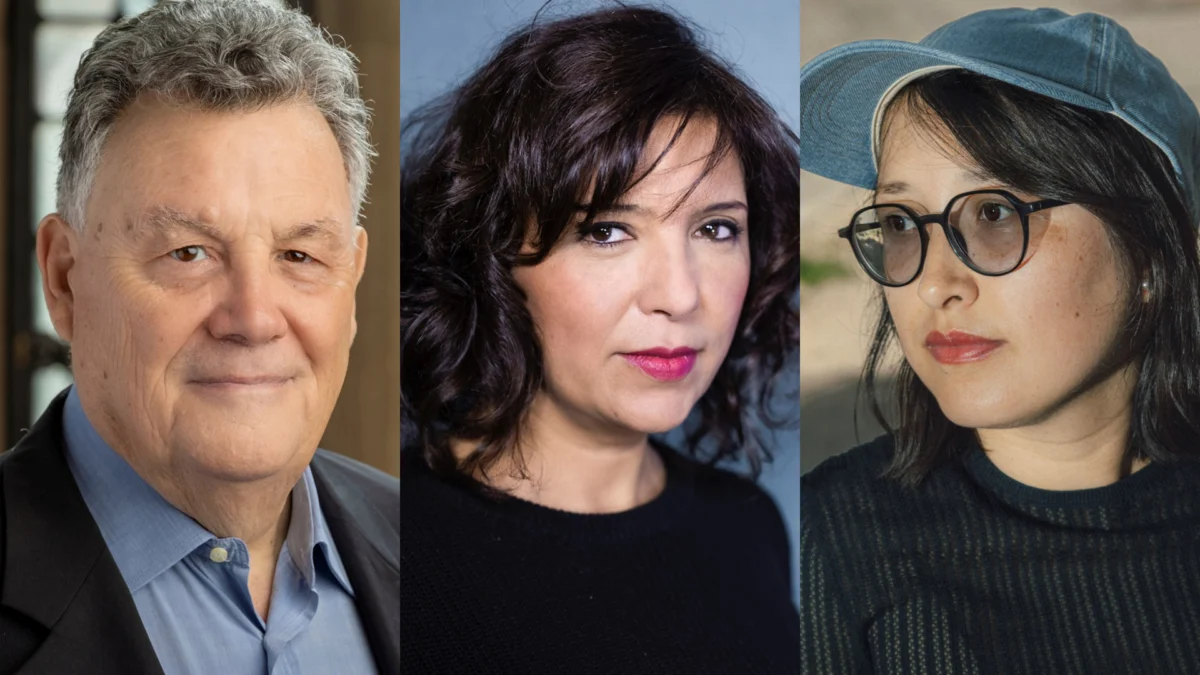
The jury comprises a remarkable array of talent and intellect: Tunisian director Kaouther Ben Hania, whose recent works have garnered international acclaim; Hong Kong filmmaking maestro Johnnie To, celebrated for his distinctive genre contributions; French director Xavier Giannoli, a consistent presence in major festival competitions; Afghan filmmaker Shahrbanoo Sadat, whose powerful narratives illuminate pressing global issues; British composer Daniel Blumberg, an Oscar and BAFTA winner whose scores have resonated deeply with audiences; and film scholar Francesco Casetti, a leading authority on cinema and media theory from Yale University. This carefully curated ensemble underscores the festival’s commitment to fostering a comprehensive and globally informed assessment of the year’s most compelling cinematic achievements.
Maggie Gyllenhaal: From Acclaimed Actress to Jury President
Maggie Gyllenhaal’s appointment as jury president, initially announced in April, signifies a pivotal moment for the festival, highlighting its recognition of multi-hyphenate talents who transcend traditional industry roles. Gyllenhaal’s career trajectory is a testament to her profound artistic sensibility. After establishing herself as one of Hollywood’s most versatile and compelling actresses, earning an Academy Award nomination for Best Supporting Actress for her role in Crazy Heart (2009) and critical praise for performances in films such as Donnie Darko (2001), Secretary (2002), and The Dark Knight (2008), she made a seamless and highly successful transition to directing.
Her feature directorial debut, The Lost Daughter (2021), premiered at the 78th Venice Film Festival, where it was met with widespread critical acclaim and earned Gyllenhaal the Best Screenplay award. This adaptation of Elena Ferrante’s novel, starring Olivia Colman, Dakota Johnson, and Jessie Buckley, delved into complex themes of motherhood, identity, and sacrifice with a raw honesty that resonated deeply with critics and audiences alike. The film subsequently garnered three Academy Award nominations, including Best Actress for Olivia Colman, Best Supporting Actress for Jessie Buckley, and Best Adapted Screenplay for Gyllenhaal herself, solidifying her status as a formidable directorial voice. Her experience as both a seasoned performer navigating complex narratives and a director making a powerful debut on the Lido provides her with a unique and invaluable perspective to lead the jury. Her presence at the helm promises a discerning and artistically sensitive leadership, attuned to both the technical craft and the emotional resonance of cinematic storytelling.
Distinguished Voices: Profiles of the International Jurors
Each member of the 83rd Venice Film Festival jury brings a distinct background and profound contribution to the world of cinema, promising a rich and multi-faceted critical dialogue.
Kaouther Ben Hania (Tunisia): A Visionary Director from North Africa
Kaouther Ben Hania stands as a leading figure in contemporary Arab cinema, celebrated for her bold narratives and distinctive visual style. Her return to Venice as a juror follows a triumphant appearance last year, where her film The Voice of Hind Rajab garnered the prestigious Silver Lion Grand Jury Prize. This powerful work, which also earned an Oscar nomination, exemplifies her commitment to exploring complex social and political themes through a deeply human lens. Ben Hania’s filmography often delves into issues of identity, gender, and societal pressures in the Arab world, challenging conventional narratives and offering fresh perspectives. Her previous films, such as Beauty and the Dogs (2017) and The Man Who Sold His Skin (2020), have also been critically lauded, participating in major international festivals and securing numerous awards. Her inclusion on the jury not only highlights her individual artistic merit but also underscores the festival’s recognition of the vibrant and increasingly influential cinema emerging from North Africa and the Middle East.
Johnnie To (Hong Kong): Master of Genre and Stylistic Innovation
Johnnie To is one of Hong Kong cinema’s most iconic and prolific filmmakers, renowned for his stylish and meticulously crafted crime thrillers, action films, and dramas. His distinctive cinematic language, often characterized by intricate plots, morally ambiguous characters, and breathtaking action sequences, has garnered him a dedicated international following. To’s relationship with the Venice Film Festival is long-standing and significant, dating back nearly two decades to his previous service on the jury in 2008. Over the years, four of his critically acclaimed films have premiered at the Lido: Throw Down (2004), Exiled (2006), Mad Detective (2007), and Life Without Principle (2011). These films showcase his versatility and his unwavering commitment to cinematic excellence. His deep understanding of commercial appeal intertwined with artistic integrity, honed over decades of filmmaking in a dynamic industry, will offer a unique and experienced viewpoint to the jury’s deliberations, particularly in assessing technical prowess and narrative sophistication.
Xavier Giannoli (France): A Chronicler of French Society
French director Xavier Giannoli has established himself as a significant voice in European cinema, known for his incisive observations of human nature and societal intricacies. His films often blend drama with elements of social commentary, historical reconstruction, and poignant character studies. Giannoli is no stranger to the competitive atmosphere of the Venice Film Festival, having had three of his features vie for the Golden Lion: Superstar (2012), a satire starring Kad Merad; Marguerite (2015), a period drama inspired by the life of Florence Foster Jenkins, which earned him a César Award for Best Screenplay; and Lost Illusions (2021), a grand adaptation of Balzac’s classic novel, which was also a major success, sweeping seven César Awards. His latest feature, Les Rayons et les ombres, premiered earlier this year, further cementing his reputation for crafting compelling and ambitious cinematic works. Giannoli’s consistent presence in major festival competitions and his ability to elicit powerful performances will contribute an acute directorial sensibility to the jury.
Shahrbanoo Sadat (Afghanistan): A Resilient Voice for Human Stories
Shahrbanoo Sadat represents a powerful and poignant voice from a region often overlooked in global cinema. An Afghan filmmaker, her personal journey—having lived in Hamburg since leaving Afghanistan following the fall of Kabul in 2021—lends profound depth to her storytelling. Sadat’s films are characterized by their raw honesty and their unflinching portrayal of life under challenging circumstances, often focusing on the resilience of the human spirit. This year, her feature No Good Men opened the prestigious Berlin Film Festival, drawing international attention to her unique perspective and narrative courage. Beyond individual films, Sadat is currently engaged in an ambitious long-term project: developing a five-film cycle based on the writings of her longtime collaborator Anwar Hashimi. This expansive cinematic endeavor promises to offer a comprehensive exploration of Afghan history and culture through a personal and artistic lens. Her presence on the jury brings a crucial and often underrepresented perspective, emphasizing cinema’s role as a platform for diverse global narratives and social commentary.
Daniel Blumberg (United Kingdom): The Architect of Sonic Landscapes
Daniel Blumberg is a British composer whose innovative and evocative musical scores have significantly impacted contemporary cinema. His distinctive approach to film scoring has earned him widespread critical acclaim, culminating in an Oscar and a BAFTA for his exceptional work on Brady Corbet’s The Brutalist. This film, which premiered on the Lido in 2024, was a major festival highlight, winning Best Director and going on to secure an impressive 10 Oscar nominations and three wins, underscoring the profound impact of Blumberg’s musical contribution. His ability to craft sonic landscapes that perfectly complement and enhance visual storytelling is evident in his other compositions, including music for Pompei: Below The Clouds and The Testament of Ann Lee. Blumberg’s presence on the jury ensures that the often-underestimated power of a film’s score will be meticulously considered, adding a crucial dimension to the evaluation of cinematic artistry.
Francesco Casetti (Italy/USA): A Pillar of Film Theory
Francesco Casetti is a towering figure in the academic world of film and media studies, serving as Sterling Professor of Humanities and Film and Media Studies at Yale University. His inclusion on the jury highlights the Venice Film Festival’s commitment to intellectual rigor and theoretical depth in its evaluation of cinema. Casetti’s extensive body of work has profoundly influenced contemporary understanding of film, media, and spectatorship. He is the author of several seminal books, including The Lumière Galaxy: Seven Key Words for the Cinema to Come, which explores the foundational concepts of early cinema and their enduring relevance, and Screening Fears: On Protective Media, a timely examination of how media shapes our perceptions of safety and vulnerability. His academic prowess and profound theoretical insights into the history, aesthetics, and cultural impact of cinema will bring an invaluable scholarly perspective to the jury’s discussions, ensuring a nuanced and intellectually robust approach to the selection process.
The Venice Film Festival: A Legacy of Cinematic Excellence
The Venice Film Festival, or Mostra Internazionale d’Arte Cinematografica della Biennale di Venezia, holds the distinction of being the oldest film festival in the world, founded in 1932. This venerable institution, held annually on the picturesque Lido di Venezia, has for over nine decades served as a crucial launchpad for international cinema, fostering artistic innovation and celebrating global storytelling. As one of the "Big Three" European film festivals, alongside Cannes and Berlin, Venice maintains an unparalleled prestige, often setting the tone for the upcoming awards season and showcasing films that go on to achieve significant critical and commercial success, including numerous Oscar wins.
Historically, the festival has been a crucible for cinematic masterpieces, introducing groundbreaking works and launching the careers of countless filmmakers and actors. Its commitment to auteur cinema and its willingness to embrace diverse voices from around the world have cemented its reputation as a vital cultural event. The selection of the international jury is always a moment of keen anticipation, as the composition of this panel often reflects the current ethos and artistic direction of the festival. This year’s jury, with its blend of established and emerging talents, academic authority, and geographical diversity, appears meticulously designed to uphold Venice’s legacy of discerning and forward-thinking cinematic appreciation.
The Coveted Awards: Prizes of Global Significance
The international jury, under Maggie Gyllenhaal’s leadership, is entrusted with the solemn responsibility of awarding the festival’s main competition prizes, which are among the most coveted honors in the global film industry. These accolades not only recognize artistic merit but also significantly elevate a film’s profile, influencing its distribution, critical reception, and potential for further awards.
The pinnacle of these honors is the Golden Lion for Best Film, a prize that instantly confers immense prestige upon its recipient, often marking a film as a major contender for international critical acclaim and even Oscar consideration. Complementing this, the Silver Lion Grand Jury Prize acknowledges a film of exceptional artistic merit that stands out from the competition, while the Silver Lion for Best Director celebrates outstanding directorial vision and execution.
Individual performances are recognized through the Coppa Volpi awards, honoring the Best Actress and Best Actor, often seen as indicators of future awards season success. The Special Jury Prize offers flexibility for the jury to acknowledge a film that demonstrates unique qualities or makes a particularly profound impact. Furthermore, the award for Best Screenplay celebrates the foundation of cinematic storytelling, recognizing exceptional writing. Finally, the Marcello Mastroianni Award is dedicated to a breakthrough performer, spotlighting emerging talent and offering a crucial boost to promising careers. The collective decision-making process for these awards is complex, requiring extensive viewing, rigorous debate, and a deep understanding of cinematic craft and artistic intent.
Implications and Anticipation for the 83rd Edition
The constitution of the 83rd Venice Film Festival jury carries several significant implications for the upcoming edition. The sheer diversity of the panel, encompassing varied professional backgrounds—from actors-turned-directors to composers, scholars, and filmmakers from distinct cultural landscapes—guarantees a multi-faceted approach to film evaluation. This ensures that films will be assessed not just on narrative or performance, but also on technical innovation, theoretical underpinnings, musical impact, and cultural resonance.
The inclusion of voices like Shahrbanoo Sadat and Kaouther Ben Hania underscores Venice’s commitment to global cinema and its recognition of powerful narratives from underrepresented regions. Their experiences and perspectives will undoubtedly enrich the discourse, potentially favoring films that push boundaries or offer critical insights into contemporary global issues. The presence of a celebrated composer like Daniel Blumberg signals an enhanced focus on the sonic artistry of film, elevating the role of music and sound design in the overall cinematic experience. Similarly, Francesco Casetti’s academic expertise promises a deeper, theoretically informed analysis of the films, moving beyond mere aesthetic appreciation to a consideration of their broader cultural and historical contexts.
Maggie Gyllenhaal’s leadership, as a director who recently premiered her acclaimed debut at Venice, brings a fresh, contemporary, and empathetic understanding of the challenges and triumphs of filmmaking. Her recent experience within the festival circuit will be invaluable in guiding the jury through the demanding process of selecting winners from a highly competitive lineup.
As the 83rd Venice Film Festival approaches, the announcement of this distinguished international jury heightens anticipation. Their collective insights, diverse backgrounds, and deep understanding of cinematic art promise a robust and thought-provoking deliberation process. The choices they make will not only crown the next Golden Lion winner but will also inevitably spark global conversations about the future trajectory of cinema, reflecting the dynamic and evolving landscape of film artistry in the 21st century. The festival’s choice of jurors reaffirms its position as a beacon for cinematic excellence, embracing both tradition and innovation in its pursuit of recognizing outstanding storytelling from around the globe.