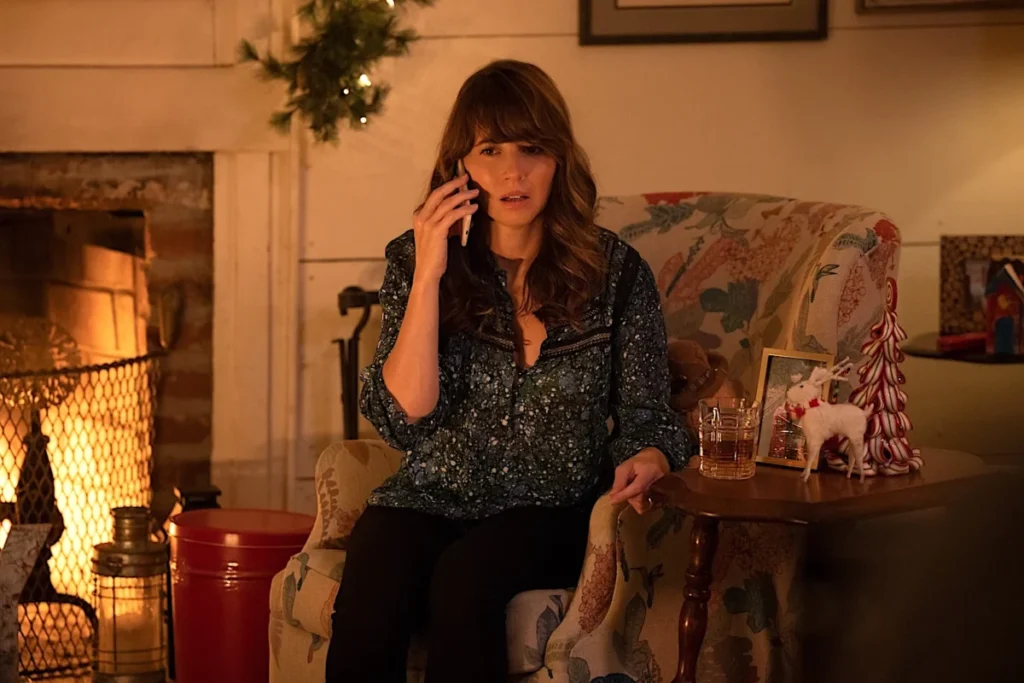
Actor and producer Lili Reinhart has expressed a strong professional interest in adapting a lesbian vampire novella for film or television, highlighting what she views as an underserved niche in contemporary mainstream media. Known for her prominent roles in the television series Riverdale and the romantic comedy adaptation The Love Hypothesis, Reinhart revealed her upcoming aspirations during a recent interview appearance on Hits Radio.
Addressing studio executives directly, the actor emphasized that the prevailing hesitation among major production companies to greenlight queer Gothic horror projects is unfounded in the current entertainment landscape. Reinhart’s public appeal has immediately triggered widespread speculation across literary and fan communities regarding the specific source material she intends to bring to the screen, while also shining a spotlight on the broader commercial viability of queer-centric horror narratives in modern Hollywood.
The Call to Action and Studio Hesitation
During her discussion on Hits Radio, Reinhart did not mince words regarding the risk-averse nature of contemporary film and television studios. Addressing industry decision-makers directly through the broadcast, she stated that modern audiences have demonstrated a robust appetite for diverse, high-concept genre storytelling, making the avoidance of such projects commercially counterintuitive.
"People are too afraid to make that," Reinhart remarked during the interview segment. "If you work at a studio and are watching this video, I don’t know why you wouldn’t make that in this day and age. That’s what I’m trying to do."
Industry analysts note that Reinhart’s comments tap into a long-standing tension within Hollywood regarding queer representation in major studio productions. While streaming platforms and independent production companies have increasingly embraced LGBTQ+ narratives, big-budget studio adaptations of explicitly queer genre fiction remain relatively scarce. By positioning herself not just as an actor, but as a driving creative force behind the adaptation, Reinhart joins a growing cohort of millennial and Gen-Z artists leveraging their platform to bypass traditional gatekeeping and bring marginalized stories to mainstream audiences.
Literary Speculation: Tracing the Potential Source Material
Following the broadcast, online literary communities and fan bases—particularly within the vibrant subculture of lesbian vampire literature enthusiasts—immediately mobilized to identify the specific novella Reinhart referenced. Because the actor did not name the title, observers have compiled an extensive catalog of potential contenders spanning from 19th-century Gothic classics to contemporary indie hits.
At the vanguard of fan speculation is Sheridan Le Fanu’s seminal 1871 Gothic novella Carmilla. Widely recognized as a foundational text in both vampire fiction and queer literature, Carmilla predates Bram Stoker’s Dracula by 26 years and explores the intense, predatory, yet romantic bond between a young woman and a female vampire named Carmilla. Given its status in the public domain and its enduring cultural footprint, a faithful adaptation or high-profile reimagining of Carmilla remains a strong possibility for any filmmaker looking to subvert traditional horror tropes.
Among contemporary titles, S.D. Simper’s 2018 release Carmilla and Laura frequently tops fan prediction lists. Serving as a direct retelling and expansion of Le Fanu’s original narrative, Simper’s work offers a deeply romantic and psychologically complex exploration of the source material that aligns with modern sensibilities. Another prominent contender is the 2020 comedic romance Just My Type by Lucy Bexley and Bryce Oakley. This novel features a distinctly different tone, centering on a 2,000-year-old vampire who experiences a quintessential meet-cute with a medical professional inside a hematology laboratory, blending supernatural horror with contemporary romantic comedy elements—a genre blend that has proven exceptionally popular among younger demographics.
Expanding the Scope: Novels and Extended Novellas
While Reinhart specifically used the term "novella," industry definitions regarding word counts can often be fluid. Consequently, fans have broadened their search to include full-length novels that share the thematic DNA of short-form queer Gothic horror.
V.E. Schwab’s anticipated or recently discussed contributions to the genre, specifically properties tracking queer female vampires across disparate historical timelines including the present day, have garnered significant attention. Similarly, S.T. Gibson’s 2021 critically acclaimed novel A Dowry of Blood, which centers on the perspective of the bisexual vampire Constanta as she navigates an abusive eternity with Dracula, has been frequently cited as a project possessing the cinematic scope and psychological depth suited for a prestige television adaptation or feature film.
Another title entering the discourse is Kat Dunn’s upcoming 2025 release Hungerstone. Functioning as an ambitious, longer-form retelling of the Carmilla mythos, Hungerstone indicates that the cultural appetite for vampire narratives filtered through a queer lens is expanding rather than contracting, providing publishers and filmmakers with a steady pipeline of new intellectual property.
The Commercial Viability of Queer Horror
Reinhart’s ambitions arrive at a time when the horror genre is experiencing a sustained financial and critical renaissance, frequently referred to by industry analysts as a golden age for elevated horror. Over the past decade, studios have discovered that horror films yield exceptionally high return-on-investment metrics compared to traditional mid-budget dramas and comedies. When combined with established intellectual property and dedicated fandoms, horror properties targeting underserved demographics consistently outperform baseline financial projections.
Furthermore, the mainstream success of recent television and film projects featuring queer protagonists demonstrates that LGBTQ+ storytelling is no longer relegated to the arthouse fringe. Audiences have shown an increasing willingness to embrace morally complex, genre-bending narratives that center queer perspectives. Projects that merge supernatural tropes with authentic emotional stakes have proven particularly effective in capturing digital engagement, generating viral marketing campaigns, and sustaining long-term fandom loyalty across social media platforms.
Chronology of Reinhart’s Career and Production Ambitions
To understand Reinhart’s pivot toward producing and developing specialized genre content, it is necessary to examine her professional trajectory over the past decade. Rising to international prominence through her portrayal of Betty Cooper on The CW’s long-running teen mystery-drama series Riverdale, Reinhart cultivated a massive, globally engaged fanbase. The series, which ran for seven seasons from 2017 to 2023, afforded her significant visibility within the television industry and provided a platform to transition into feature film projects.
Following her tenure on Riverdale, Reinhart expanded her resume into executive producing and starring roles. Her production company, Small Victory Productions, established a first-look deal with Amazon Studios, signaling her intent to move behind the camera and curate stories focused on complex female characters, mental health advocacy, and genre fiction. Her involvement in projects such as Chemical Hearts and her expressed attachment to adapting Ali Hazelwood’s bestselling novel The Love Hypothesis demonstrate a deliberate strategy to diversify her artistic output beyond the constraints of network television.
By setting her sights on a lesbian vampire property, Reinhart is signaling a bold departure from conventional romantic comedies and coming-of-age dramas, aligning herself instead with the prestige horror space currently dominated by studios like A24 and Neon.
Industry Implications and Next Steps
As the entertainment industry continues to navigate shifting economic models, streaming service consolidations, and changing audience consumption habits, the viability of mid-budget genre adaptations hinges on attached talent with proven audience draw. Reinhart’s public declaration serves as an informal pitch to the broader entertainment marketplace, effectively signaling to financiers, literary agents, and studio heads that she is actively seeking development partners.
While it remains unconfirmed whether Reinhart has officially secured the rights to any of the specific titles bandied about by literary enthusiasts, the public response to her interview underscores the immediate marketing advantage such a project would possess. A well-cast, high-concept queer vampire adaptation spearheaded by a recognizable star possesses built-in audience awareness that significantly mitigates the financial risks typically associated with launching a new intellectual property.
For literary fans and horror enthusiasts alike, October has proven to be an optimal cultural moment for these discussions to surface. Whether Reinhart’s mysterious project ultimately turns out to be a faithful adaptation of Le Fanu’s Carmilla, a contemporary indie romance, or an entirely different literary property, her public commitment to bringing a lesbian vampire story to the screen highlights a growing demand for diverse, unapologetic genre storytelling in modern Hollywood. As development cycles continue, industry observers will be watching closely to see whether a major studio answers Reinhart’s call and brings this Gothic vision to life.