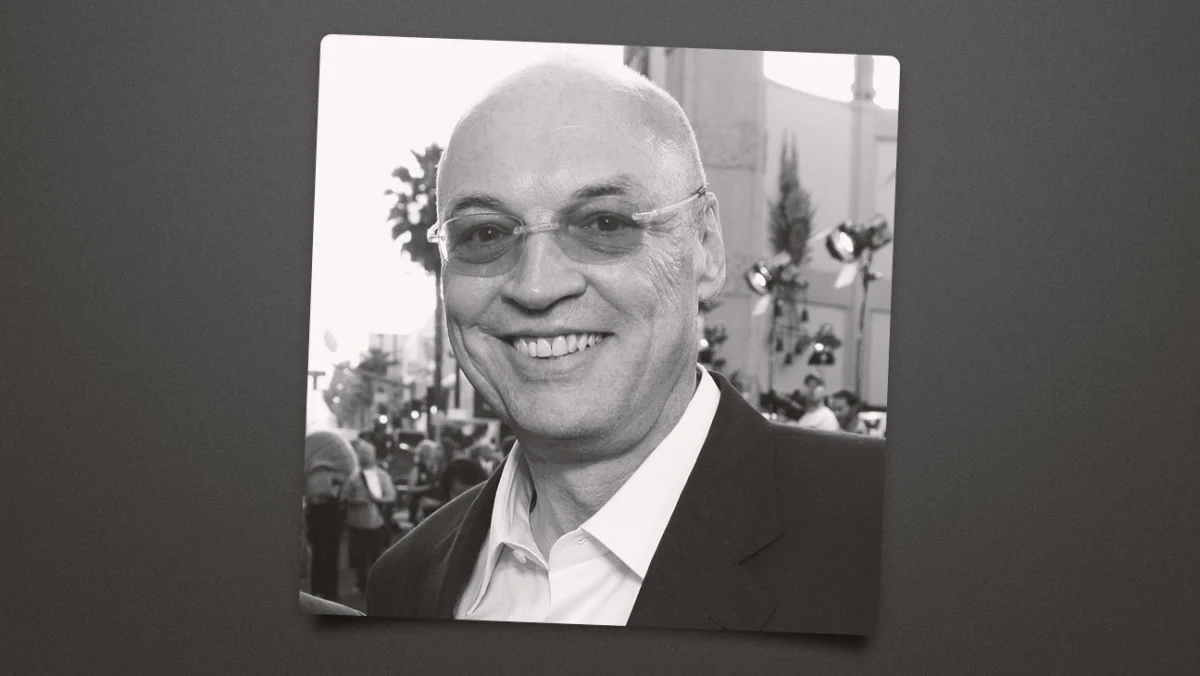
Moritz Borman, the prolific and respected movie producer renowned for his frequent collaborations with director Oliver Stone and his involvement in two installments of the iconic Terminator franchise, passed away on Wednesday at the age of 71. His death was confirmed by his longtime producing partners, Eric Kopeloff and Philip Schulz-Deyle, though a cause of death was not immediately disclosed. The news sent ripples through the independent filmmaking community, where Borman was a towering figure known for his keen entrepreneurial spirit and unwavering commitment to ambitious cinematic projects.
A Career Defined by Vision and Collaboration
"It is with profound sadness that we, as Moritz Borman’s longtime producing partners, announce his passing," began the joint statement from Kopeloff and Schulz-Deyle. "Moritz was one of the most accomplished and respected independent producers of his generation. Over a career spanning more than four decades, he produced more than 25 feature films, frequently collaborating with Oliver Stone." The statement highlighted a diverse filmography that included critically acclaimed works and major studio productions alike, citing films such as Under the Volcano, The Quiet American, Terminator 3: Rise of the Machines, Terminator Salvation, Alexander, World Trade Center, W., Savages, and Snowden.
Beyond his impressive list of credits, Borman was celebrated for his instrumental role in shaping the landscape of independent filmmaking. His partners further elaborated, stating, "As both a producer and entrepreneur, Moritz helped shape the landscape of independent filmmaking, building creative and financial bridges between Europe and Hollywood. He will be remembered not only for his achievements, but also for his generosity, optimism, integrity, and unwavering passion for cinema." This testament speaks to Borman’s multifaceted impact, extending beyond the creative aspects of filmmaking to the crucial financial and logistical architecture that underpins independent productions on an international scale. His ability to connect disparate cinematic cultures, particularly between the robust European funding models and the creative dynamism of Hollywood, established him as a pivotal figure in global cinema.
Early Life and Genesis of a Producing Career
Born in Germany, Moritz Borman’s journey into the cinematic arts began on his home continent. He first honed his skills as a producer for German television, gaining valuable experience in the fast-paced and demanding world of episodic production. This early grounding provided him with a foundational understanding of storytelling, production logistics, and the intricacies of bringing narrative content to audiences. Seeking to further his education and broaden his horizons within the global film industry, Borman made the significant move to Los Angeles, the heartland of American cinema. There, he enrolled in the prestigious American Film Institute (AFI), an institution renowned for nurturing generations of filmmaking talent. His time at AFI was undoubtedly crucial, exposing him to the specific mechanisms and artistic ethos of Hollywood, thereby preparing him for a career that would bridge continents and cinematic styles.
His transition from television to feature films was marked by an auspicious debut. Borman’s first credited film as a producer was for the legendary director John Huston’s 1984 drama, Under the Volcano. This adaptation of Malcolm Lowry’s acclaimed novel was a critical success, earning two Academy Award nominations: one for Best Actor for Albert Finney’s powerful portrayal of Geoffrey Firmin and another for Best Cinematography. For a burgeoning producer, working on such a critically celebrated project with a director of Huston’s stature was a profound validation and a clear indicator of Borman’s discerning eye for quality material and talent. The film, a challenging and often bleak exploration of self-destruction against the backdrop of Mexico, demonstrated Borman’s early willingness to tackle complex and artistically ambitious projects, setting a precedent for his future endeavors.
Forging a Path: Early Critical Acclaim and Diverse Projects
Following his impactful debut, Borman continued to diversify his portfolio, showcasing a remarkable versatility in his producing choices. His work often veered between critically acclaimed dramas and commercially successful genre films, reflecting a producer who understood both artistic merit and market demands.
One significant production in his early career was Phillip Noyce’s 2002 adaptation of Graham Greene’s The Quiet American. This compelling drama, set against the backdrop of Vietnam in the 1950s, resonated deeply with audiences and critics, particularly in the post-9/11 era, for its themes of political intervention and cultural misunderstanding. The film garnered significant praise, earning an Academy Award nomination for Best Actor for Michael Caine’s nuanced performance. Borman’s involvement in such a timely and thought-provoking film underscored his commitment to cinema that engaged with global issues.
In contrast to these intense dramas, Borman also demonstrated his commercial acumen by producing mainstream hits. A notable example is the 2001 romantic comedy The Wedding Planner, starring Jennifer Lopez and Matthew McConaughey. The film was a significant box office success, grossing over $95 million worldwide against a modest budget. This venture highlighted Borman’s ability to identify and shepherd projects with broad appeal, showcasing his range as a producer who was not confined to a single genre. Similarly, he produced Dennis Dugan’s 2003 action-comedy National Security, further illustrating his capacity to navigate different facets of the Hollywood production landscape. These diverse projects solidified Borman’s reputation as a versatile and commercially aware producer, capable of delivering both artistic triumphs and popular entertainment.
Navigating Blockbusters: The Terminator Franchise
Borman’s producing prowess extended to the realm of big-budget blockbusters, most notably his involvement in the Terminator franchise, a series synonymous with groundbreaking special effects and high-stakes action. His entry into this iconic sci-fi saga came with its third installment, Terminator 3: Rise of the Machines, released in 2003. Serving as an Executive Producer, Borman was part of the team tasked with continuing the legacy established by James Cameron’s highly acclaimed first two films. Terminator 3 saw Arnold Schwarzenegger return as the T-800, battling a new, more advanced female Terminator, the T-X. The film was a considerable commercial success, grossing approximately $433 million worldwide on an estimated budget of $170-200 million. Critically, it received mixed reviews; while praised for its action sequences and Schwarzenegger’s performance, many critics felt it didn’t quite capture the innovative spirit or emotional depth of its predecessors, yet it successfully continued the narrative and proved the franchise’s enduring box office appeal.
Borman returned to the franchise for its fourth cinematic outing, Terminator Salvation, released in 2009, this time as a full producer. This installment marked a significant departure from previous films, opting for a darker, post-apocalyptic setting centered on the future war between humanity and Skynet, with Christian Bale starring as John Connor. Terminator Salvation aimed to reboot the franchise’s timeline and tone, moving away from time-traveling cyborgs in the present to the grim realities of the future war. The film garnered approximately $371 million worldwide against an ambitious budget of around $200 million. However, critical reception was largely mixed to negative, with many reviewers finding its narrative convoluted and its attempts at a darker tone lacking in emotional resonance. Despite its struggles to launch a new trilogy, Borman’s involvement in these two large-scale productions demonstrated his capability to manage complex logistical challenges and significant financial investments inherent in blockbuster filmmaking, affirming his status as a producer capable of operating at the highest echelons of the industry.
The Enduring Partnership with Oliver Stone: A Chronicle of Ambitious Cinema
Perhaps the most defining and enduring professional relationship of Moritz Borman’s career was his frequent collaboration with the acclaimed and often controversial director Oliver Stone. Their partnership, which began in 2004, spanned over a decade and produced a series of ambitious films that often grappled with complex historical events, political figures, and societal issues. Borman proved to be an ideal partner for Stone, whose vision often required significant financial backing and meticulous production management for projects that were frequently epic in scope and challenging in subject matter.
Their first collaboration was the monumental historical epic Alexander (2004). Stone’s ambitious portrayal of Alexander the Great’s life, starring Colin Farrell, Angelina Jolie, and Anthony Hopkins, was one of the largest productions of its time, with an estimated budget of $155 million. While the film struggled at the domestic box office, grossing around $34 million, it performed better internationally, eventually reaching approximately $167 million worldwide. Alexander was met with polarized critical reception upon its initial release, leading Stone to release multiple director’s cuts in subsequent years. Borman’s role in navigating such a massive, star-studded, and geographically diverse production, fraught with creative and financial complexities, showcased his formidable skills as an executive producer.
The partnership continued with World Trade Center (2006), a poignant and emotionally charged drama recounting the harrowing true story of two Port Authority police officers trapped in the rubble during the 9/11 attacks. The film was a critical and commercial success, praised for its sensitive and respectful portrayal of the tragedy. It grossed over $163 million worldwide against a budget of $65 million, becoming one of Stone’s more financially successful and critically lauded films. Borman’s ability to help bring such a delicate and historically significant story to the screen, balancing authenticity with cinematic narrative, was a testament to his producing acumen.
In 2008, Borman again joined forces with Stone for W., a biographical film about the life and presidency of George W. Bush, released during a pivotal election year. Starring Josh Brolin in the titular role, the film aimed to offer a nuanced, albeit critical, look at the 43rd U.S. President. With a budget of $25 million, it grossed nearly $29 million worldwide. Critical reception was mixed, with some praising its attempt at an even-handed approach while others found it lacking in depth. This project further underscored Borman’s willingness to support Stone in tackling politically charged subjects that often sparked public debate.
Their collaborations continued into the next decade with films like Savages (2012), a gritty crime thriller adapted from Don Winslow’s novel. The film, featuring a strong ensemble cast including Blake Lively, Taylor Kitsch, Aaron Taylor-Johnson, and Salma Hayek, offered a stylized look into the drug trade. It performed reasonably well at the box office, grossing over $83 million worldwide against a $45 million budget, and received mixed critical reviews for its intense violence and plot.
The final collaboration between Borman and Stone was Snowden (2016), a biographical thriller about the controversial whistleblower Edward Snowden. Starring Joseph Gordon-Levitt, the film delved into the events leading to Snowden’s leak of classified NSA documents. Snowden grossed approximately $37 million worldwide on a budget of around $40 million, and while it received mixed to positive reviews, it was largely praised for its compelling narrative and relevance to contemporary issues of surveillance and privacy.
The enduring partnership between Moritz Borman and Oliver Stone was a testament to Borman’s deep belief in Stone’s unique cinematic vision. He consistently enabled Stone to pursue projects that were often grand in scale, complex in theme, and frequently politically resonant, showcasing a producer who prioritized impactful storytelling and wasn’t afraid to navigate controversial terrain. Borman’s ability to secure financing, manage intricate international co-productions, and maintain a steady hand through the challenges of ambitious filmmaking was crucial to the success of this prolific creative alliance.
A Broader Filmography and Industry Impact
Beyond his high-profile work with Oliver Stone and the Terminator franchise, Moritz Borman’s filmography included a range of other notable productions, further illustrating his diverse taste and producing capabilities. His involvement in films like The Wedding Planner (2001) and National Security (2003) demonstrated his capacity to deliver commercial successes, balancing his more art-house or politically charged projects with films designed for broader audience appeal.
Borman’s impact on the industry extended beyond individual film credits. He was widely recognized as an "entrepreneur" in the truest sense, constantly seeking innovative ways to finance and produce films, particularly those that might fall outside the traditional studio system. His skill in "building creative and financial bridges between Europe and Hollywood" was not merely a tagline but a fundamental aspect of his modus operandi. He understood the nuances of European co-production treaties, tax incentives, and financing structures, leveraging them to bring American stories to life with international backing and vice versa. This expertise was invaluable for independent filmmakers who often struggled to secure funding solely from domestic sources. He helped foster a more globalized approach to film production, demonstrating that compelling stories could transcend geographical boundaries in terms of both creation and audience. His reputation for integrity, generosity, and an unwavering passion for cinema made him a trusted figure in an often volatile industry, capable of nurturing projects from conception to completion and inspiring confidence in investors and creative talent alike.
Unfinished Work and Enduring Influence
At the time of his passing, Moritz Borman was actively engaged in another promising project: an untitled film directed by John Lee Hancock, further confirmed by Kopeloff and Schulz-Deyle. The status of this project following Borman’s death remains to be seen, but his absence will undoubtedly be felt during its production. His passing leaves a void in the independent filmmaking community, particularly for those who relied on his expertise in international financing and his steadfast commitment to challenging narratives.
His legacy, however, is firmly etched in the annals of cinema. The films he produced, from intimate dramas to sprawling epics and high-octane blockbusters, represent a significant contribution to cinematic history. More than just a list of titles, his impact lies in the stories he helped tell, the visions he enabled, and the countless filmmakers and crew members whose careers he touched. His enduring influence will continue to be felt through the innovative financing models he championed, the international collaborations he fostered, and the high standards of production he maintained throughout his illustrious career.
Industry Tributes and Lasting Impact
The joint statement from Eric Kopeloff and Philip Schulz-Deyle served as an industry tribute, articulating the profound sense of loss felt by those who worked closely with him. "Our thoughts are with Moritz’s family, his friends, and the many colleagues around the world whose lives he touched. His legacy will endure through the films he made, the filmmakers he inspired, and the lasting impact he had on our industry." This sentiment resonates deeply within a community that valued Borman not just for his professional achievements but for his personal qualities. His generosity, optimism, and unwavering integrity were not merely attributes but foundational elements of his approach to filmmaking, fostering an environment where creativity could flourish even amidst the inherent challenges of independent production. Moritz Borman’s passing marks the end of an era for a producer who genuinely shaped the global cinematic landscape, leaving behind a rich tapestry of films and a legacy of unwavering dedication to the art of storytelling.