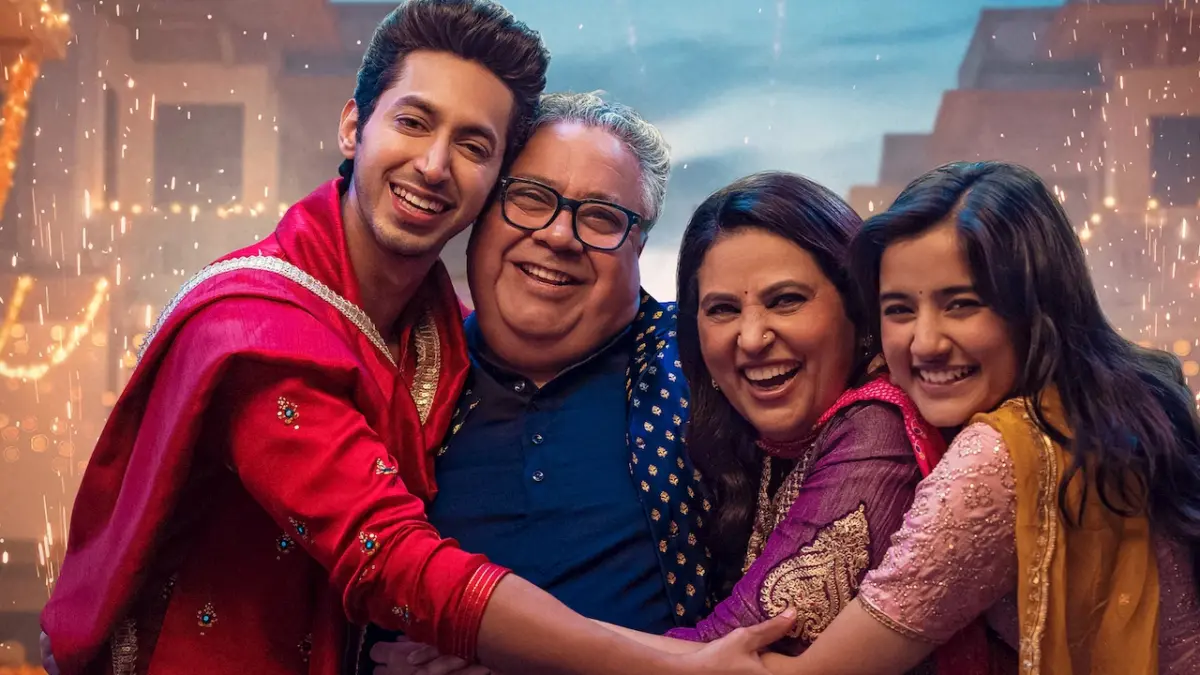
The landscape of digital streaming is undergoing a subtle yet significant shift as platforms re-evaluate traditional runtime expectations to better suit modern viewing habits. Netflix India has officially expanded its nascent short-format feature initiative with the global release of Dilwali Diwali, a family drama with a tightly edited runtime of just 61 minutes. Directed by Ritesh Menon and written by Ritu Mago, the Hindi-language film represents a calculated push by the streaming giant toward concise, high-impact storytelling that caters to audiences with limited leisure time.
The launch follows a successful trial period last year when Netflix India experimented with a brief 52-minute featurette titled Greater Kalesh. Despite not carrying the formal "Netflix Original" designation, the family holiday flick managed a surprise entry into the Global Top-10 Non-English Movies list during its debut week. This unexpected milestone provided critical market validation, proving that global audiences are increasingly receptive to narrative features that sit comfortably between standard television episode lengths and traditional two-and-a-half-hour cinematic runtimes. Industry analysts noted that the triumph of Greater Kalesh signaled a broader appetite for digestible content, prompting content executives in Mumbai and Los Angeles to fast-track a slate of under-90-minute projects designed to maximize viewer engagement without demanding extensive time commitments.
The production of Dilwali Diwali brings together a seasoned creative team known for delivering culturally resonant domestic narratives. Terribly Tiny Tales, the production house behind the project, is coming off a stellar global debut with the romance series Musafir Cafe earlier this year. Writer Ritu Mago, who also penned Greater Kalesh, anchors Dilwali Diwali in familiar thematic territory, exploring the complex emotional dynamics of an adult child returning to the family fold during a major cultural holiday. Ritesh Menon, whose previous directorial work includes Crazy Cukkad Family, brings a balanced cinematic eye to the domestic tensions that define the narrative core of the film.
At the center of Dilwali Diwali is a premise deeply rooted in contemporary socioeconomic realities within urbanizing India. The narrative follows Ansh Sikka, a young professional who has spent years working abroad and achieved the quintessential milestone of modern success: providing financial security and an upgraded lifestyle for his middle-class parents. To reward their lifelong sacrifices, Ansh purchases a swanky, modern high-rise apartment in a prestigious neighborhood, believing that a luxury address equates to a better quality of life. However, his homecoming for Diwali reveals a sharp disconnect between material upgrades and emotional fulfillment. As the narrative unfolds, Ansh realizes that while upgrading a family’s physical living space is achievable, convincing them to abandon their deeply ingrained emotional attachment to their concept of "home" presents a far more intricate challenge.
The film’s casting strategy bridges generational talent to enhance the authenticity of its domestic conflicts. Mihir Ahuja, recognized for his performances in The Archies and Operation Safed Sagar, steps into the role of Ansh Sikka. Reflecting on the thematic resonance of his character, Ahuja noted that Ansh’s motivations stem from a place of genuine affection, mirroring a universal dilemma faced by many young adults working away from their families. The actor observed that while individuals strive to provide the best possible lives for their aging parents, the pursuit of material improvement can sometimes overshadow the fundamental need to understand what brings them true, day-to-day contentment.
Veteran actor Manoj Pahwa, whose extensive portfolio includes appearances in Hashmukh and Single Papa, anchors the older generation as Ansh’s father. Marking his sixth collaboration with Netflix on an Original film or series, Pahwa brings a grounded gravity to the film’s central ideological clash. Discussing the perspective of his character, Pahwa emphasized that for parents, the concept of home extends far beyond physical architecture, luxury furniture, or high-rise postal codes. Instead, it is inextricably linked to decades of shared memories, community ties, and the intangible comfort of familiarity. The emotional tension of the film thus relies not on villainous conflict, but on the friction between two equally well-intentioned perspectives on familial well-being.
The supporting ensemble further grounds the family dynamic, featuring Neelu Kohli in the role of Ansh’s mother and Aurra Bhatnagar Badoni as his younger sister. Together, the cast portrays a realistic middle-class household navigating the sudden influx of wealth and the subtle alienation that can accompany upward social mobility. The film’s global release is supported by robust localization efforts, streaming with English, Hindi, and Hindi CC subtitles, alongside dubbed audio options in Tamil, Telugu, and Hindi audio description to ensure accessibility across India’s diverse linguistic demographics. The United States market has classified the feature with a TV-PG rating for language, reflecting its broad family-friendly appeal.
The strategic pivot toward sub-90-minute films represents a deliberate adaptation to the fragmented consumption patterns of contemporary streaming audiences. In an era where viewers frequently navigate busy schedules and competing digital distractions, lengthy cinematic commitments can sometimes act as a barrier to entry. By offering complete narrative arcs within a 60-to-85-minute window, Netflix aims to capture attention during smaller windows of leisure, such as a weekday evening or a brief afternoon break. Furthermore, this format provides streaming platforms with a sustainable pipeline to collaborate with emerging writers and directors, exploring niche subjects and experimental genres that might not secure financial backing for a conventional, theatrical three-hour Bollywood release.
Industry observers suggest that the success of Dilwali Diwali and its predecessor could permanently alter the production landscape for mid-tier Indian streaming content. As data analytics continue to shape commissioning decisions, platforms are increasingly prioritizing efficiency, narrative pacing, and global discoverability over traditional runtime benchmarks. If short-format features continue to perform well in international viewership metrics, the industry may witness a permanent expansion of this cinematic tier, offering creators a versatile middle ground between serialized television and feature-length films. As Netflix rolls out its comprehensive 2026 content slate for the Indian market, the reception of Dilwali Diwali will likely serve as a crucial benchmark for the future of concise, character-driven storytelling on the platform.